

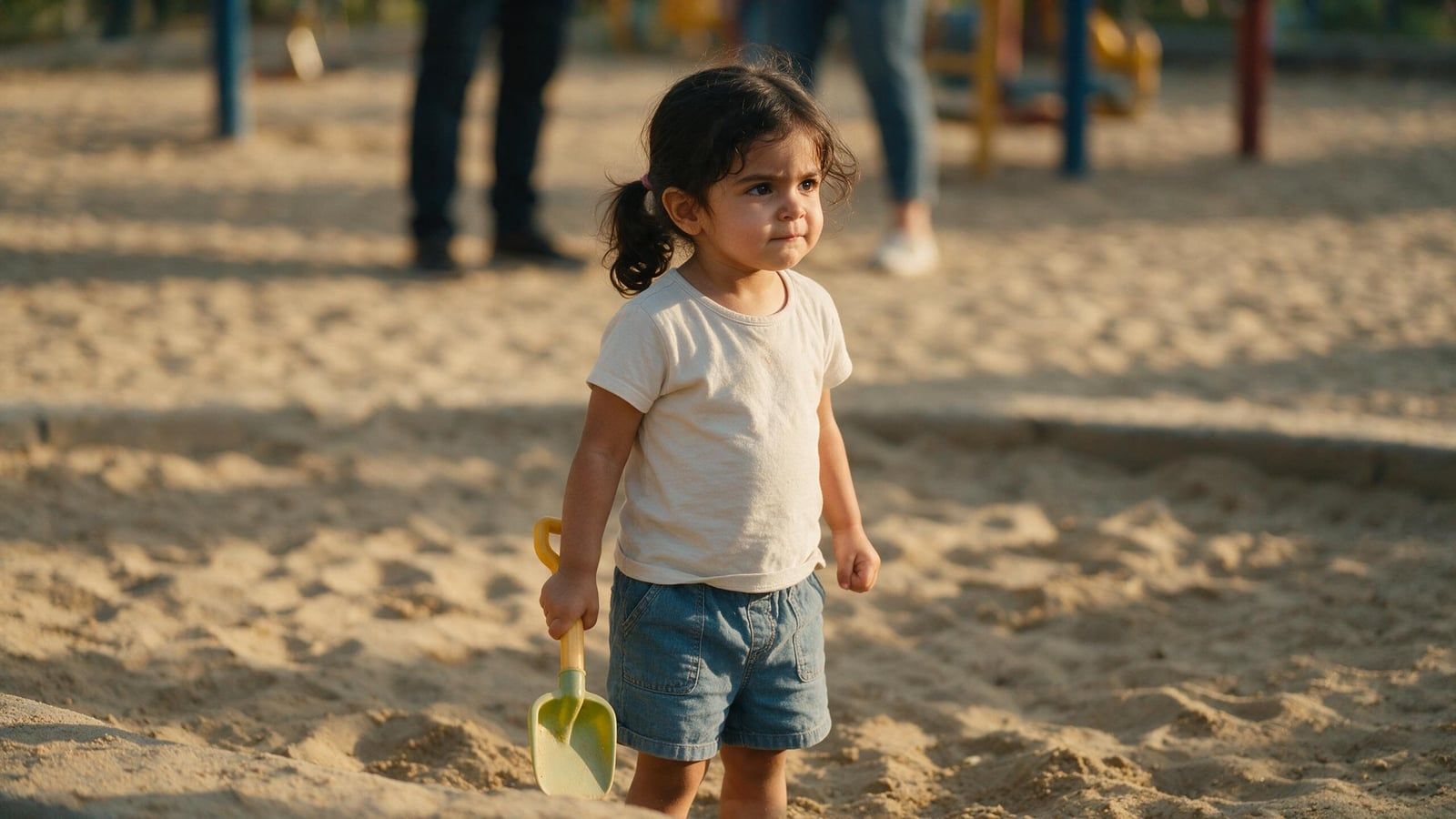
Someone takes the shovel out of their bucket and, before you can get across the sandbox, your child has already shoved him. The other boy is on the ground, crying. His mother is looking at you. You're looking at your child, who is still holding the shovel and wearing the face of someone who has no idea why any of this blew up.
And in your head, the same thought as always: we don't teach that at home.
This is mostly about two- and three-year-olds, which is when hitting shows up the most. Where something changes at four or five, we say so.
They hit because it works
At that age, shoving is the fastest, most effective tool in the kit. It gets the shovel back in under a second, and it also gets the kid who was breathing down their neck to back off. Asking for it or waiting a turn takes far longer, and sometimes it doesn't work at all.
As long as hitting is still what solves the moment best, banning it isn't enough. Giving it up costs a lot less when they have something else that works almost as fast, and that gets built outside the conflict.
It also follows a known curve: most children start in their second year, the frequency plateaus between two and three and drops off slowly from there. For almost everyone, what you're seeing means your child has just reached the age when it shows up. There is a minority in whom it doesn't drop off, and that's what the list of signs at the end is for.
What they're trying to get
Sometimes they want something: the toy another kid has, a turn on the slide. They're going after a specific goal and they're calm about it, so the job is to teach them to ask for it and to make sure the shove doesn't hand them the object.
Other times they want something to stop, and from the outside it looks almost identical. If the shoving comes at the end of a long day, or on the way out of crowded places, it's probably overload rather than a dispute. Teaching them to ask doesn't help there, because they aren't asking for anything: you have to turn down the volume of the day before they reach their limit. And if it happens to them much sooner than to other children their age, look into whether they're one of the kids who gets overwhelmed easily.
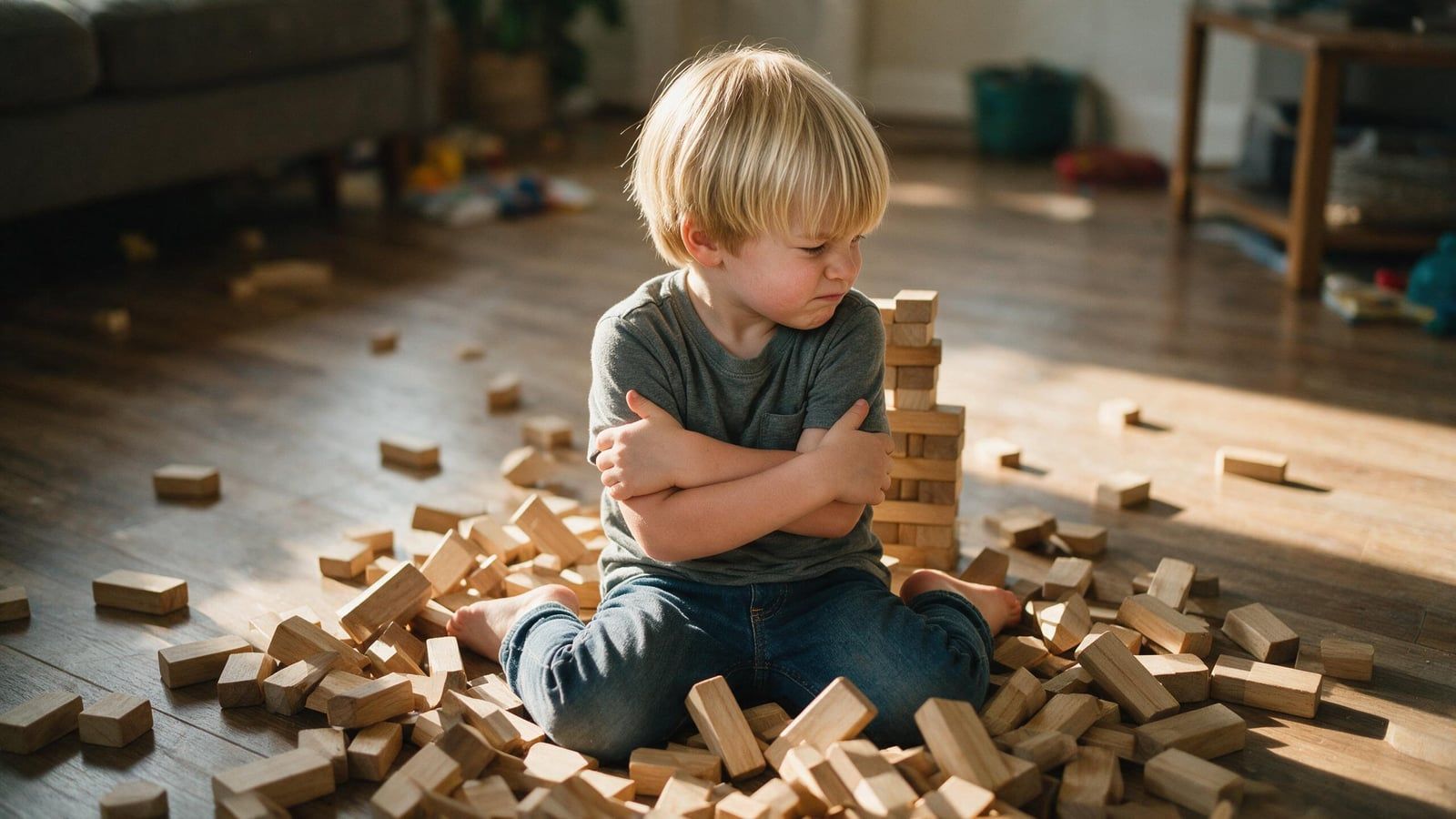
And other times they're overwhelmed and no longer choosing, in the middle of a tantrum. That shove doesn't get corrected in the moment: you stop it, you stay with them, and you talk once they're back. What goes on inside during those minutes is in tantrums: what happens in your child's brain.
And there's the case that tends to worry parents most: the child who hits their own mother or father. The usual explanation is that they hit where they feel safe, and let out there what they held in elsewhere. It fits what many families see, though it isn't well measured. You stop it the same way as any other.
The next ten seconds
You almost never get there in time. You're a few steps away, with your back turned or talking to someone, and by the time you look the hit has already landed. So the order of what you do matters more than the speed.
If you get there first, stop the hand. With yours, gently and without gripping, or by putting yourself between the two children. A hit that lands all the way confirms that the method works.
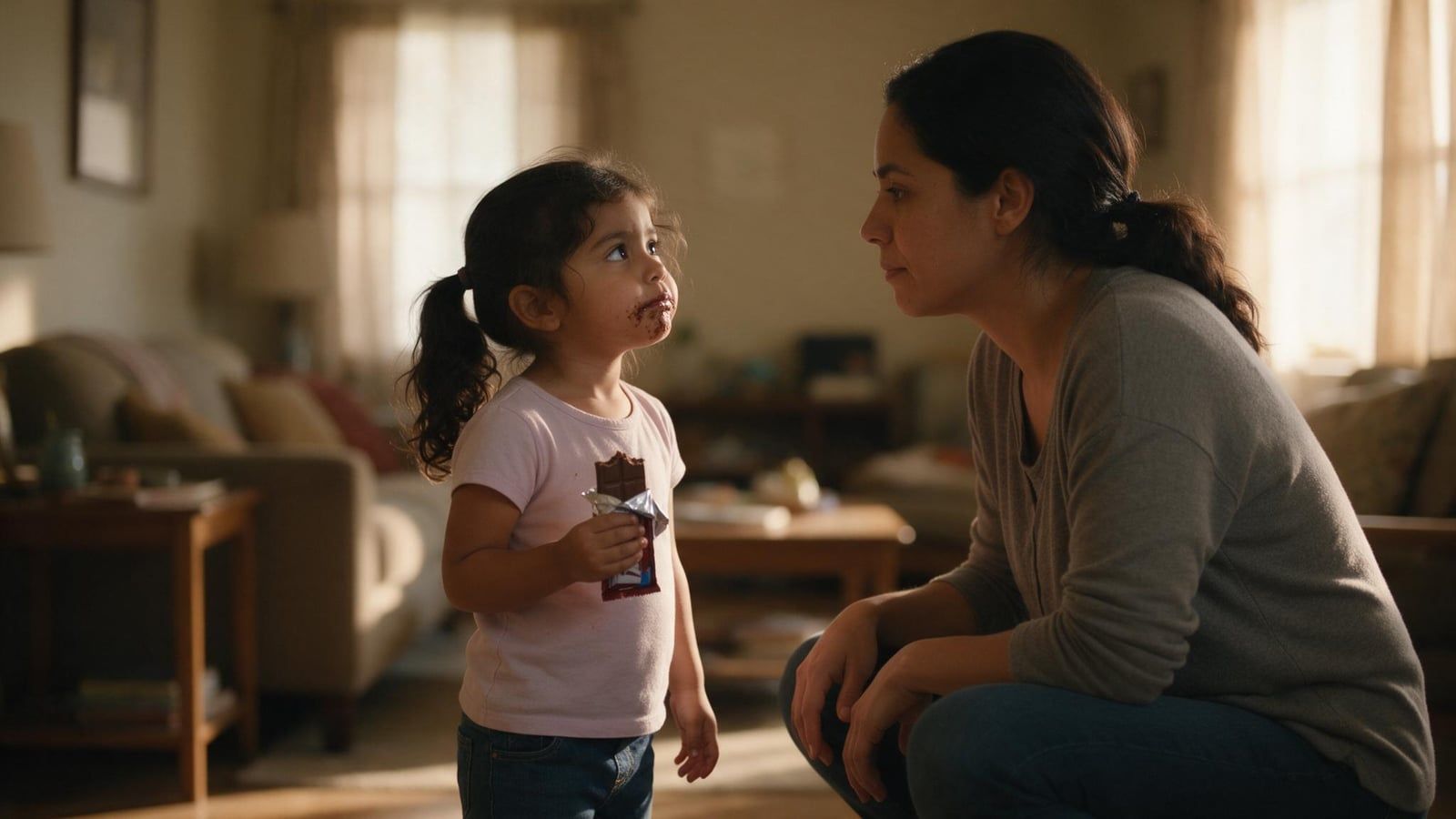
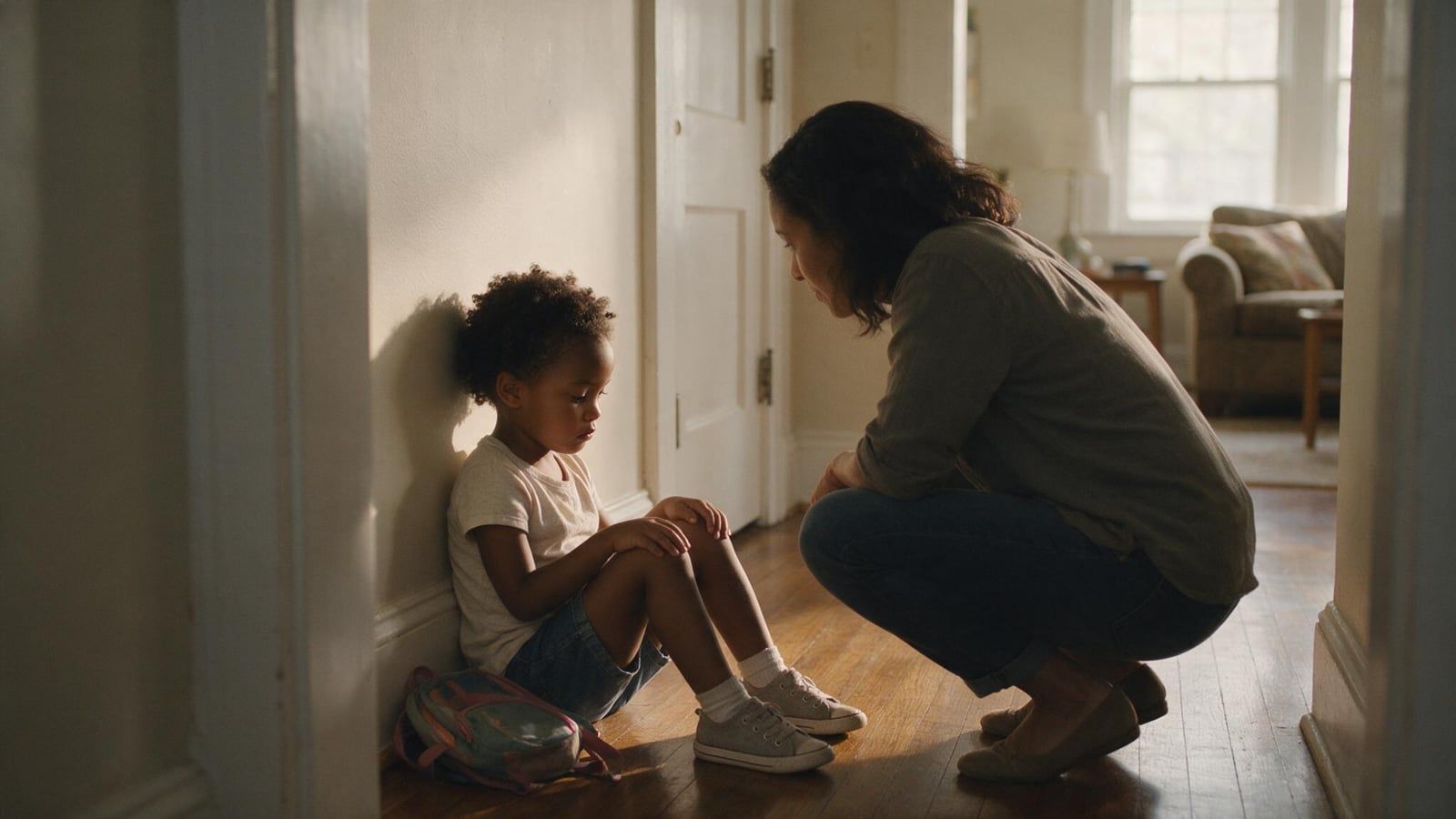
If it already landed, go to the child who got hit first. Crouch down with the boy who's crying and look after him. If his mother or father is already there, it's enough to come over, ask how he is and not rush off. Your child watches the whole scene, and that scene tells them what happened better than anything you could say right now.
Then one short sentence, always the same one. "I won't let you hit." Five quiet words and that's it, no questions and no "how would you like it if someone did that to you?". If you go on, what they take away is that hitting gets them all of you for a good long while.
The object goes back. If they got the shovel by hitting, the shovel goes back, and you can be the one to hand it to the other child: "He had this one." Expect them to get angry right then, and hold that anger: that's where it gets decided whether the method still works for them.
And with the audience, keep it short. A "sorry, I'm on it" is enough. Long explanations to the little crowd are for us: they cost time you're not giving either child, and in front of your child they turn the whole thing into a scene about looking bad.
If it keeps going anyway, you leave, with no speech on the way out. And if you walk out of the playground wanting to cry, that says nothing about you: you've just held a scene together with half a dozen people watching.
Repair, which is not saying sorry
The automatic "say sorry" is the quick way out, and above all the one that settles us in front of the other parents. What the child learns is the formula: there's a word that closes the matter and hands them their freedom back. Nobody has shown that it does them any harm, but it's hard to see what it teaches.
They repair better by doing something: handing the toy over to the other child, or helping him up. It's concrete, and it's within reach at two.
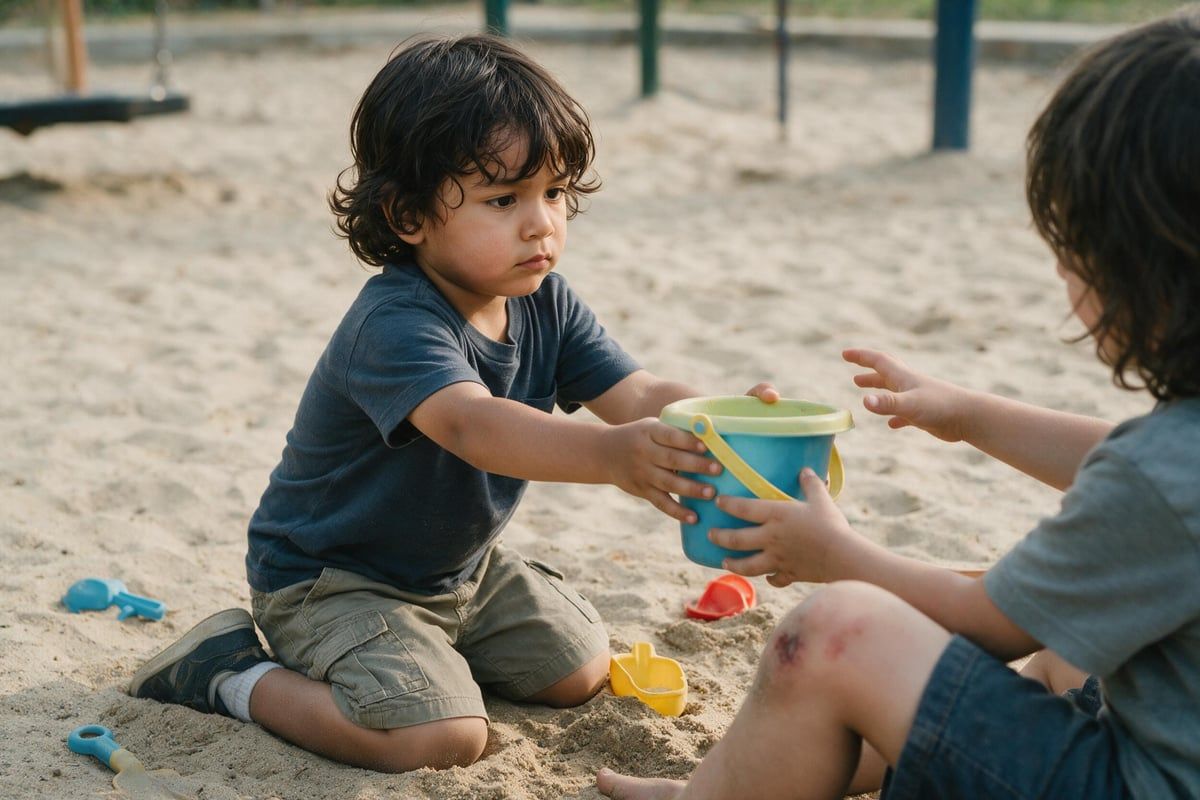
And there's a misunderstanding worth clearing up, because it changes what you do. People often say that until four or five a child doesn't register that someone else is hurting. What has been measured points elsewhere: already in their second year, children show concern for someone who has just been hurt and do something to help, even when that person shows no sad face at all. In those experiments the child is watching from the outside and isn't the one who caused the harm, so it isn't exactly our scene; what they rule out is the idea that at that age the other person doesn't matter to them. What comes later is reasoning and talking about what the other person feels.
So it does register; what doesn't get through at two is the long speech. That's why the short, physical version works: point to the other child, say "that hurts him", and look after him in front of your own. If yours won't even come close, don't force it, and do it yourself where they can see. They'll copy it in time, not on the third try.
Calm moments are where you teach it
What actually reduces the shoving happens far from the sandbox, in the moments when nothing is at stake, and it has to come down to concrete examples.
Give them the words before they need them, and keep them short: "mine", "no", "stop". If the words are hard to say, they won't show up when it counts. It helps to name them while your child is playing calmly ("that one's yours, tell him mine"), without waiting for the fight.
Practice a gesture that replaces the hit: an open hand held out in front, or squeezing a cushion hard. It goes better as a game with stuffed animals, where one takes something from the other and you ask your child what the one left with nothing can do. Short stretches, repeated often, and never made to feel like homework.
And look at when they hit, not just that they hit. There's almost always a pattern: late in the day, hungry, with one particular child, at tidy-up time, when there are visitors. Just before that moment there's plenty you can do; inside it, almost nothing.
Expect this to take months, with relapses. It happening again after a calm stretch doesn't cancel out what came before.
What doesn't help
Hitting back so they see how it feels. First, why people do it: hitting back cuts the scene short on the spot, exactly the way the shove works for your child. Over the medium term it pulls the other way. The reference meta-analysis pools more than 160,000 children and finds that more spanking goes with more aggressive behavior, and the American Academy of Pediatrics advises against physical punishment in any form. Almost all of those studies are observational, and the underlying criticism is real: it may be that the more aggressive child draws more punishment rather than the other way around. The few papers pointing the other way only reach obedience in the moment, and they are heavily disputed. And then there's the obvious part: it's hard to teach that we don't hit by hitting.
Asking "why did you hit him?". At two or three they don't know, and they end up telling you what they think you want to hear. From four or five the question starts to make sense, better a while afterward and not in the heat of it.
Hanging the label on them. "My kid's a hitter", repeated in front of them, can end up being the explanation they use about themselves, and then you're working against something much stickier than a behavior. Something similar happens with the labels in when everyone else is doing it.
When to take a closer look
Almost always this sorts itself out with time and with everything above. It's worth mentioning to your pediatrician if you see any of these:
- At four or five it's still their main way of solving things.
- It's increasing rather than easing off over the months.
- They hit out of the blue, with no anger and nothing in dispute.
- They really hurt other children and don't stop at the other child's reaction.
- It goes together with language that isn't taking off, or little interest in playing with other children.
- They sleep badly for weeks on end, or something is hurting them.
And one case that isn't for the pediatrician: if it only happens in one place, that place is what needs looking at, and that's a conversation to have with the daycare.
You ask in order to rule things out, and almost always the visit ends up confirming there's nothing more to it.
The captains who came in swinging
One of our stories is about exactly this. In The Captain of Silence a kraken has a shipping route blocked, and a line of captains takes turns trying to solve it. They all try the same thing, going in hard and forcing it out of the way, and with every attempt things get worse. Captain Leeward does what nobody had done: he stays still and watches for a while before deciding anything.
It's for the older ones in the house, four or five and up; at two it drags. At that age it does work as a place to talk from about why answering force with more force leaves the problem exactly where it was. You read it together and that's it, without turning it into a message about what happened at the playground.

The Captain of Silence
A friendship born from respect
Captain Sotavento is a ten-year-old boy who loves the sea and studies marine creatures. When an important maritime route is blocked by a kraken, the governor of Coral Island offers a reward to whoever can reopen it. All the captains try to defeat the kraken with force, but Sotavento chooses to observe, listen, and understand. He discovers that the kraken isn't a monster, but a being who suffers from the constant noise of ships. While others fail with violence, Sotavento builds a friendship based on respect and shared silence.
Read this children's story in the Semillita appNext post: why anything unfamiliar suddenly gets pushed away, and what to put on the table tonight.