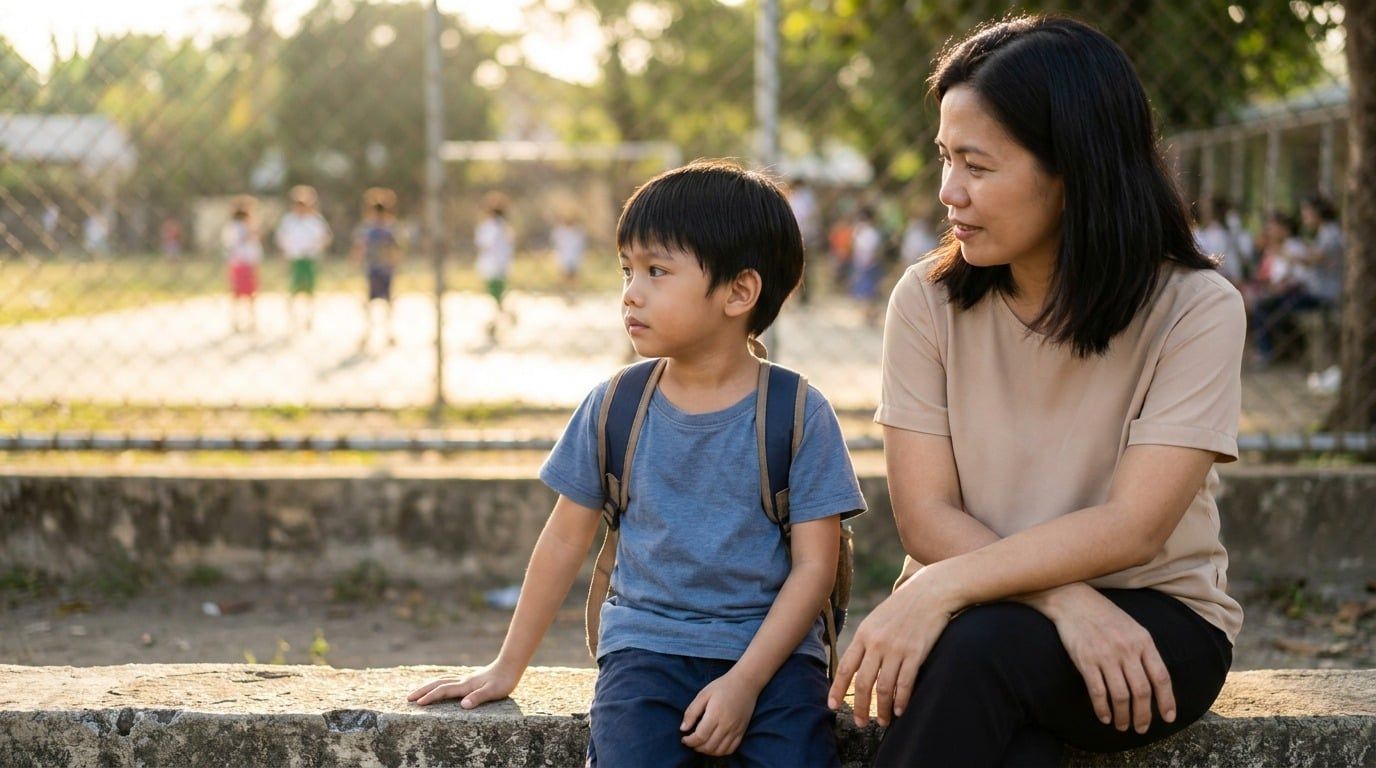


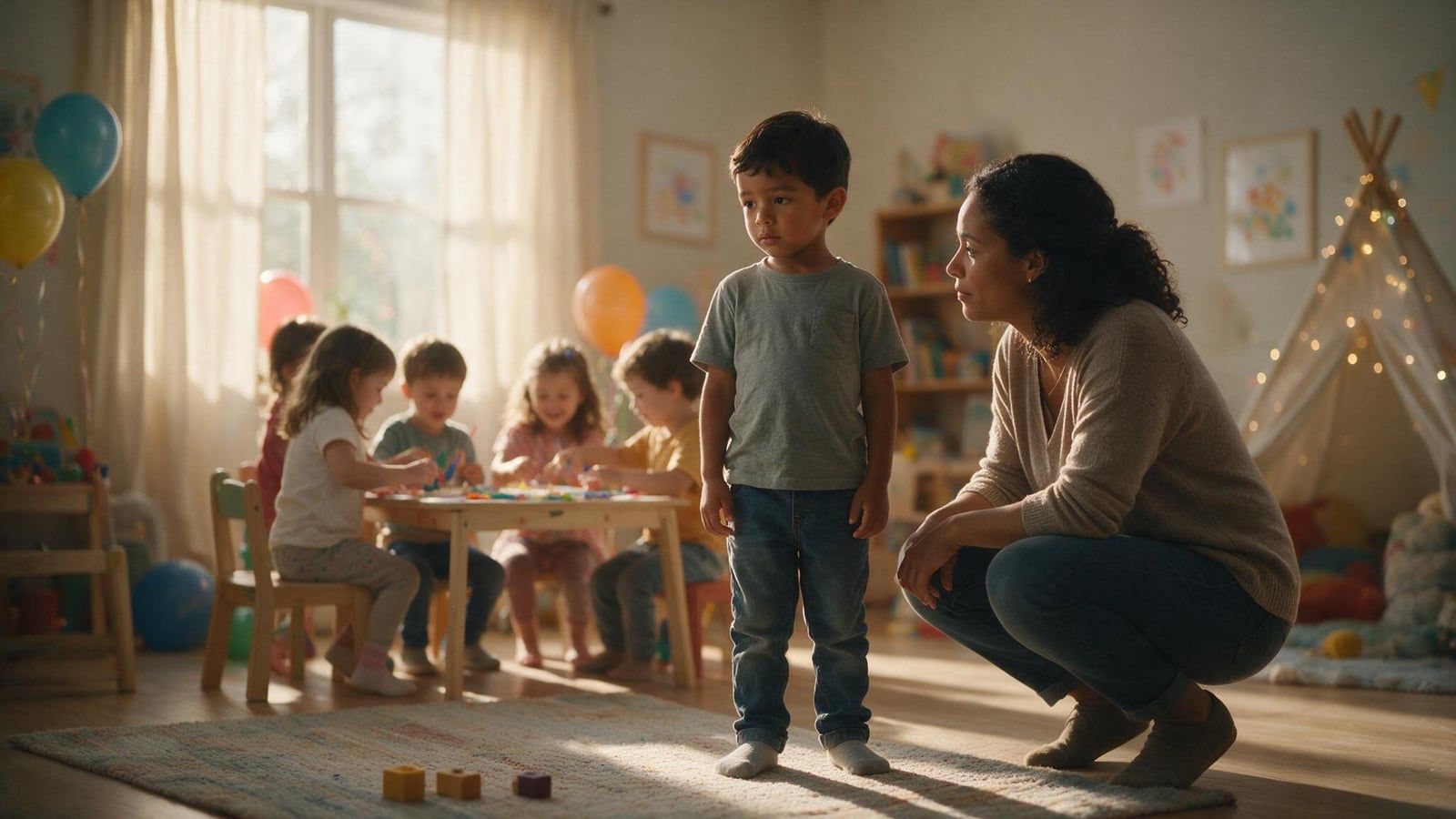
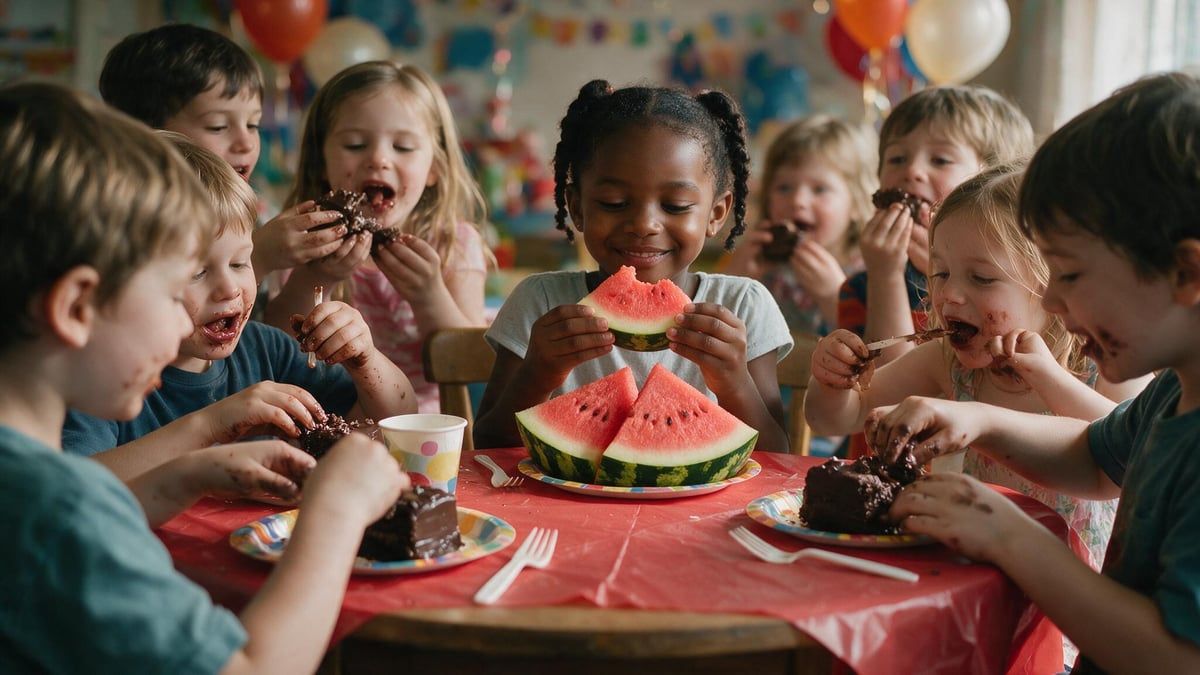
It's a birthday party and all the kids have thrown themselves at the same thing. It doesn't matter what: the game someone just started, the snack they all suddenly want at once. All of them except yours, who hangs back half a step, watching, never quite joining in. Or the other way around: they join in, do what everyone else is doing, and then, in the car on the way home, tell you very quietly that they didn't really want to.
That scene has two versions, and both are unsettling. If your child stays on the outside, you wonder whether they struggle to connect with others. If they get swept along, you wonder whether they'll be able to say no when it truly matters. Not long ago we wrote about how to support a child who hesitates in the face of anything new; this is similar, except the brakes no longer come only from within. Now there's a group pulling, and holding your ground when everyone else is heading the other way is one of the hardest things we learn — as grown-ups too.
Why fitting in matters so much at this age
The need to belong to a group is one of the most basic we have as people. It isn't a whim or a weakness: for a very long stretch of our species' history, being left out of the group was a serious survival problem. It's often explained that this is why the brain registers social rejection in a way that resembles a real threat; whether or not that's entirely the case, what we do see is that a child cares enormously about what everyone else is doing, and that fitting in gives them an important sense of safety.
Around age three, on top of that, your child starts to become aware of the group. Before, they played alongside other children; now they watch them, compare themselves, and want to do what the others do. That attention to others is the engine behind plenty of good learning: it's how they learn to share, to wait their turn, and so many other things about being with people. Wanting to be like the others is, most of the time, a sign that they're socializing well.
What they're still missing is the scale to weigh it. A young child feels the pull of “do it like the group,” but has little practice yet in putting that pull on one side and their own preference on the other. When the two collide, the group often wins without the child even realizing they've given in. They notice afterward, with that vague discomfort of having done something they didn't feel like doing.
When giving in is learning, and when it's worth a closer look
It helps to take the weight off one thing: a child sometimes doing what the group does is no failure at all. Trying a game they wouldn't have chosen on their own, or setting their own thing aside for a while to be with the others — that's part of getting along too, and learning to get along means giving in now and then. A child who never adapts to anything doesn't have it easy either.
Giving in now and then isn't the problem. What's worth watching closely is something else: when your child gives up what they want over and over just to avoid being left out, when they say they love something they can't stand at home depending on who they're with, or when they come back from being with other children flat, as if they'd left a piece of themselves along the way. At that point they're no longer learning to get along; they're learning that what they like counts for less than what the group likes. And that's the idea we don't want to stick.
What actually helps
This isn't about your child standing up to everyone, either. The goal is more modest: that they learn to notice when they're giving in and can choose with a little more freedom. A few things that help:
Name what's happening to them. It helps a lot for your child to learn to recognize the pull before they get swept along. You can put it in simple words: “sometimes we do something just because everyone else is doing it, even when we don't feel like it; that happens to all of us.” Knowing that feeling has a name gives them a small spring to pause and think next time.
Give them a way to say no. A child often gives in because they can't find a way to refuse without looking bad in front of the others. Handing them a couple of ready-made phrases takes that awkwardness away: “not like that, thanks,” “I'd rather have this one.” They don't need a whole speech: a short, polite out is enough for them to feel that saying no is a real option.
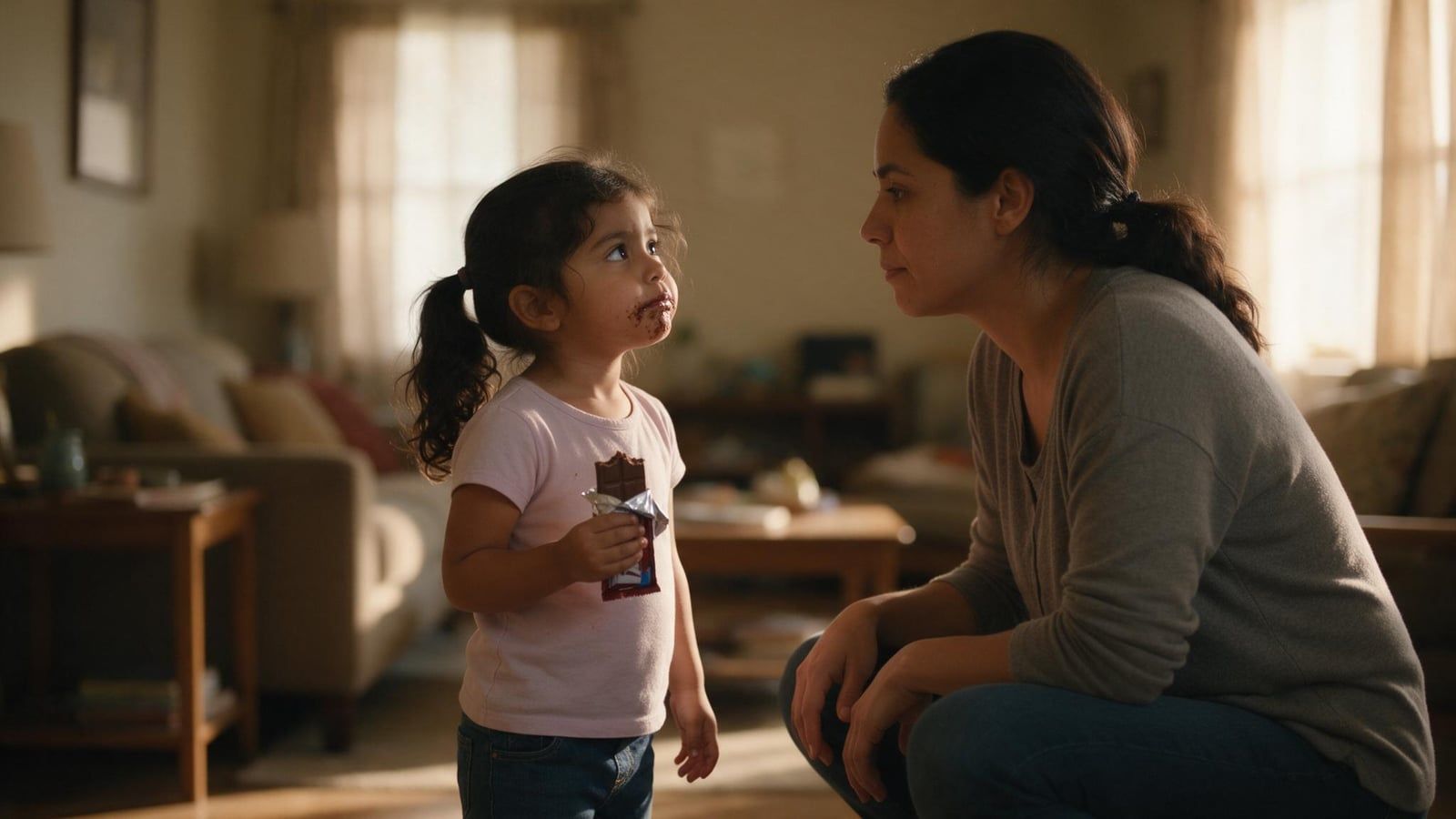
Ask more than you explain. When something has gone this way, instead of delivering the lesson (“you don't have to do what everyone else does”), ask calmly: “did you really want to?”, “how did you feel afterward?” Questions turn their attention back to what they themselves were feeling. A lecture does the opposite: it tells them what to feel instead of helping them notice for themselves.
Respect their small “nos” at home. The confidence to hold a “no” out there is trained at home. If their preferences count under your roof (which shirt they put on, what to play, when a hug is welcome and when not yet), your child takes in that what they want matters. It's hard to ask them to stand their ground with the group if day to day they learn that their opinion always bends to the adult's. Listening to their reasonable “nos” doesn't turn them into the one who runs the house; it only teaches them that their opinion counts too.
Watch the labels. In front of them, phrases like “oh, they're very much their own person” or “that one does their own thing” seem harmless, but they stick. So do the ones from the other side: “they're a pushover, everyone bosses them around.” It's more useful to describe the moment than to define the person: “today it was hard for you to say no,” rather than pinning on a label they'll drag around afterward.
Look at your own example. Children learn more from what they see than from what we tell them. If they watch you always give in to avoid friction, or change your mind depending on who's in front of you, they learn that's what you're supposed to do. You don't need to become rigid; it's enough for them to see you, every so often, calmly hold on to something you think even when it isn't the most popular view at the table.
When to take a closer look
Most of these ups and downs even out on their own as a child gains experience and confidence. Even so, it helps to know where the line is. If your child is deeply distressed at being apart from the group, if they avoid playing with other children out of fear of getting it wrong, or if the distress of not fitting in lingers and starts affecting their daily life, it's worth a conversation with the pediatrician or the school. Not to label them, but to rule out anything more going on underneath, and so someone can lend you a hand if needed.
What Herbi learns
In The Little Victory, this is exactly what happens to Herbi. Herbi is a dinosaur who doesn't like cocoa, and it turns out that all the other dinosaurs her age are wild about it: it's the tastiest thing in the forest, what gets eaten at parties, what everyone asks for. Being the only one who doesn't like it makes her feel odd, as if something were wrong with her.
At a birthday party, with the cocoa cake in front of her and everyone enjoying it, Herbi wrestles with whether to eat it to be like the others or to listen to what she feels and dare to say that she doesn't like it. Her grandfather Otto doesn't force her or correct her: he stays alongside her without judging and leaves her room to listen to herself. And then Herbi discovers two things: that she can say “I don't like this” without the world ending, and that she wasn't the only one with different tastes. It's a story made for those days when a child feels that being different is a problem, and it shows them, through Herbi, that daring to hold on to what you like is, also, a little victory.

The Little Victory
A story about staying true to your tastes
Herbi is a young dinosaur who doesn't like cocoa. This makes her feel different because all the other dinosaurs her age love everything made with cocoa beans and think it's “the best thing in the forest.”
Read this children's story in the Semillita appThere's one area where this group pressure shows up very early: “that's for girls” and “that's for boys.” Colors, toys, and games get loaded with labels far sooner than we think. In the next article we look at how to support your child in choosing what they like, without a “that's not for you” deciding for them.