

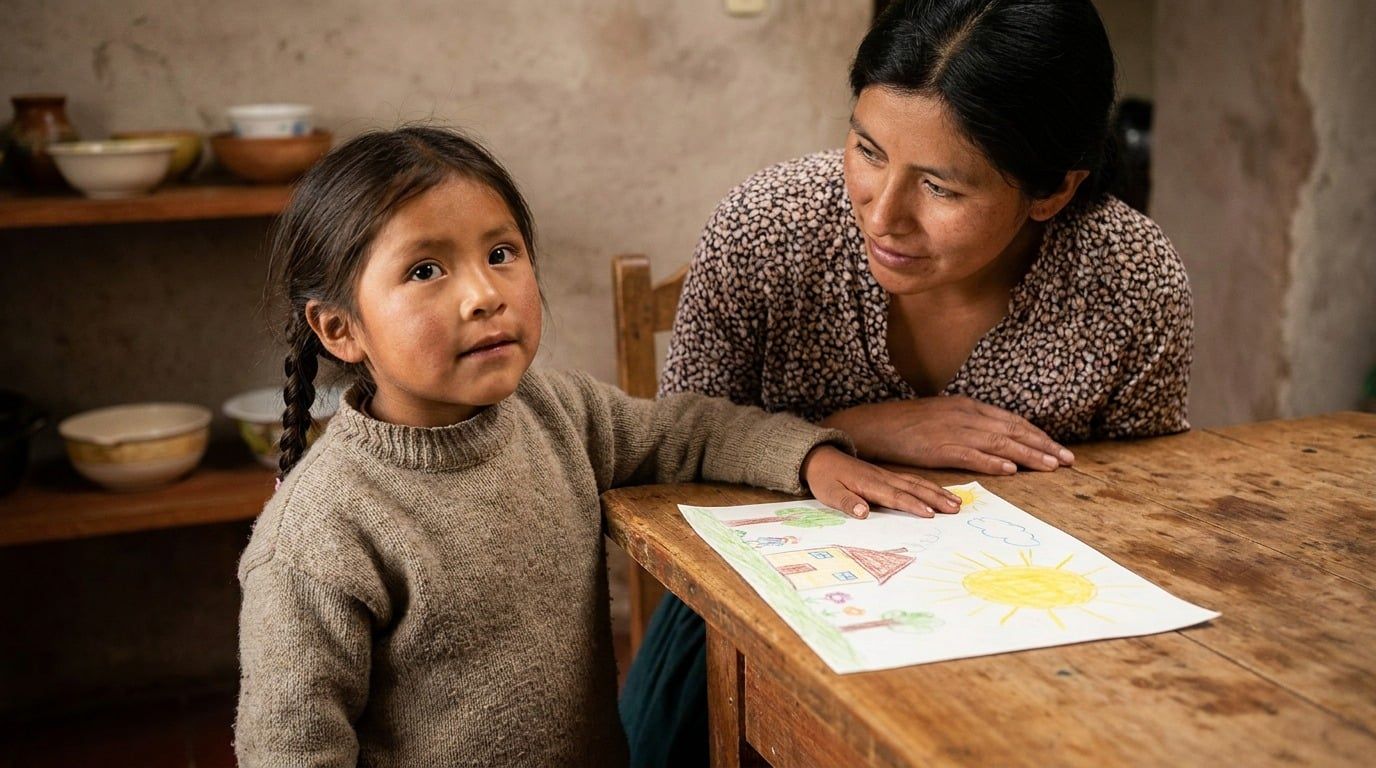
Your child shows you the drawing for the third time in ten minutes. “Do you like it?” You say yes, it's beautiful, they'll be an artist one day. They look at it, set it down on the table, and two minutes later they're back: “But do you really like it?”
A lot of the time, that second question isn't about the drawing. It's about whether you're looking at them. And turning up the volume on praise usually isn't what helps them most.
What's been measured, and in whom
Of the three studies we cite, two looked at children aged 7 to 12, and only one includes young children.
Inflated praise. It's the kind that bumps up the grade on what you've seen: “incredible,” “perfect,” “the best.” In a study that followed 120 Dutch families with children aged 7 to 11, the children of parents who praised this way ended up, over time, with lower self-esteem. Praise that matched what the child had actually done wasn't linked to anything, good or bad. The authors suggest that inflated praise sets a bar the child feels they can't live up to (Brummelman and colleagues, 2017).
Warmth. In another study, with 565 children aged 7 to 12, self-esteem went hand in hand with parental warmth. This study didn't measure praise but how parents saw their children: when that view was inflated, the children ended up more narcissistic, in the sense of “I'm better than everyone else” (Brummelman and colleagues, 2015).
Effort. This is the one with young children: 53 families with children aged 14 to 38 months. It didn't measure self-esteem but what children believe about whether they can get better. At 7 or 8, the children whose parents had praised their effort believed more strongly that you can get better. Praising what they were like (“you're so smart”) wasn't linked to thinking you can't get better (Gunderson and colleagues, 2013).
All three followed families without changing anything: they show that things go together, not that one causes the other.
What comes out of this is modest: ordinary praise had no effect in these studies, and what did go along with better self-esteem was warmth. A “that's beautiful” or a “you're an artist” said warmly doesn't seem to fall into the inflated kind. If it's something you say every day, you don't need to drop it: add what you see, which is what comes next.
What to say instead of “you're amazing”
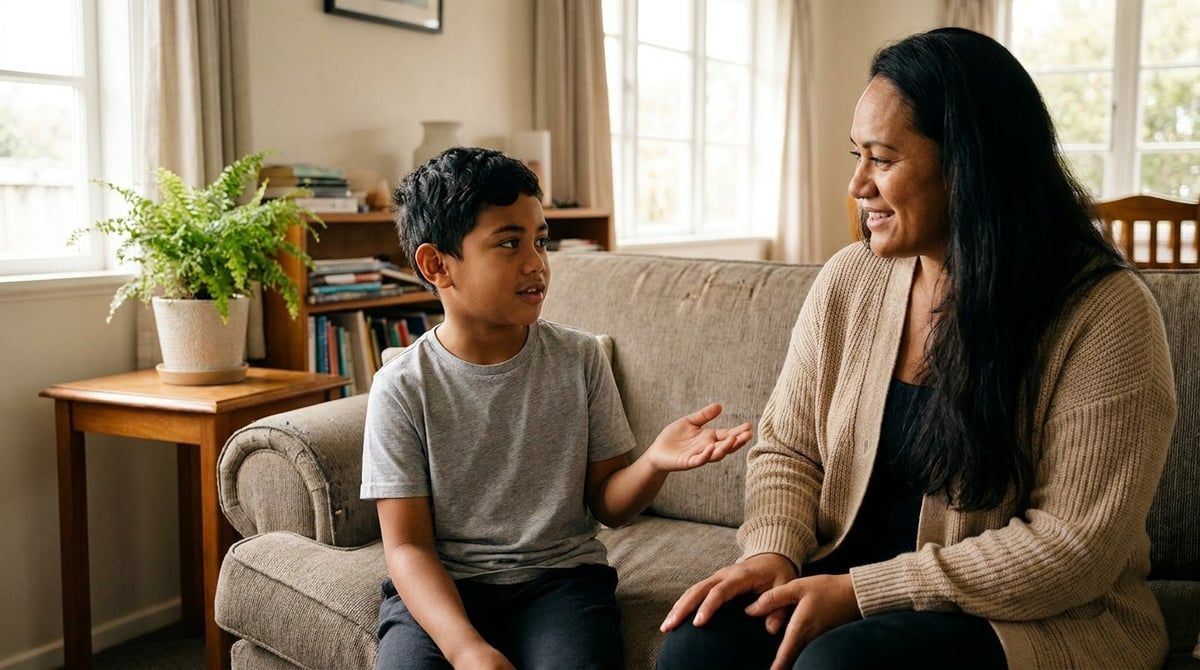
You don't have to stop praising. These ideas come from common practice, not measured results, except the third, which draws on the study with young children. It can help to hand out praise in a different way:
Say what you see. “You made the sun huge and the house tiny.” That way they can tell you really looked, which is often what they're after when they ask “Do you like it?”
Ask instead of evaluating. “How did you come up with this?” “What do you like best about it?” The idea is to leave the verdict in their hands so they gradually learn to look at their own work. For many two- and three-year-olds, the question is too big. Then it's enough to describe what you see.
Praise what's up to them. Effort, strategy, trying again: “You tried a different way when it wasn't working.”
If they keep asking, say yes and add what you see. “Yes, I like it. I love the yellow you picked for the sun.” You don't have to avoid saying yes.
Beyond the words
Warmth shows more in what you do than in what you say:
Being there while they show you something. A few minutes with your mind on what they're telling you and no phone in your hand.
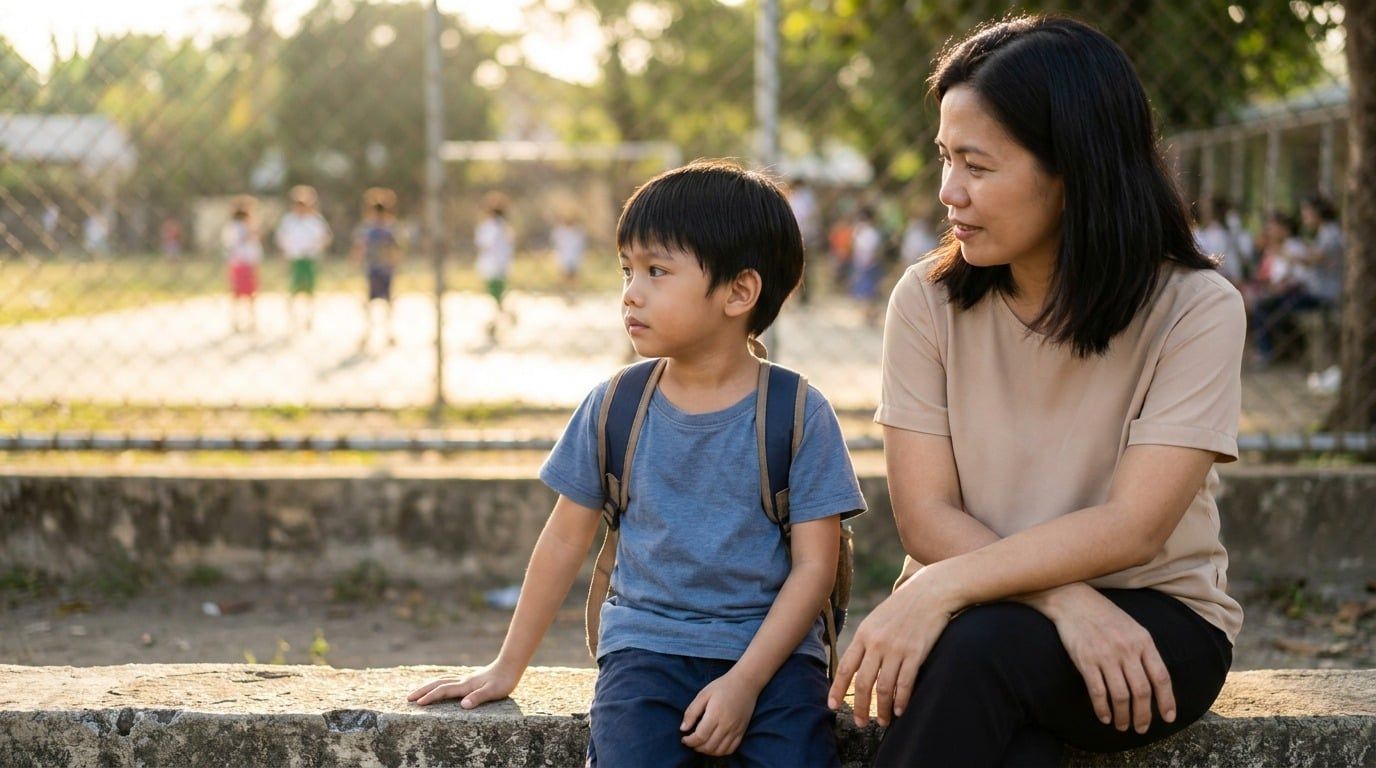
Staying even when your face changes. Nobody's face stays neutral when something goes wrong. If annoyance has crept onto your face, there's no need to hide it: “My face looked angry for a second, but I'm still here with you.” We've already written about how to support a child who's afraid to try new things.
Letting them do things that really count, even if they turn out worse than when you do them yourself: setting the table or watering the plant.
When to take a closer look
Asking for approval again and again is normal in young children, and so is saying “I'm stupid” or “I can't do anything right” when something doesn't work out and they already have the words to say it. If they keep it up almost every day for several weeks, if they avoid almost everything new, if no answer is ever enough, or if they seem sad or withdrawn most of the time, it's a good idea to talk to their pediatrician, their school, or a child psychologist. Also look at whether anything has changed at home or at school, like a new sibling or a move.
The question from the girl in town
In A Retelling of The Little Mermaid, our story for children aged 6 to 8, Marina lives in the sea and sings. She hides her voice to visit a town where no one sings. Without meaning to, she starts to hum, and a girl, instead of telling her “that's great,” asks her: “How did you do that?” Later the girl tries it herself, softly and without quite knowing how, and no one in the story tells anyone they're amazing at it.

A Retelling of The Little Mermaid
When who you are changes someone else's world
Marina lives in the sea, and when she sings, the water around her turns orange. One day, Marina decides to visit the village of Mateo, a boy who comes by in his rowboat every afternoon. In that village, no one sings. But what happens there is something Marina did not expect: someone listens to her, and asks what the thing she just heard is called.
Read this children's story in the Semillita app