


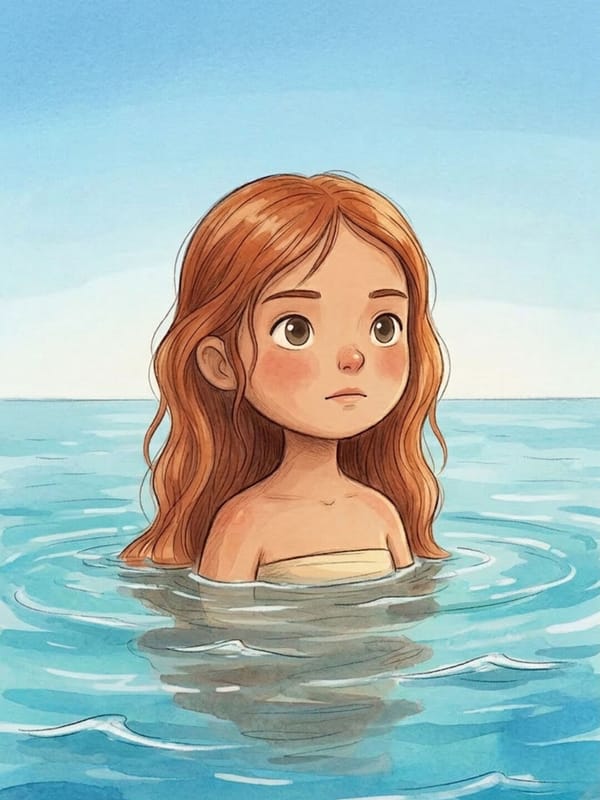
A Retelling of The Little Mermaid
When who you are changes someone else's world
Read this story in the app
Stories are only read in the mobile app. Scan the QR to open this same page on your phone.
Tap to open the story if you already have the app. Otherwise, install it first.


How the story begins
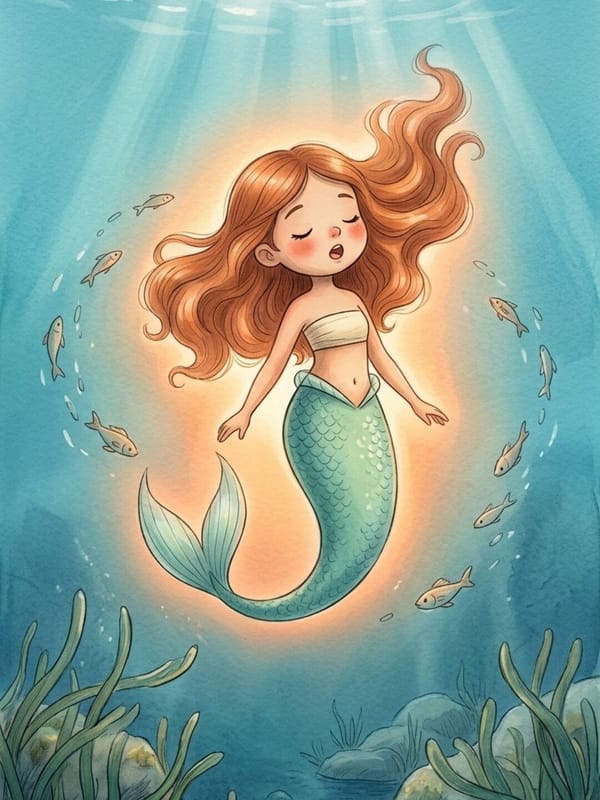
When Marina sang, the water turned orange. Not just any orange: a bright, glowing orange, as if the sun itself had spilled into the sea. The fish circled slowly. The plants swayed. Everything moved with her voice.
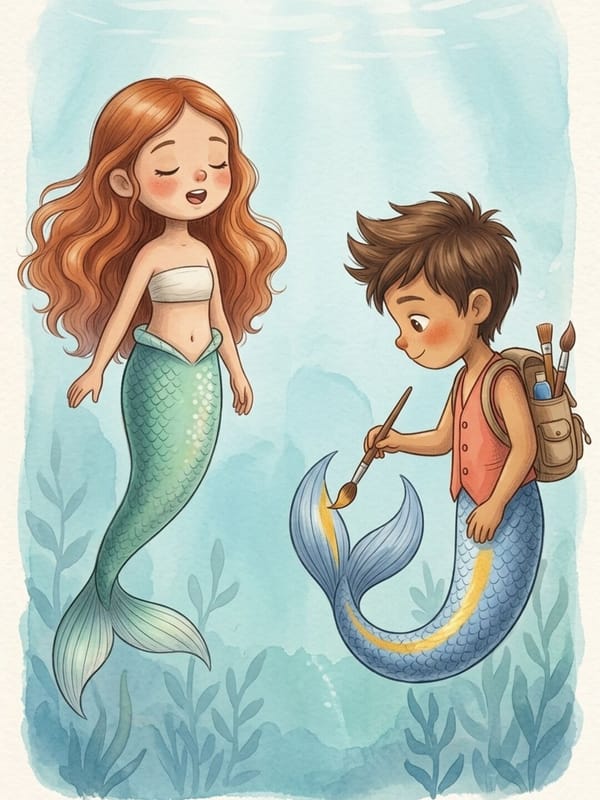
Marina sang every morning. She sang when she woke up. She sang when she gathered shells. She sang when the water was cold and when it was warm. Nearby, her friend Suno was painting his tail another color.
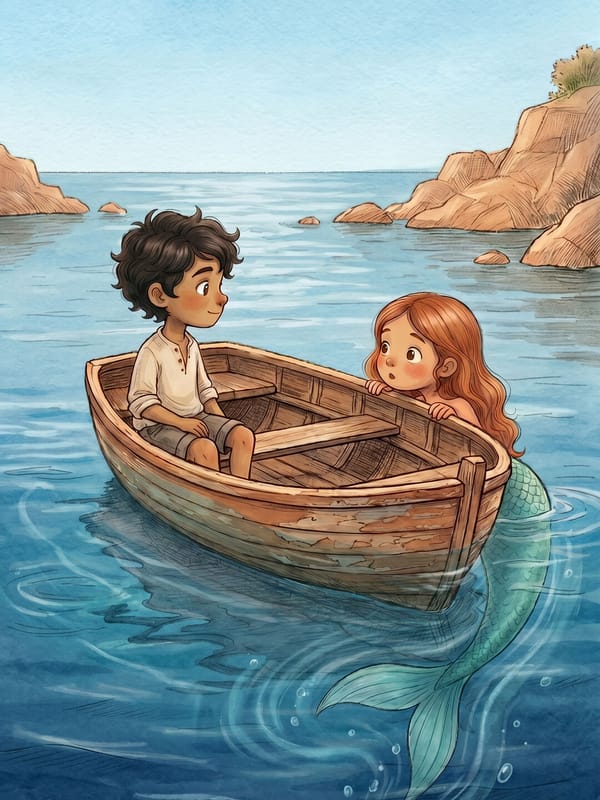
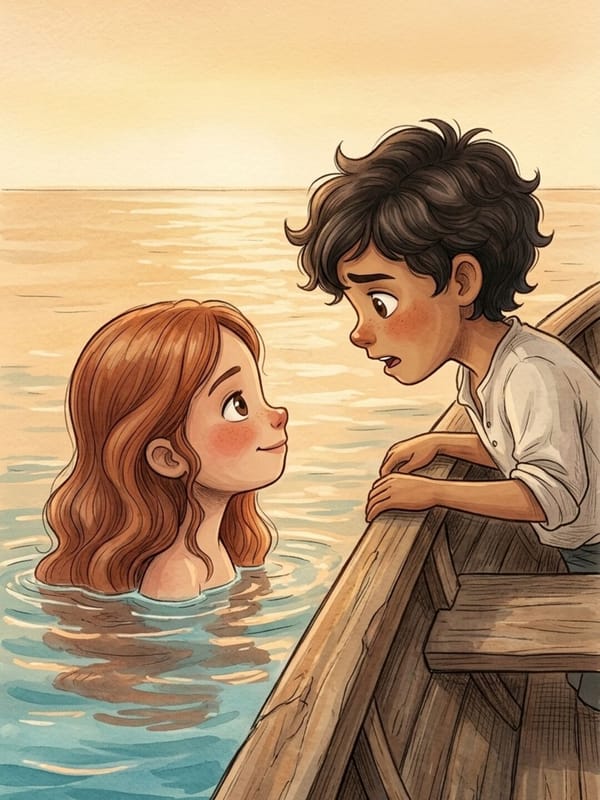
Every afternoon, a boy named Mateo came in his rowboat. He liked to listen to her sing. Marina, delighted, would seize the chance to ask him things: “What are the houses like in your town? What do you eat? What do the children play?” Mateo would answer, and Marina would listen.
Want to know what happens next? Read and listen to the full story in the free Semillita app — no ads.
Guide for families
💭 What is this story about?
Marina lives in the sea, and when she sings, the water around her turns orange. One day, Marina decides to visit the village of Mateo, a boy who comes by in his rowboat every afternoon. In that village, no one sings. But what happens there is something Marina did not expect: someone listens to her, and asks what the thing she just heard is called.
🧠 What will children learn?
- The power of naming what we feel: the village girl was already making “a sound with her mouth when she felt happy.” She just needed to know that thing had a name. Naming something that already lives inside us is an act of discovery.
- The difference between silencing and holding: Marina chooses to keep her voice tucked inside so she can step into a new world. It isn't a loss — it's her own decision, with a cost she sets herself.
- That who you are can be a gift to others: not because you set out to give it, but because sometimes it just happens — a note slips out, someone hears it, and something shifts.
- That “no one had tried it before” doesn't mean “it can't be done.” Some things are simply waiting for someone to be the first.
- The joy of learning together: the girl doesn't learn alone — she brings others. The learning that matters is the kind we share.
🤝 How to continue this conversation?
- “Is there something you do that changes how you feel? Do you know what it's called?”
- “Have you ever felt something inside that you didn't know how to name?”
- “What do you think the girl felt when she found out the thing she did had a name?”
- “Do you think there's something in your class or at home that 'no one has tried before'?”
🎯 Educational approach
The pedagogical heart of this story is the page where Marina says, “It's not magic. It's called singing.” The village girl already had the experience — she made sounds when she felt happy — but she didn't have the word. That moment of naming doesn't create something new: it reveals something already there. For educators and families, the story opens a valuable conversation about emotional vocabulary: how many things do children feel that still have no name in their mouths? Naming a feeling or an ability isn't only a matter of language — it's the first step toward being able to choose what to do with it. The story also invites reflection, through Mateo, on the rules we keep not because they're necessary but because no one has questioned them yet.
More stories you might like


