Wolfie sitting on the ground at the park with his ears drooping, surrounded by Teddy, Fanti, and Pom-Pom approaching with grass and dirt in their hands, the little wooden playhouse under the slide in the background.

An Adaptation of The Three Little Pigs

The House of Calm · Where huffing and puffing doesn't scare

🌱 Read on Semillita
Download on the App StoreGet it on Google Play
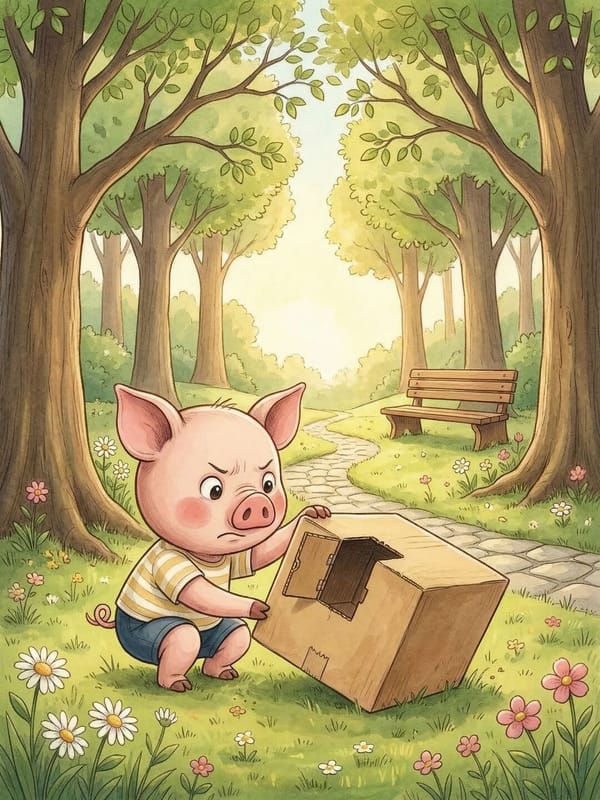
Illustration from An Adaptation of The Three Little Pigs — 1
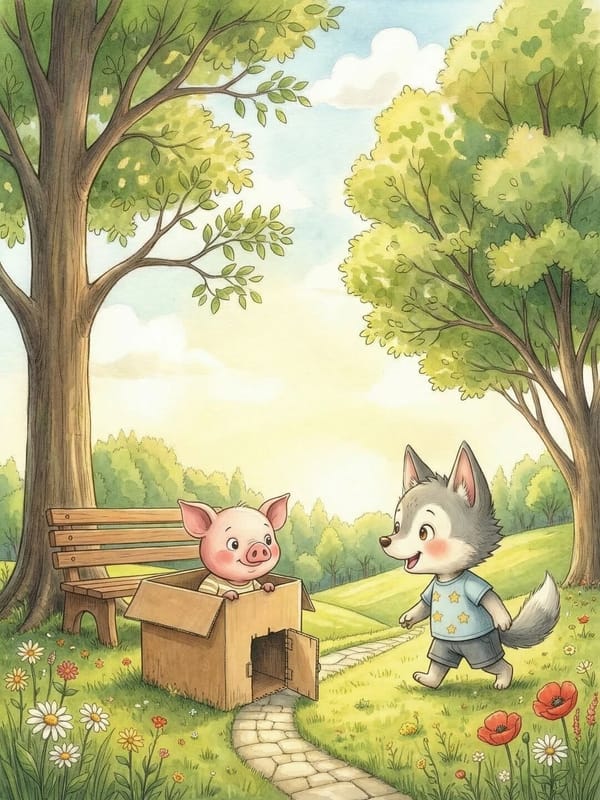
Illustration from An Adaptation of The Three Little Pigs — 2
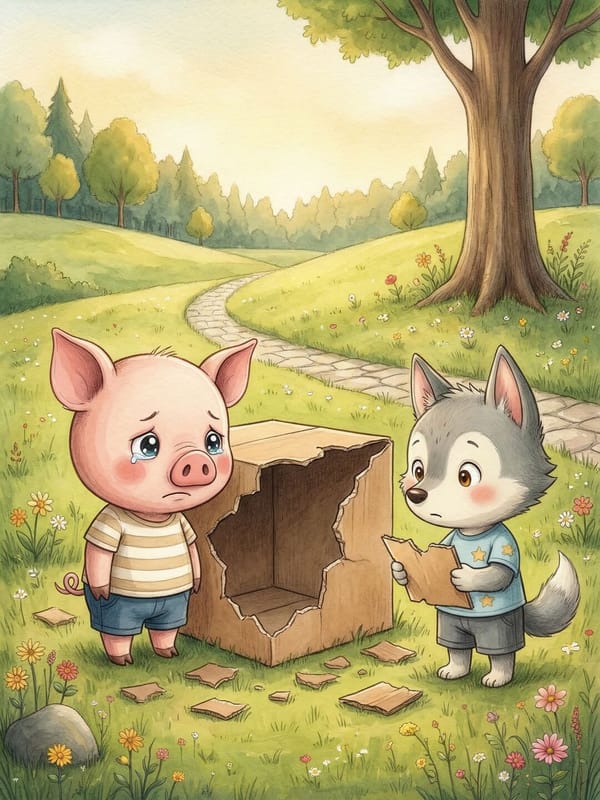
Illustration from An Adaptation of The Three Little Pigs — 3
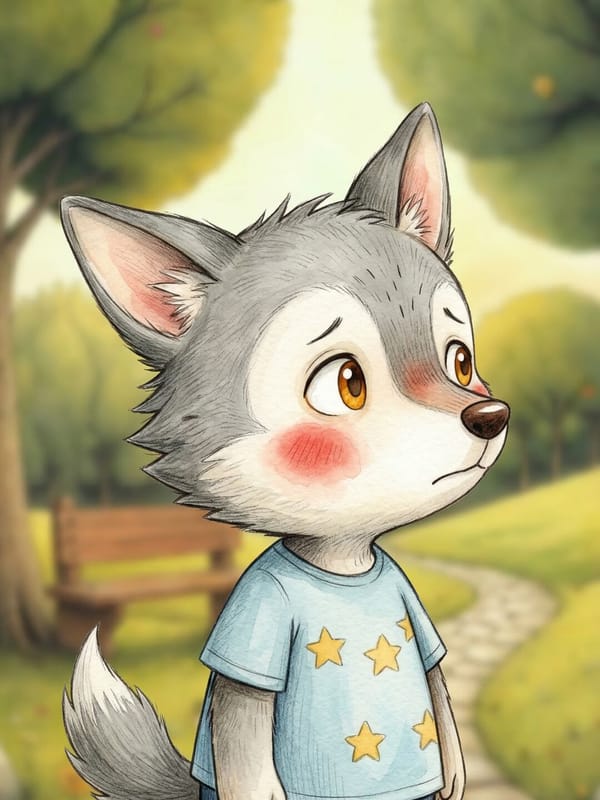
Illustration from An Adaptation of The Three Little Pigs — 4
Illustration from An Adaptation of The Three Little Pigs — 5

Guide for families

Content warnings

This story shows a character who destroys others' play out of frustration and cries. It may be helpful to read it at a calm moment when you can talk together afterwards.

🎯 Educator Guide: “An Adaptation of The Three Little Pigs”

💭 What is this story about?

Wolfie arrives at the park eager to play. The other children are so absorbed in their own games that they don't notice him. When his frustration gets too big, Wolfie blows — and things break. But when he finally cries, something changes: the others come closer. It turns out everyone was, in some way, alone.

🧠 What will children learn?

  • Understanding loneliness teaches us that it sometimes disguises itself as anger, hiding a deep wish to be seen and to belong.
  • Expressing empathy demonstrates that words are not always needed: a quiet gesture can say more than any sentence.
  • Building connections shows us that support can arrive when least expected, and not always in the way we ask for it.
  • Validating tears helps us understand that crying is not a weakness, but the real emotion hiding beneath the frustration.
  • The value of shared play reminds us that friendships grow from small acts of kindness, not big speeches.

🤝 How to continue this conversation?

  • “Have you ever wanted to play with someone and didn't know how to ask?”
  • “When you're alone at recess, what does your body do? How do you feel?”
  • “Can you remember a time when you did something you didn't mean to because you were really sad inside?”
  • “Is there a way to invite someone to play without using words?”

🎯 Educational approach

This story doesn't teach an emotional regulation technique — it suggests that anger is often not the problem, but the signal of a deeper problem. When we're with a child who broke something or reacted roughly, this story opens a different question: what did they need that they couldn't ask for? The shared play at the end isn't an easy happy ending — it's a beautiful image of what happens when someone reads that need in silence.

🌱 Read on Semillita

More stories you might like

Marina and the Color of the Sea
Little Red Riding Hood Adaptation
Nutzie and the Forest Sounds