⚠️ Content warnings
A brief mental image of the protagonist “breathing fire out of his mouth, very angry” (page 12) — clearly located inside his head, with no real harm in the scene, intentional for validating intrusive thoughts without generating guilt. Appropriate for ages 4–6 with adult company.
💭 What is this story about?
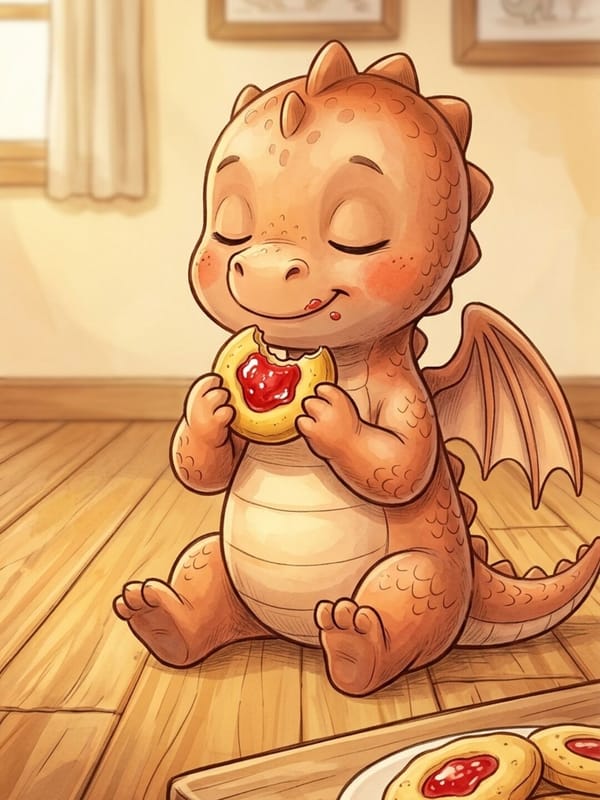
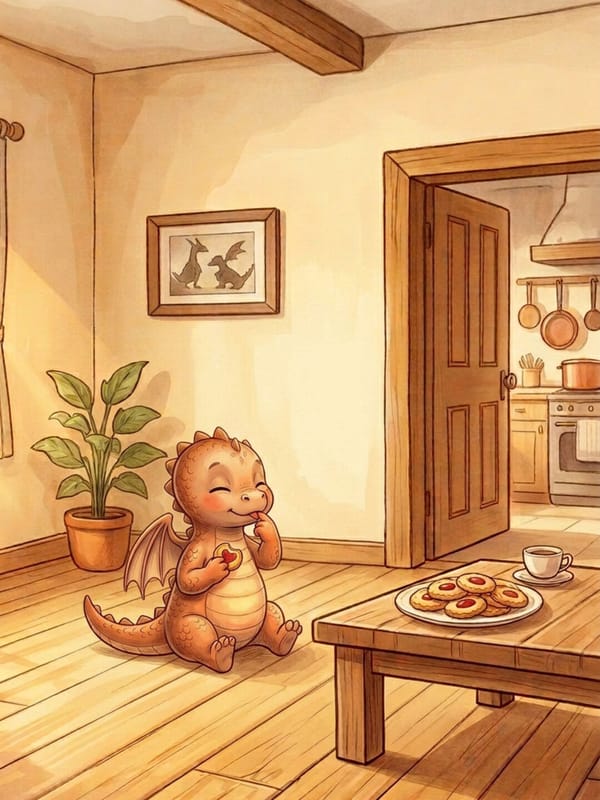
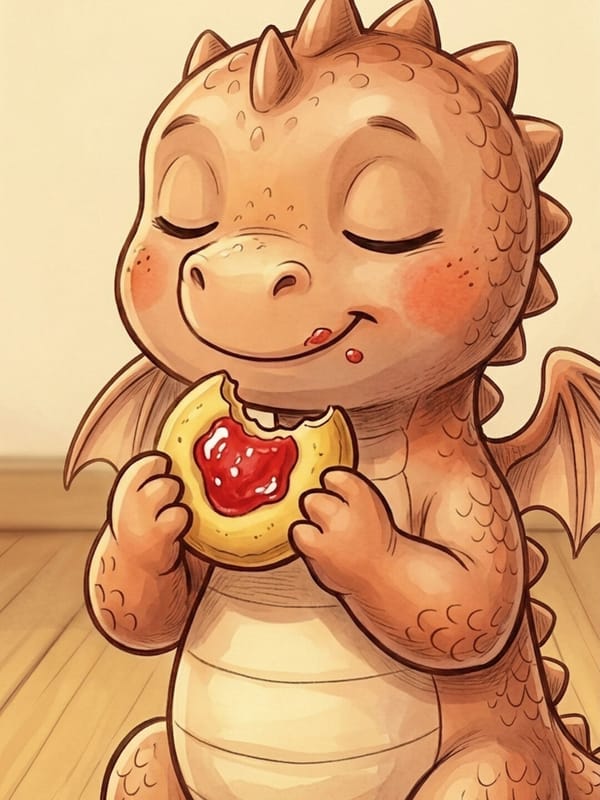
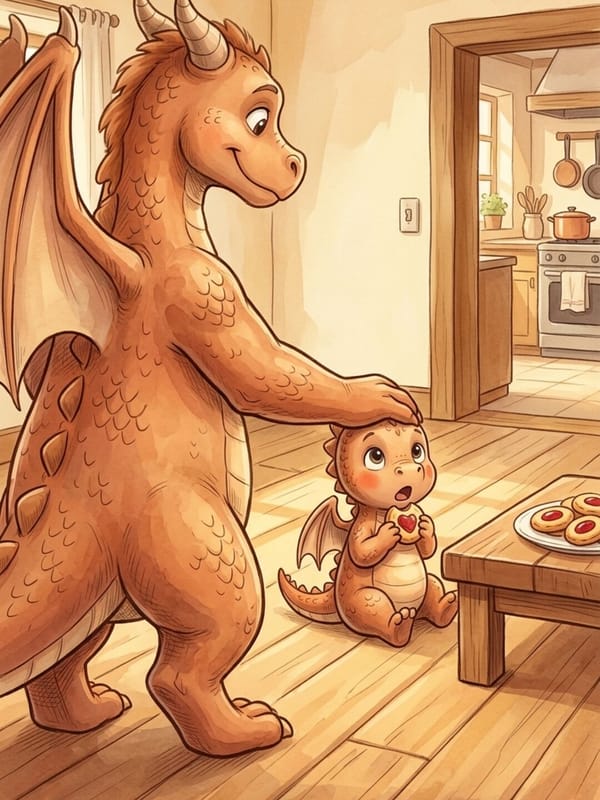
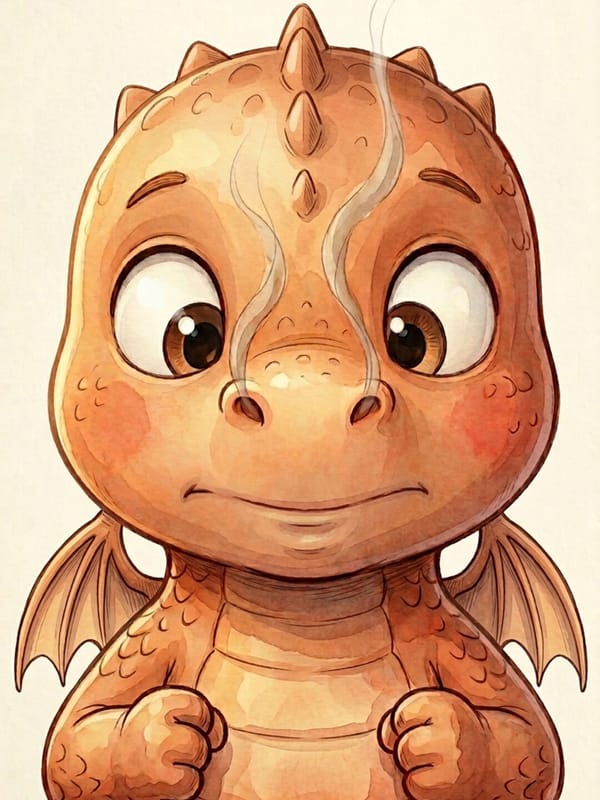
It's Milo's favorite afternoon — a little dragon enjoying his beloved jam-filled cookies. When his dad tells him he's had enough, Milo feels something new inside: the warm, quiet little sun he always carries in his belly starts to heat up in a different way, grows big, and smoke begins coming out of his nose without permission. He decides that if he doesn't let the smoke out, there won't be a problem.
🧠 What will children learn?
- Anger has a body: hands that clench, heat that rises, smoke that escapes on its own. Recognizing those signals before having the word for them is the first step toward being able to do something with them.
- That anger is your own energy in a different state, not something foreign invading you. The little sun Milo carries inside when he's calm and the fire that burns when he's angry are the same thing — only the phase changes.
- That holding in what we feel makes it bigger: Milo's smoke finds every possible door when he tries to seal it in. Emotions don't switch off by being ignored — they look for a way out.
- That imagining is not doing: sometimes, when we're very angry, a very intense image of our rage passes through our head — like roaring fire or exploding. That image is not something bad about us — it goes away if we don't follow it.
- That adults can be present without teaching: Grandma doesn't explain anything to Milo. She shows him she knows it too, and stays beside him while he figures out what to do with his body.
- That calm is learned the way a body learns to walk: stamping the floor firmly, breathing out slowly. They are not tricks — they are things the body remembers how to do when someone shows them.
- That the volcano doesn't disappear — it falls asleep: anger comes back, because it's part of us. What changes is that now we know what to do when it wakes up.
🤝 How to continue this conversation?
- “When you get really angry, where do you feel it in your body? In your belly, in your hands, in your throat?”
- “Have you ever tried to keep something you were feeling from showing? What happened?”
- “If your anger were something you could see, what color would it be? What size?”
- “Is there someone in your life who, when you're feeling really bad, stays with you without telling you what to do?”
🎯 Educational focus
This story works with a principle that the psychology of emotional development has confirmed in recent years: in children from four to six years old, body awareness arrives before emotional vocabulary. Before being able to say “I am angry,” a child feels heat, pressure, agitation in the body. If we adults jump straight to words (“calm down,” “don't be angry”), we miss the place where regulation actually happens: the body. Milo's grandma doesn't teach a technique — she stamps next to him. That difference is the pedagogical heart of the story. An important clarification for adult readers: the gesture of stamping the floor firmly is against the FLOOR — not against objects or people. It's a grounding technique (body anchoring through pressure in the feet) recognized in clinical practice with children: it connects the body with the place where you are and returns a sense of control. It is not aggressive discharge, it is not “hitting something,” it does not rehearse violence. The distinction is crucial — when accompanying a child, it helps to verbally reinforce that we stamp against the floor, not against things or people, so the reading stays clean. For families and educators, the story offers two very concrete images (the volcano that rises and falls, the smoke that comes out in an orderly line) and two actions immediately imitable (stamping the floor firmly, breathing out slowly) that can be integrated into daily life without need of a manual.