


Thank You for Today
A Bedtime Story
Read this story in the app
Stories are only read in the mobile app. Scan the QR to open this same page on your phone.
Tap to open the story if you already have the app. Otherwise, install it first.


How the story begins
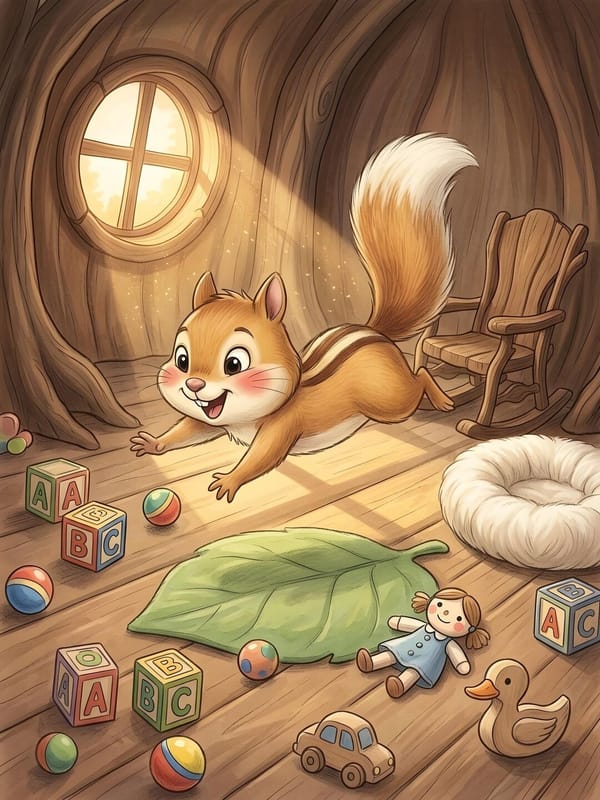
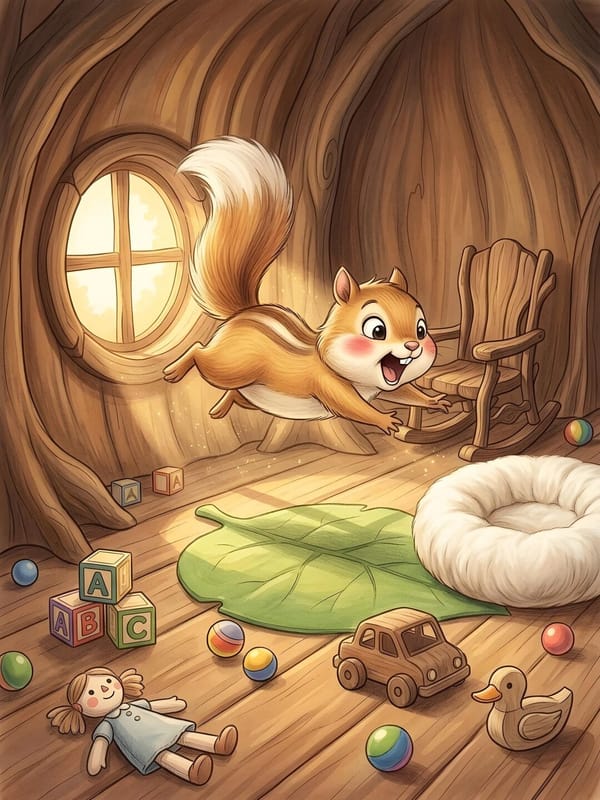
Acorn scampered around his room in the hollow tree. His little paws couldn't stay still.
He went from the window to the bed. From the bed to the large green rug.
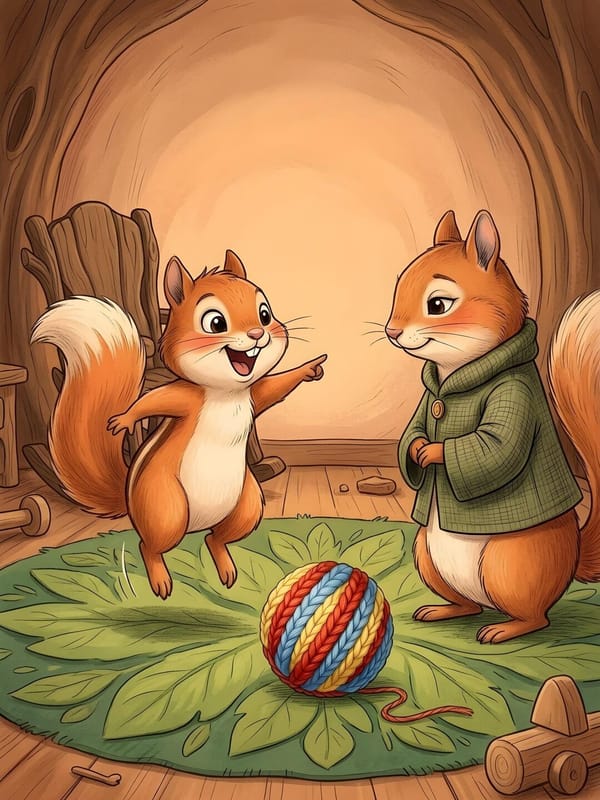
“I can't sleep, Grandma!” said Acorn. “My yarn ball wants to roll faster. And the rocking chair is bored all alone.”
Want to know what happens next? Read and listen to the full story in the free Semillita app — no ads.


Guide for families
💭 What is this story about?
Acorn is a little squirrel bursting with energy who, at bedtime, feels that his toys still need him to keep playing. Instead of telling him to stop, Grandma Squirrel suggests a special agreement: say goodnight to each toy, remembering all the fun they had together during the day. Little by little, Acorn discovers that taking care of his toys is also a way of taking care of himself.
🧠 What does this story work on?
- Emotional regulation: the story gently guides children through the transition from active energy to nighttime calm.
- Validating play: the importance of what happened during the day is acknowledged without it becoming a reason to stay awake.
- Cognitive closure: saying goodbye to the day’s objects and routines helps prepare the mind for sleep.
- Emotional recognition: Acorn experiences how his presence and company are meaningful to those around him.
- Co-regulation: shared breathing with Grandma as a practical tool to slow down the nervous system.
🤝 Things to talk about
- “Of all the toys you played with today, which one would you like to say goodnight to?”
- “What was the most fun thing we did together this afternoon?”
- “What does your body feel like when you breathe really, really slowly, like Acorn and his grandma?”
- “What would you tell your pillow about how your day went?”
🎯 Educational focus
The story reframes bedtime resistance as an active role of caring: Acorn doesn’t “have to” sleep, but rather “takes care of” his world before resting. This reframing draws on affective episodic memory—recalling specific moments from the day—to naturally slow things down. The ending introduces co-regulated breathing as a practical tool that caregivers and children can use together every night. Before turning off the light, try a “goodnight round”: your child picks a toy or something from their day and says something kind they remember about it. This one-to-two-minute ritual gives bedtime a clear, predictable starting point. Practice Acorn and Grandma’s breathing together: breathe in counting to three, breathe out counting to five. Doing it side by side—your chest and theirs rising and falling at the same time—activates co-regulation and strengthens the attachment bond at the moment of nighttime separation.
More stories you might like


