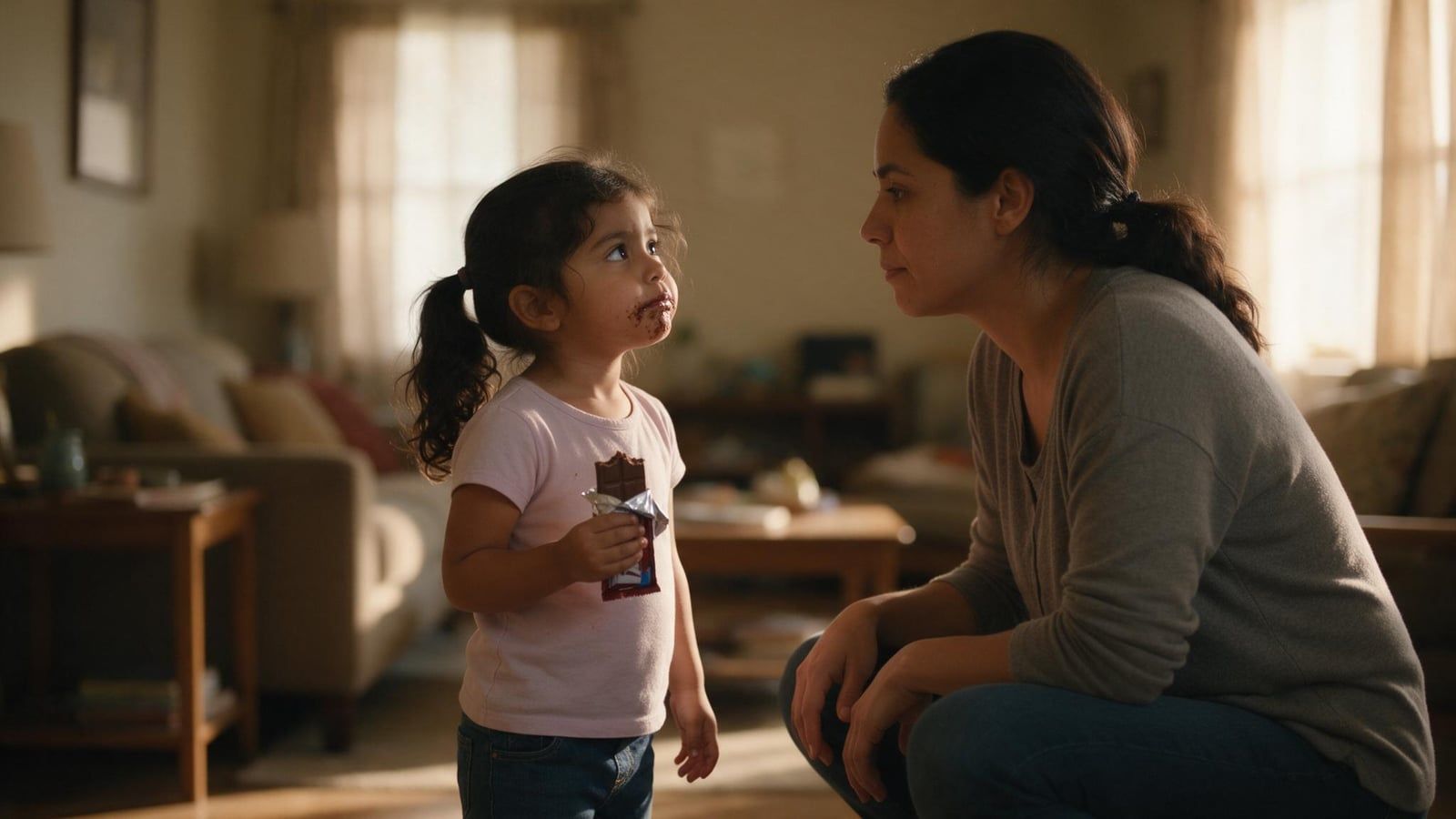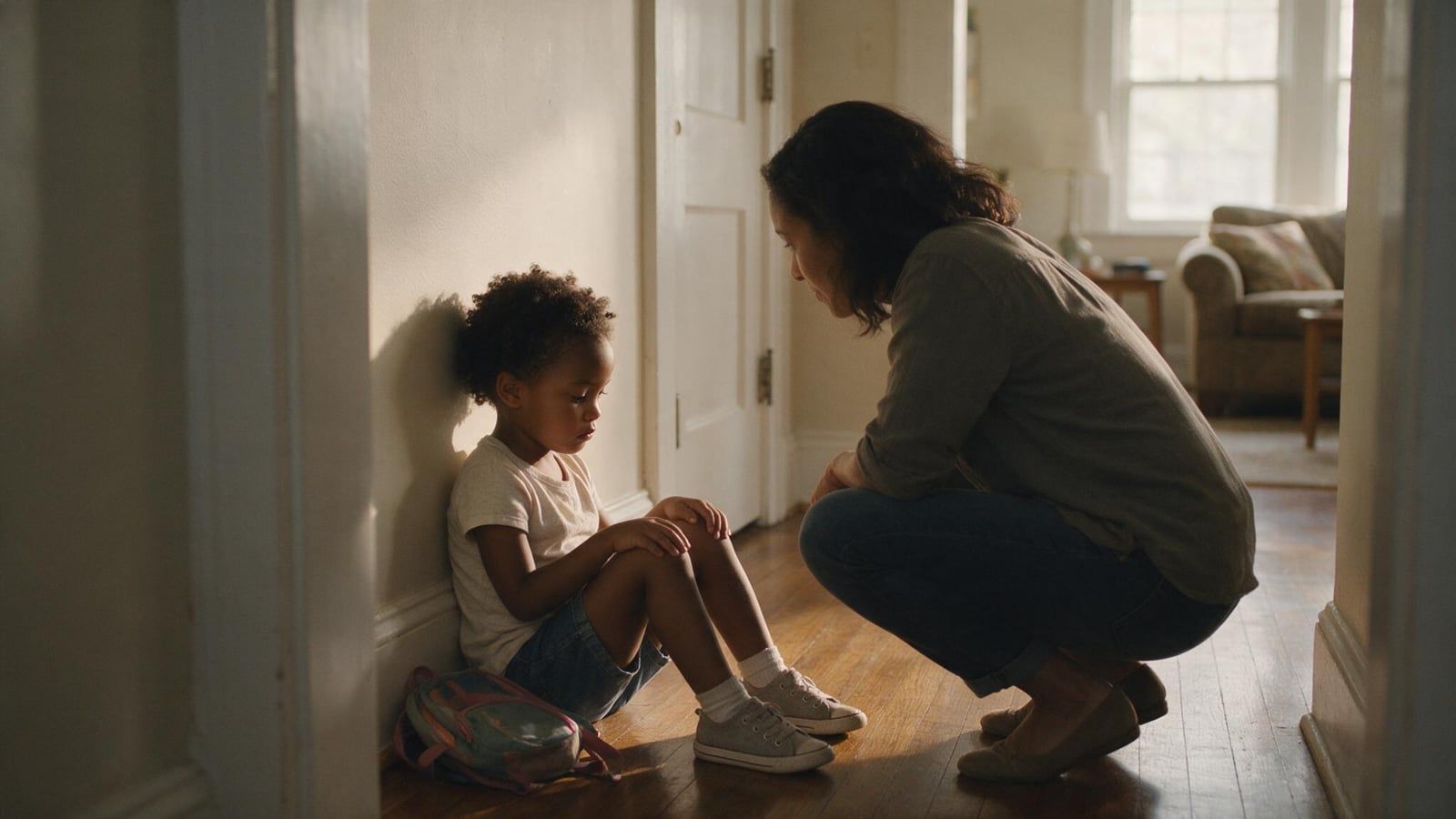


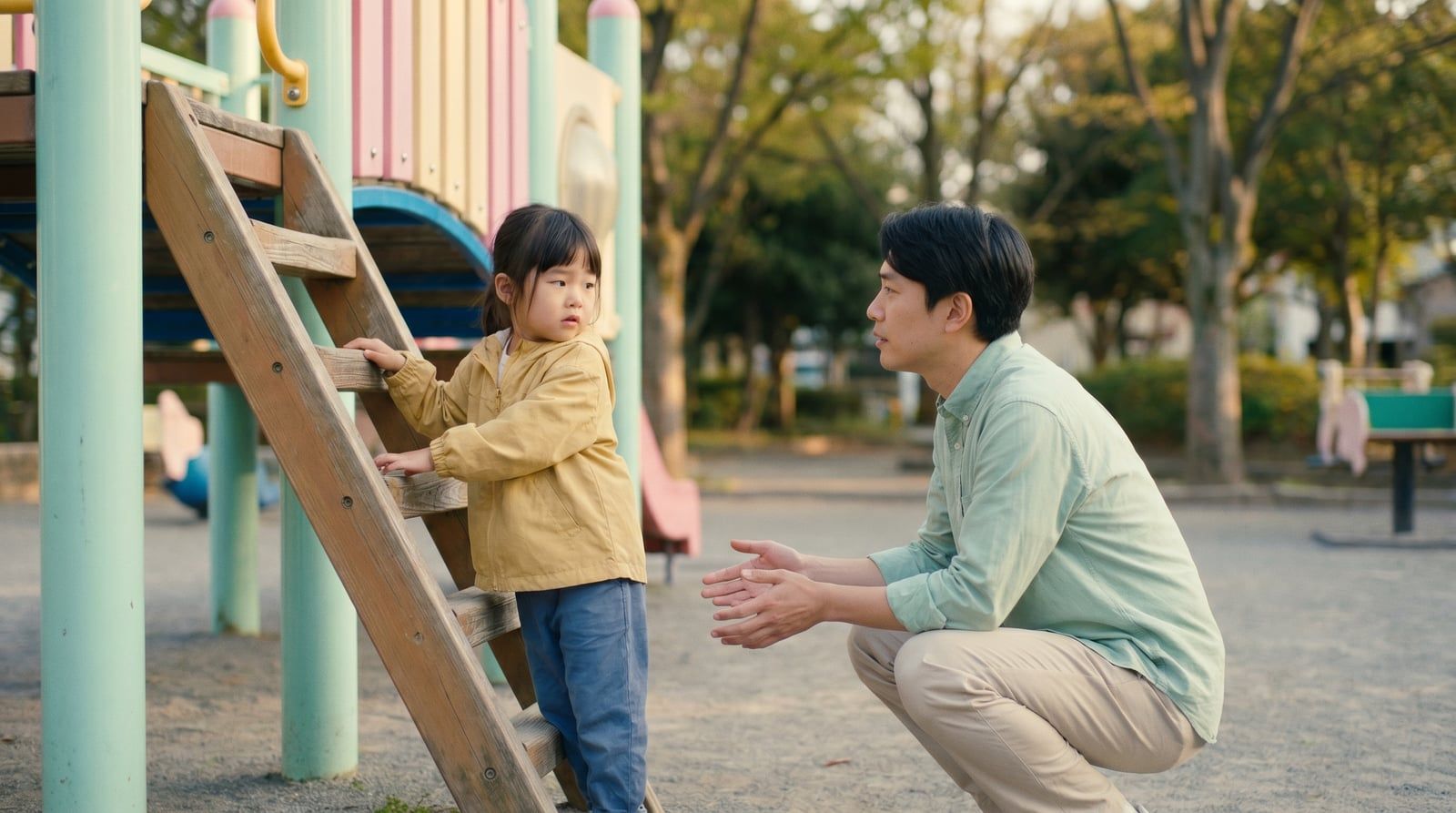
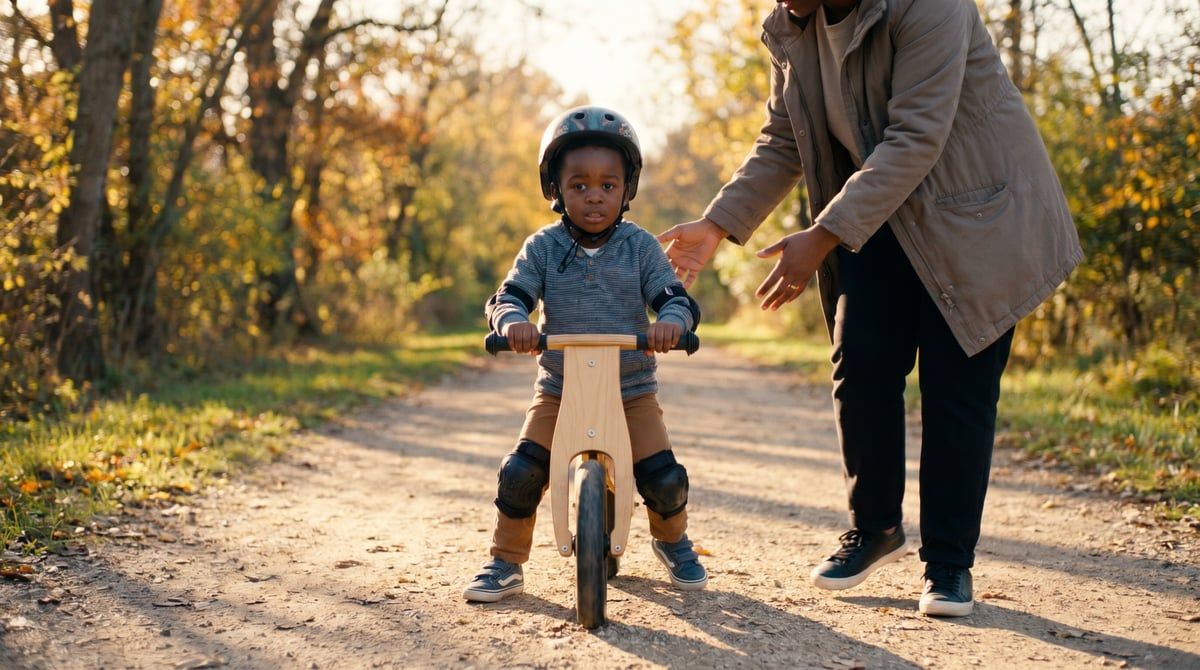
You're at the park and every child is throwing themselves down the slide except yours, who hangs back and watches. You cheer them on, tell them it's super easy, that you're waiting right at the bottom. Nothing. They cling to your leg. And when they finally make up their mind half an hour later and go down once, it turns out they want to do it twenty times in a row.
That scene, whether it's the slide or the bike, the pool or saying hello to another child, is one of the ones that most baffle families. It feels as if your child is lacking courage, or as if something's wrong. Almost always it's neither: the thing is that the confidence to try new things doesn't come ready-made. It gets built, and at this age it's still under construction.
Why the new is so hard at this age
For a child aged 2 to 6, almost everything is a first. They've been in the world such a short time that they don't yet have a big file of "I tried it and it went fine" to reach for when something unfamiliar shows up. Without that track record, the brain does what any brain does faced with the unknown: it goes on alert and puts on the brakes.
That caution has a purpose: it's the same system that stops a small child from flinging themselves off any height without thinking. The trouble is that this brake can't yet tell a real danger from a perfectly safe slide. It reacts the same way to both, which is why we sometimes see enormous fear over something that looks tiny to us.
At the same time, at this age your child starts to compare. They notice the others going down the slide or getting into the water without a second thought, and that comparison can add shame to the doubt. It's not only falling they fear: they fear being shown up. Knowing there can be those two layers under the "I don't want to" helps you not treat it as a simple whim.
The difference between pushing and accompanying
When a child freezes, the most common reaction is to try to jolt them out of it with encouragement: "don't be a scaredy-cat", "look how well your cousin does it", "come on, it's nothing". It comes from love and from wanting them to have fun. But pressure, however loving, tends to achieve the opposite of what it's after.
A child pushed into something before they're ready learns two things at once, and neither is good: that the new thing was so dangerous it had to be forced, and that their pace doesn't count. Next time they'll resist a little more. Avoidance, when it's reinforced like this, tends to grow.
Accompanying is something else. It's staying close without solving it for them, holding the discomfort of their taking a while, and trusting them to take the step when the step is theirs. It costs more than pushing, because it makes us sit with our own impatience while the child gathers their courage. But it's what really builds security.
What really helps
The goal isn't for your child to lose the fear all at once, but to learn to move with it on their back. Some things that help:
Put the fear into words without dramatizing it. Naming what's happening makes it more manageable: "going down feels a bit scary, that's normal, it's the first time". Acknowledging the emotion doesn't make it bigger; it takes the edge of shame off it and shows them you can handle it without getting scared yourself.
Break the new thing into tiny steps. Almost nothing has to be done whole on the first go. Before going down the slide you can climb the ladder, sit at the top, look over the edge, come down holding your hand and, another day, let go. Every step they do take is proof, filed away, that getting close to the new thing didn't hurt them. That advance by small approximations is the sturdiest route to security.
Let them set the pace. You can offer, suggest, invite. What doesn't help is setting the timetable yourself. "Whenever you want, I'm right here" gives them back control, and the sense of control is exactly what fear takes away. Sometimes they'll need to watch the scene ten times from the outside before joining in, and that watching is part of the learning too.
Recognize the try, not just the win. It's easy to celebrate when they finally go down. Just as important is valuing that they tried, even if they stopped halfway: "you climbed all the way up, that's already a lot". If only the result counts, they'll learn to attempt only what's already in the bag; if the daring counts, they'll keep trying.
Watch the labels. Saying in front of them "oh, they're very shy" or "this one's the fearful one" seems harmless, but children keep those phrases and end up behaving like the label we've hung on them. It's more useful to describe the moment than to define the person: "they're finding it hard to get going today", rather than "they're a timid one".
The role of the adult who cheers them on
There's a nuance that makes the difference. Accompanying means being close as a warm presence that trusts them out loud, without staying silent and neutral waiting for them to jump in alone, and without doing the work for them. A "I think you can, and I'm here just in case" carries far more weight than a "come on, it's easy".
That figure at their side, who neither rescues nor abandons, is the one that lets them stretch a little beyond what they'd do on their own. Over time, that outside voice that trusted in them becomes the inside voice they use to encourage themselves. That's how self-confidence gets built: borrowed first, their own later.
When to look more closely
Most of these freezes loosen on their own as the child gathers experiences and builds up their repertoire. It's still worth knowing where the line is. If the fear of the new is so intense and so general that it stops them enjoying anything, if they avoid almost any unfamiliar situation for a long time, if it brings on distress that doesn't ease with your support or interferes with their day to day, it's worth a conversation with the pediatrician. Not to label them, but to rule things out and to have someone alongside you if needed. Accompanying a fear always starts with acknowledging it, just as we saw with fear of the dark.
What Alina discovers
In The Brave Butterfly, Alina has just transformed and is showing off beautiful new wings. The trouble is she's afraid to use them: looking down from the branch and thinking about flying for the first time leaves her frozen. Her friend Zumbi, a patient bumblebee, doesn't push her off the edge or tell her to be brave already. He stays by her side and helps her try it in pieces, one small flutter at a time, celebrating every bit of progress.
Little by little Alina discovers that feeling afraid of something new is fine, and that being brave isn't about stopping being afraid, but about daring to try even while you feel it. It's a story made for exactly those days when starting something gives a little wobble of nerves: it validates the child's doubt and lets them see, through Alina, that confidence is earned step by step.

The Brave Butterfly
Discovering confidence step by step
Alina is a young butterfly who has just transformed and has beautiful new wings, but she feels afraid to use them for the first time. With the help of her friend Zumbi, a wise and patient bumblebee, Alina discovers that confidence is built step by step and that daring to try is the first great flight.
Read this children's story in the Semillita appOnce your child starts daring on their own, another similar challenge soon appears: holding their ground when the whole group pulls the other way. In the next article we talk about peer pressure and how to help a child stay true to themselves even when the others think differently.