


The Brave Butterfly
Discovering confidence step by step
Read this story in the app
Stories are only read in the mobile app. Scan the QR to open this same page on your phone.
Tap to open the story if you already have the app. Otherwise, install it first.


How the story begins
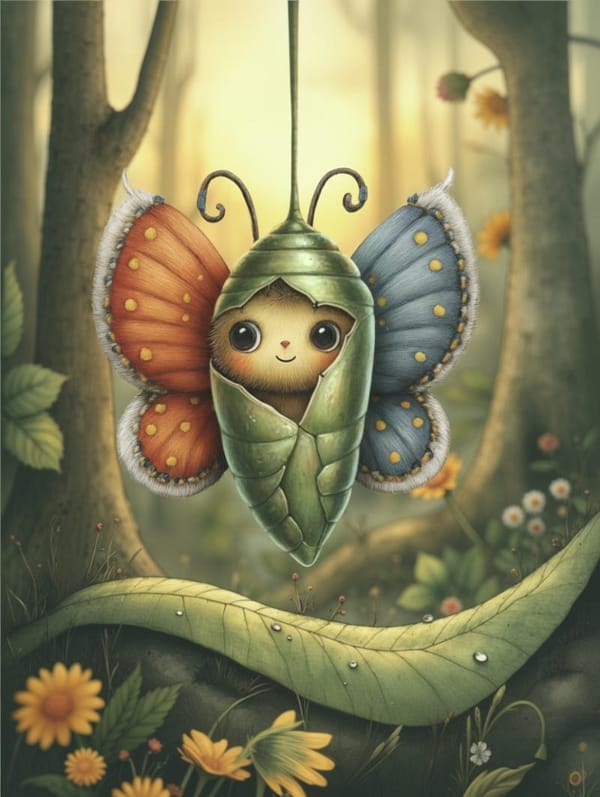
Alina opened her eyes inside her chrysalis. Everything was dark and narrow. She felt something different. Her body had changed. It was bigger, lighter. “What happened to me?” she thought. Carefully, she started pushing the walls of her little home.
The dawn light came in little by little. Alina pushed harder. Crack! The chrysalis opened. Fresh air touched her body for the first time. Alina came out slowly, feeling the warm sun on her. Everything seemed new and bright.
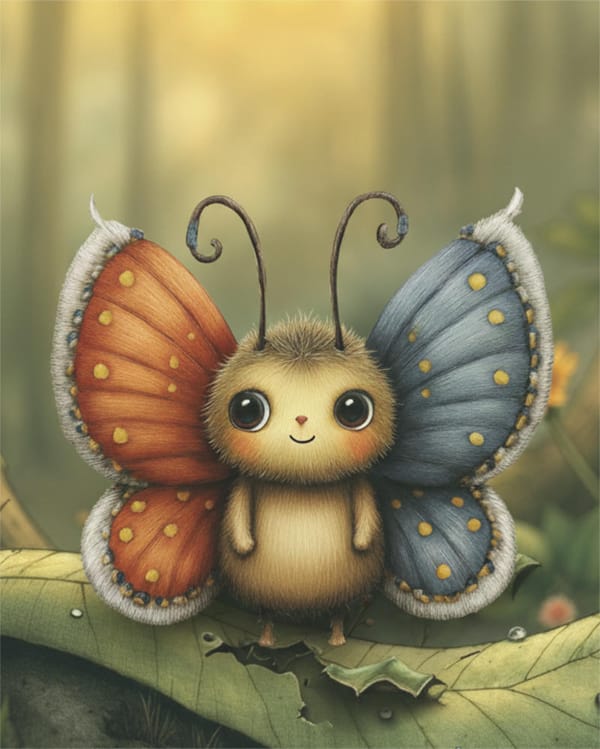
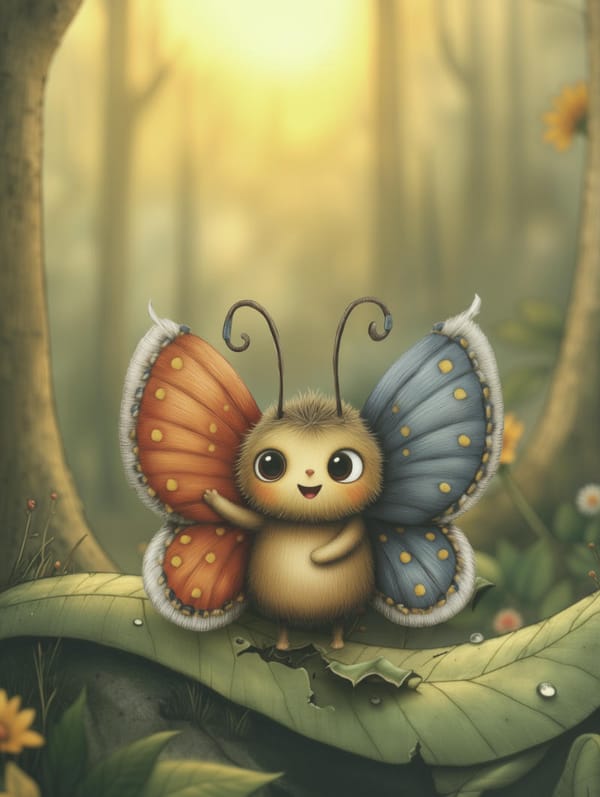
When Alina looked at herself, she was speechless. She had wings. Huge, beautiful wings! They were orange like the sunrise, blue like the sky, with little yellow spots that shone like tiny suns. “Are these mine?” she whispered in wonder.
Want to know what happens next? Read and listen to the full story in the free Semillita app — no ads.

Guide for families
💭 What is this story about?
Alina is a young butterfly who has just transformed and has beautiful new wings, but she feels afraid to use them for the first time. With the help of her friend Zumbi, a wise and patient bumblebee, Alina discovers that confidence is built step by step and that daring to try is the first great flight.
🧠 What will children learn?
- Progressive self-confidence: That it's okay to feel afraid of something new, and that confidence is built with small steps, not all at once.
- Transformation as growth: That changing and growing is natural, and that each new stage brings new abilities to discover.
- Emotional courage: That being brave doesn't mean not feeling afraid, but daring to try even when you feel scared.
- Value of support: That asking for help and receiving encouragement from others is important when we're learning something new.
- Celebrating small achievements: That each small step forward deserves to be recognized and celebrated on the learning journey.
- Accepting mistakes: That making mistakes or falling is a normal part of learning, not a failure.
🤝 How to continue this conversation?
- “How do you think Alina felt when she looked at her new wings? Have you ever felt something similar?”
- “What new thing have you learned recently? Was it easy or difficult at first?”
- “When Alina was afraid to fly, what helped her? Who helps you when you try something new?”
- “Do you remember the first time you did something that now seems easy? (swimming, riding a bike, tying your shoes...)”
- “If you had a friend who was afraid to try something new, what would you tell them?”
- “Is there something you want to learn to do but that scares you a little? How could we start together?”
- “What part of growing up seems most exciting to you? Is there any part that makes you nervous?”
- “Just like Alina has wings, what 'superpowers' do you have that are growing every day?”
🎯 Educational approach
This story uses the universal metaphor of butterfly metamorphosis to address one of the most important emotional challenges of early childhood: developing self-confidence in the face of the unknown. Through Alina, children can project their own fears about new experiences (starting school, sleeping alone, making new friends, learning new skills) and see reflected a healthy process of overcoming. The story deliberately avoids the idea of “instant bravery” and instead shows small steps, attempts, natural doubts, and the importance of social support, offering a more realistic and achievable model for little ones. Pedagogically, the story works from the “zone of proximal development” approach, showing how Alina advances with support (Zumbi) toward something that initially seemed impossible. Families can use this story as a starting point to validate children's fears of the new, while simultaneously offering them concrete tools: breaking big challenges into small steps, celebrating every attempt (not just successes), seeking support when needed, and understanding that growth is a process, not a single event. The absence of judgment toward Alina's fear teaches children that all emotions are valid and that bravery coexists with fear. When children face a new situation that makes them feel insecure, you can remember together: “Do you remember Alina and her new wings? What did she do when she was afraid?” This helps them connect the story's lesson with their own experience and gives them emotional language to express what they feel.
More stories you might like


