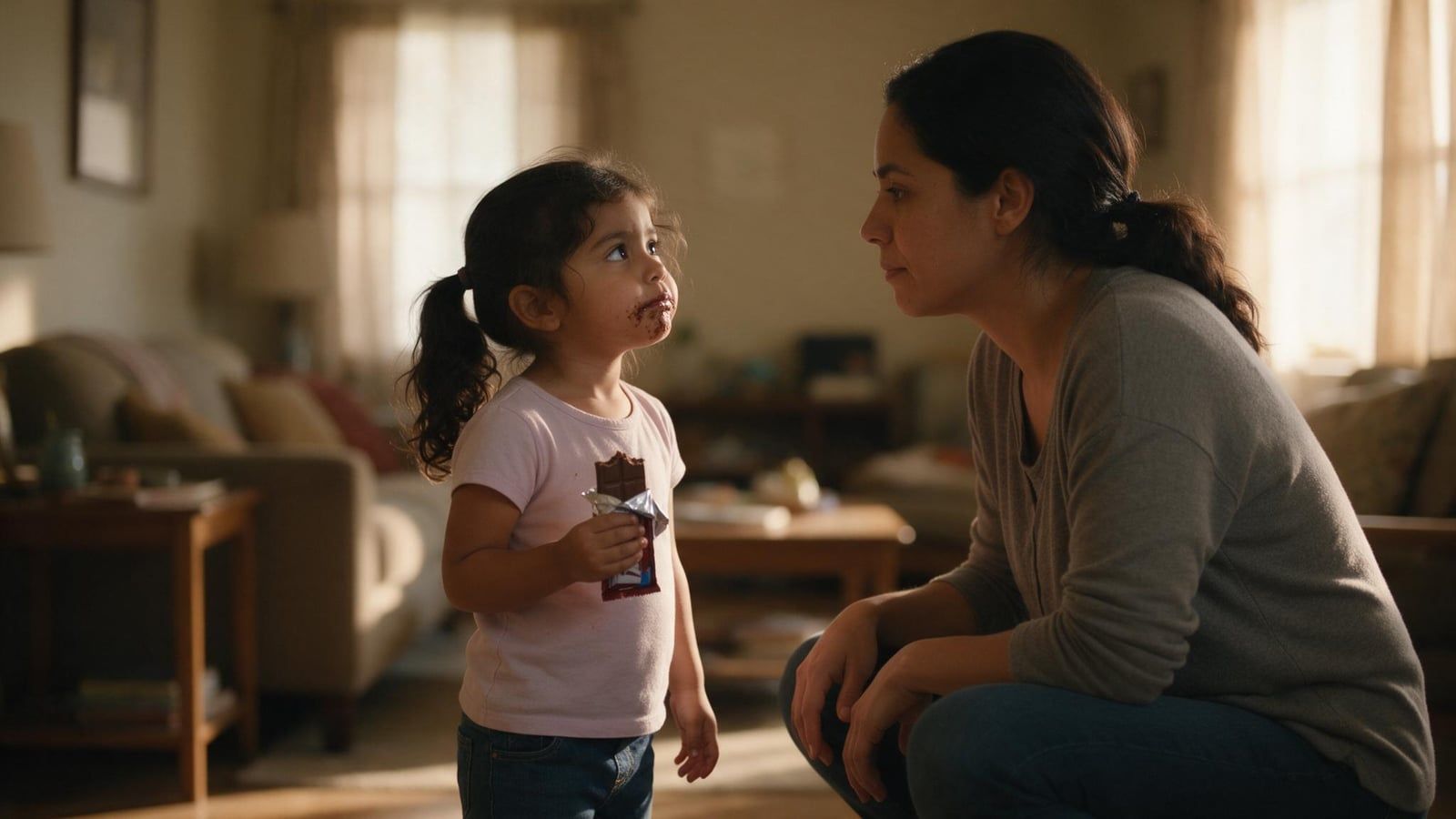



In the previous article we explained what happens in your child's brain during a tantrum: the prefrontal cortex disconnects, the primitive brain takes control, and the child temporarily loses the ability to reason, listen, or calm down alone. We also explained that at that moment, the only regulated brain available is yours.
The question remains concrete: what do you do with that regulated brain? What tools do you have? These are five co-regulation techniques you can start using today. They require no training, no cooperation from the child, and they work precisely because they don't try to stop the tantrum — they accompany it.
1. Get Down to the Floor
The first thing you can do when your child enters a crisis is to lower yourself. Literally. Sit on the floor, get on your knees, crouch down. Whatever puts you at their eye level.
It's not a symbolic gesture. When an adult stands over an overwhelmed child, the child's brain reads threat. When that same adult lowers themselves, the signal changes. No danger. There is someone here, at the same level.
2. Breathe Visibly
Don't ask your child to breathe. In the heat of a tantrum, that instruction doesn't land. What does land is the rhythm of your own breathing — if it's visible enough.
Visible breathing means slightly exaggerating your breath so the child can perceive it. If your body says 'there's no emergency here,' theirs will start to believe it.
3. Name Feelings Without Asking for Anything in Return
"You are very angry." "You wanted that, and it just wasn't possible."
These phrases are not to calm them down. They are to accompany them. When you name what your child feels without adding a "but" or "it's okay," you activate the part of the brain that processes language. The chaos begins to take shape.
4. Offer Contact Without Trapping
The technique is to offer without imposing. A hand on the floor near theirs. An open arm. If the child moves away, respect the distance without withdrawing emotionally.
What the child needs to know is that contact is available — not that it's mandatory. That difference is everything.

5. The Bridge Phrase
When the intensity starts to drop, there's a window. It's the moment for a short phrase that says: this is over and we are still together.
"It's over now. I'm here." "That was hard. I'm with you."
The Hard Part Isn't Learning the Techniques
The hard part is holding onto your own calm when everything around you is screaming. But every time you do, your child's brain registers something fundamental: that big emotions do not destroy the relationship with the person they love most.
How Wolfie Experiences It
In *An Adaptation of The Three Little Pigs*, Wolfie arrives at the park wanting to play. But no one sees him. Frustration grows and grows until he blows. Not out of malice. Because he had no other language for what he was feeling.

An Adaptation of The Three Little Pigs
The House of Calm · Where huffing and puffing doesn't scare
Wolfie arrives at the park eager to play. The other children are so absorbed in their own games that they don't notice him. When his frustration gets too big, Wolfie blows — and things break. But when he finally cries, something changes: the others come closer. It turns out everyone was, in some way, alone.
Read this children's story in the Semillita appHave you ever asked if they were hungry and they said no, only to explode ten minutes later? Sometimes, a tantrum isn't the cause, but the consequence of a body signal the child doesn't know how to read yet. In the next article we look closely at the world of childhood interoception.