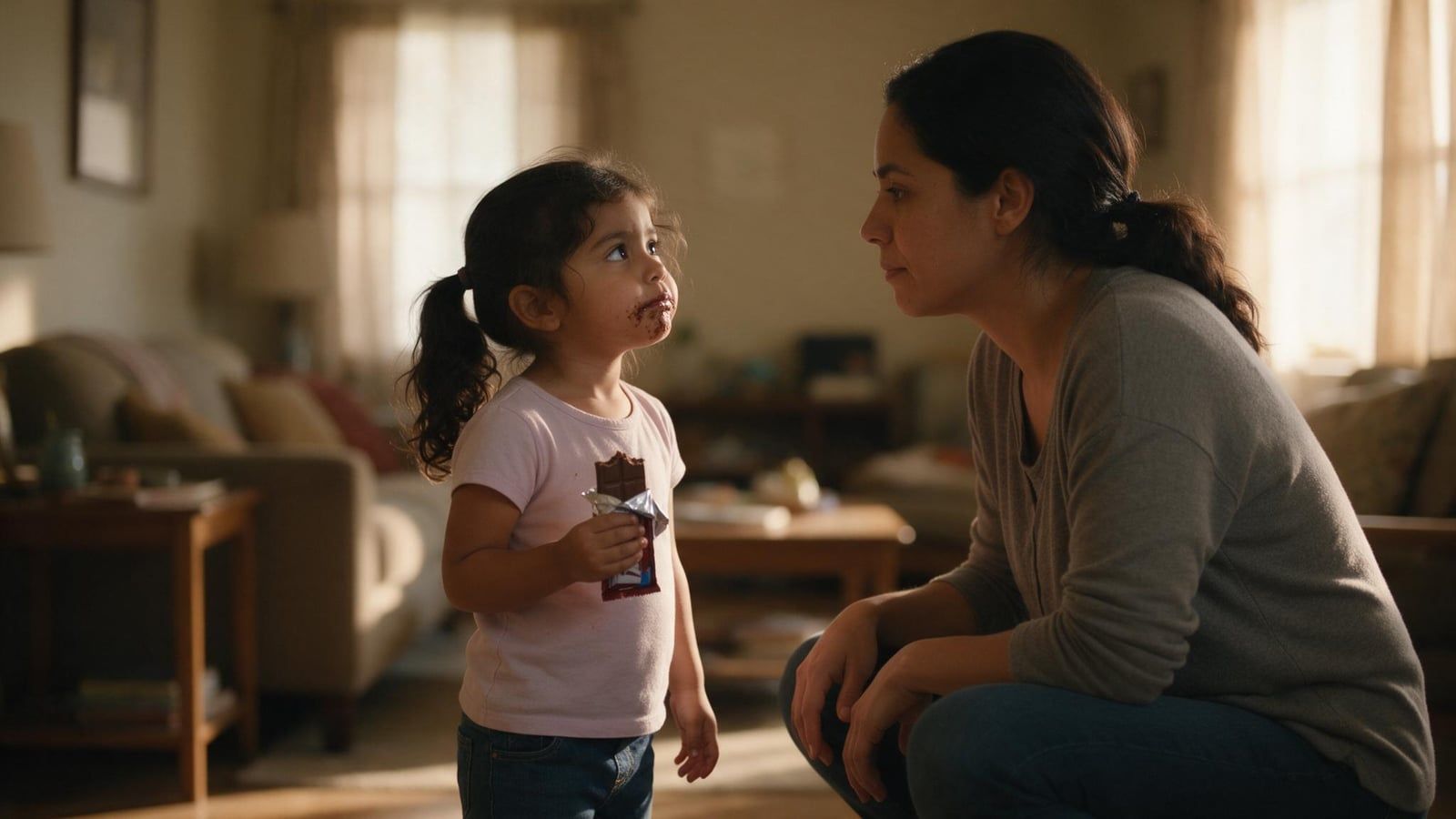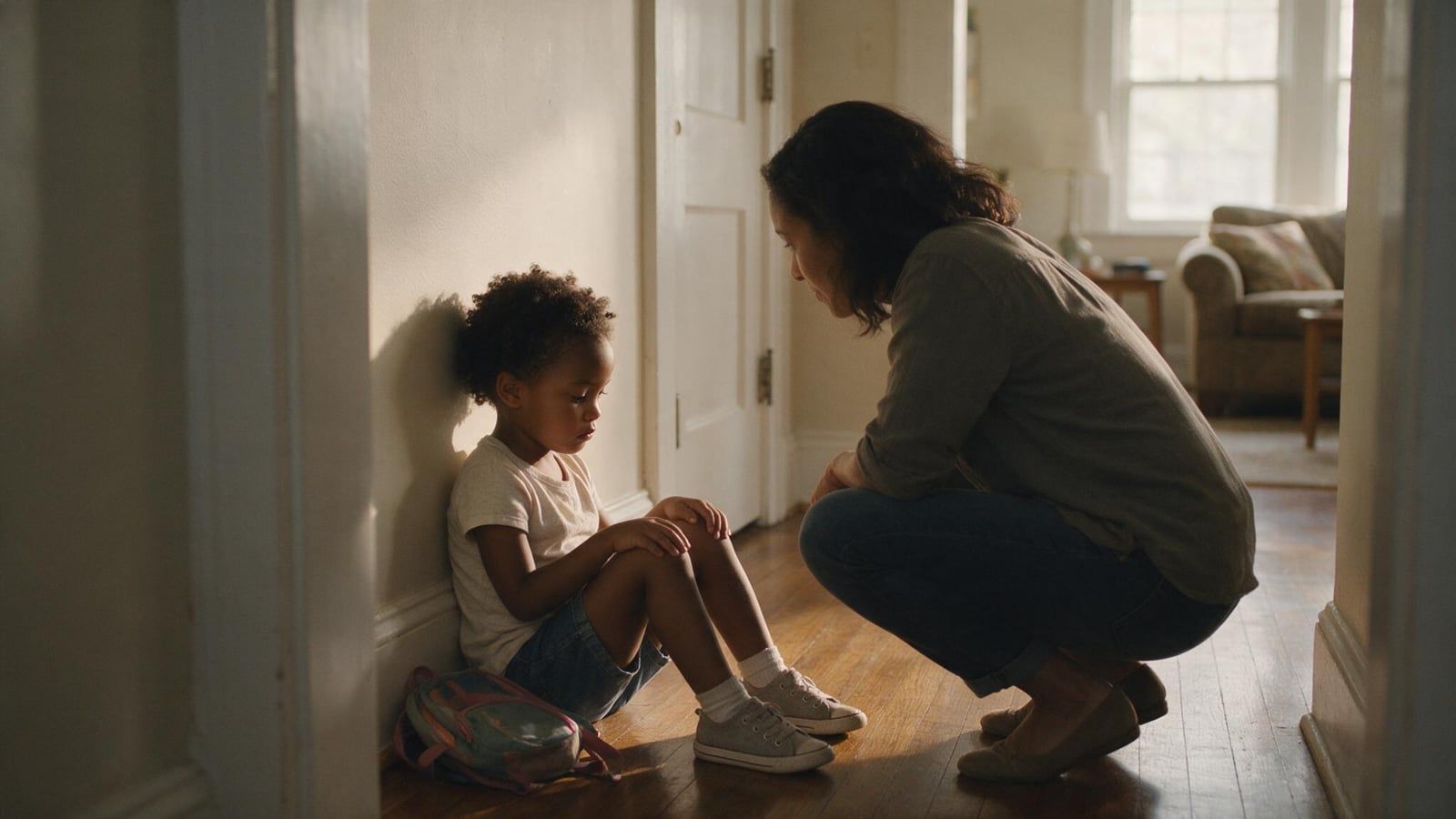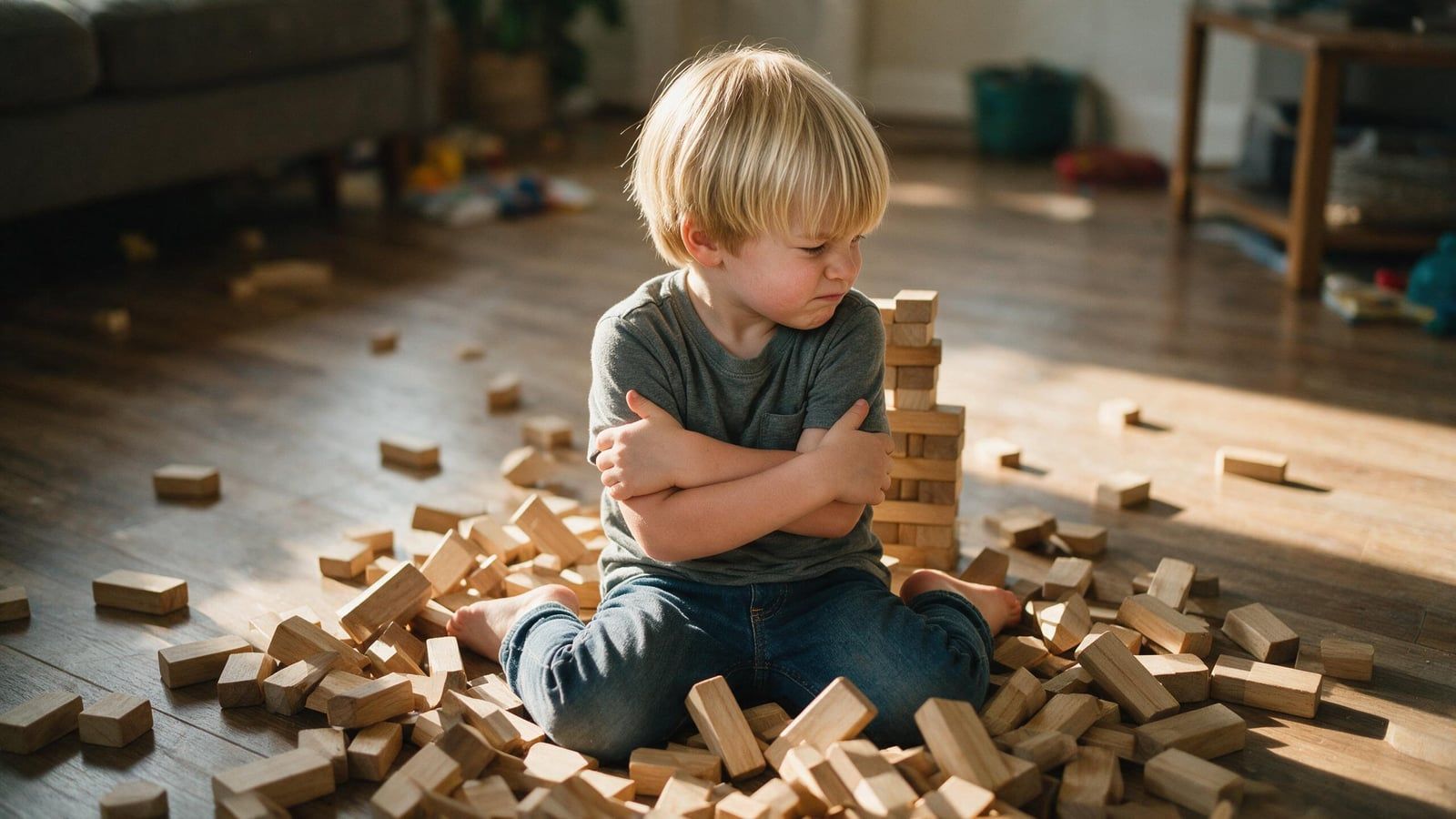


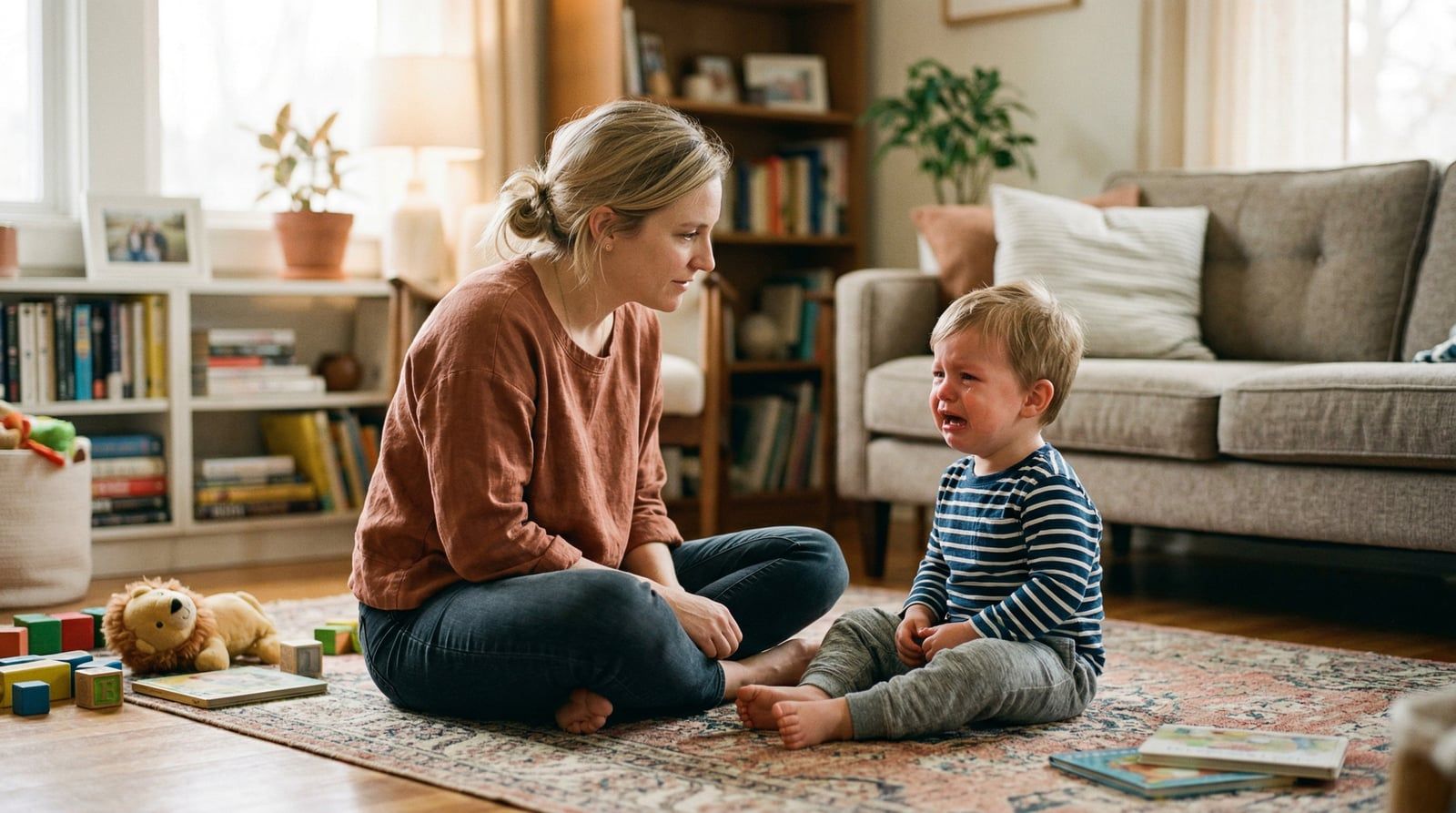
In the previous article we talked about the 'no' phase: that stage where your child discovers their will and exercises it with all the energy they have. But there are moments when refusal is no longer a word. It's a cry that escalates, a body that throws itself on the floor, an intensity that seems impossible to contain.
That's a tantrum. And understanding what's happening inside when it happens completely changes how we respond.
What Happens in the Brain During a Tantrum
The child's brain has two parts that matter here. The lower part — the primitive brain — manages intense emotions. The upper part — the prefrontal cortex — manages reasoning and self-control.
In a 2 or 3-year-old, that upper part is practically under construction. When they have a tantrum, the lower part takes control and the connection between the two is broken. It's not that the child doesn't want to calm down: it's that they literally cannot.
Why What You Do Matters More Than You Think
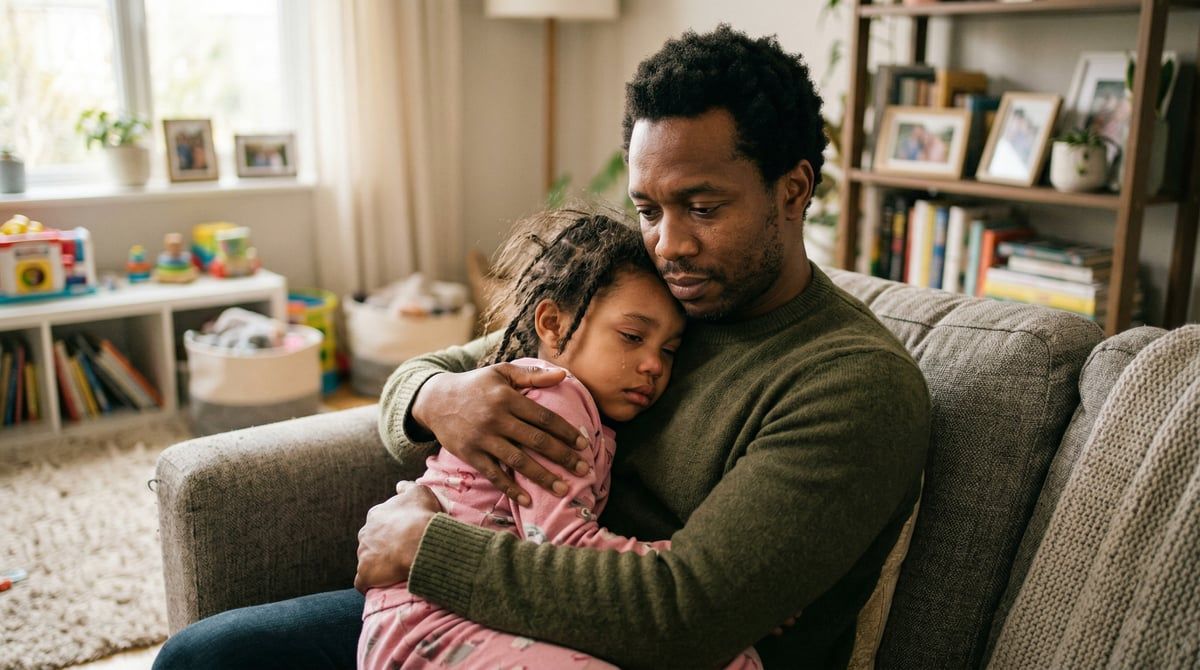
At that moment, the only brain available to help is yours. When an adult stays calm, their nervous system acts as an anchor for the child's. This is what we call co-regulation: your regulated brain helps theirs return to calm gradually.
What Helps During a Tantrum
- Presence without intervention: Being close without trying to force the crying to stop.
- Low and slow tone of voice: Your rhythm provides safety information to the child.
- Naming without judging: "I see that you're feeling very angry."
- Waiting: Tantrums have a natural arc that goes up and then down.
What Helps Afterwards
Once the storm has passed, then it makes sense to talk. A hug first. Then, a short conversation: 'You were very angry before. What happened?'. The child learns that their emotions do not destroy the relationship with the adult.
What Wolfie Teaches Us
In An Adaptation of The Three Little Pigs
What the story does is show what is underneath the huffing: not malice, but a child who wanted to belong and didn't know how to ask. Exactly what we do when we crouch down and wait instead of escalating.

An Adaptation of The Three Little Pigs
The House of Calm · Where huffing and puffing doesn't scare
Wolfie arrives at the park eager to play. The other children are so absorbed in their own games that they don't notice him. When his frustration gets too big, Wolfie blows — and things break. But when he finally cries, something changes: the others come closer. It turns out everyone was, in some way, alone.
Read this children's story in the Semillita appKnowing what happens during a tantrum is the first step. The second is having concrete tools. In the next article we share five co-regulation techniques you can start using today.