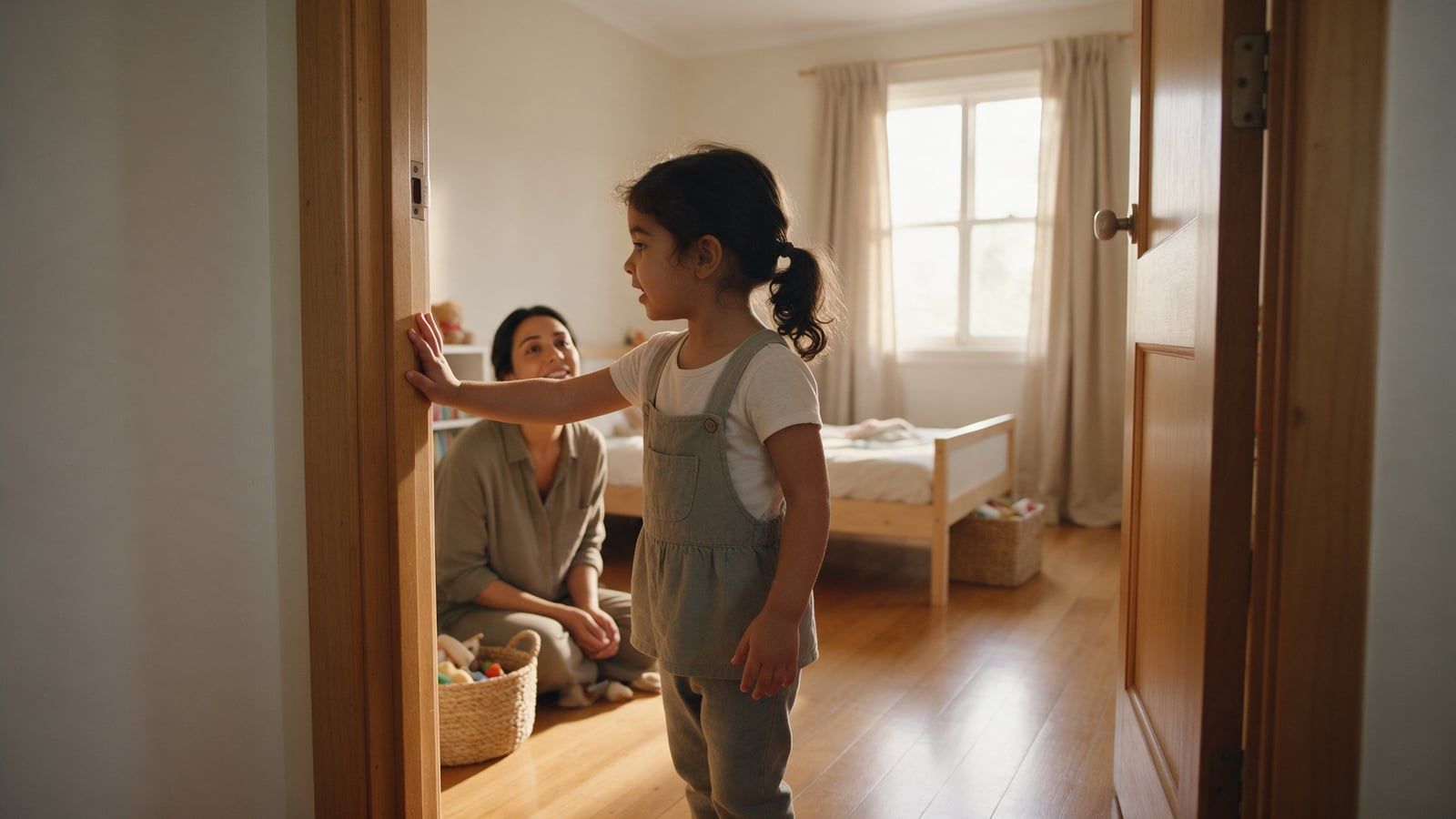


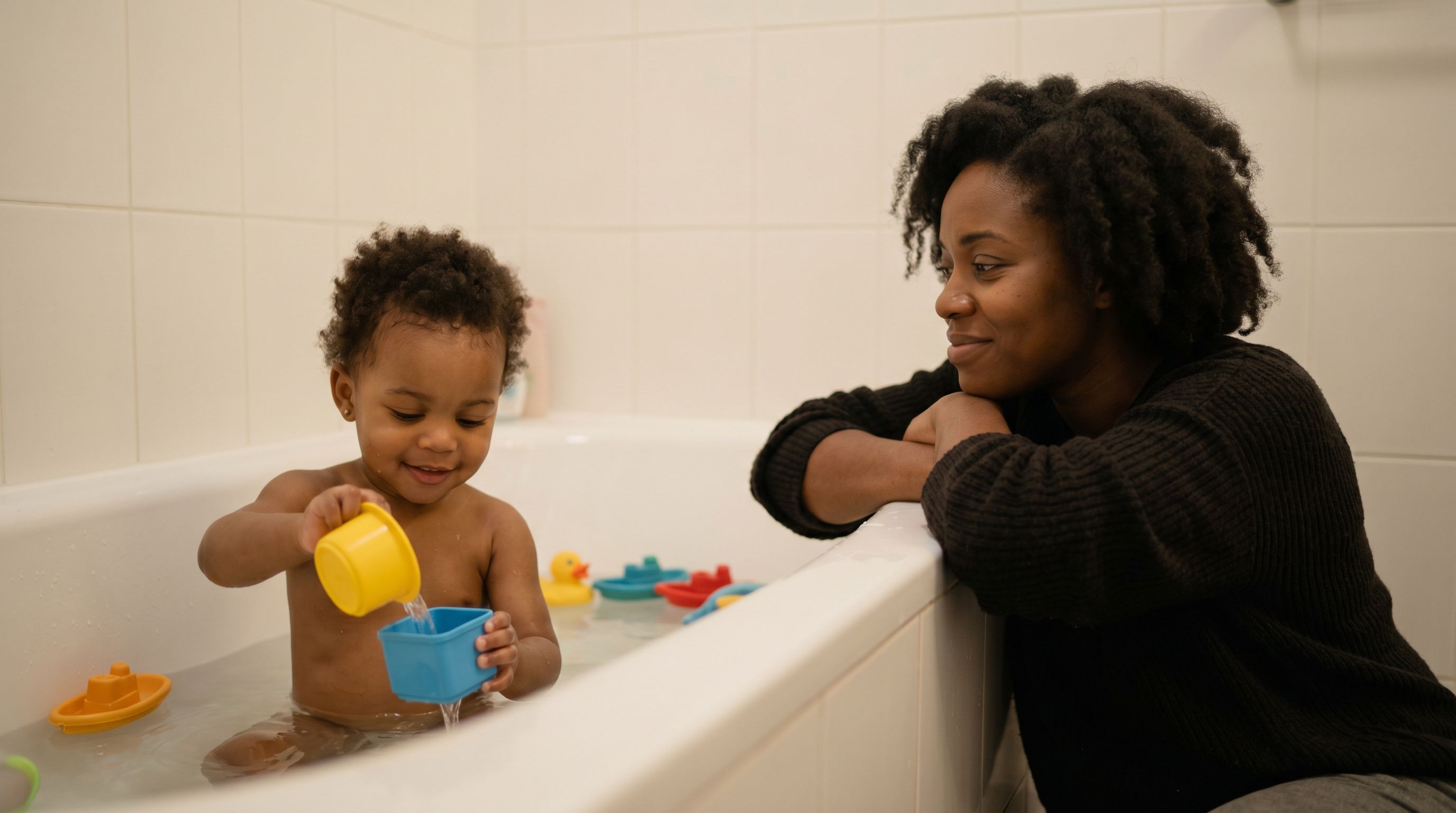
There are nights when bath time happens without fuss: your child gets into the tub with a toy, plays with the foam for a while, and gets out without drama. And there are other nights when the same proposal—same tub, same water, same soap—ends in tears the moment you announce it, in a long negotiation, and with everyone exhausted. The curious thing is that the bath itself is almost never the problem. What goes wrong usually happens in the minutes before.
As with stopping diapers, the conflict is rarely where we look for it.
The real problem: pulling them out of play
A child between one and four years old who is playing is not an adult who decides to stop and stops. They are inside the play. Their head doesn't have a pause button that responds well to a 'let's go take a bath'. When they resist, it's not because they don't want a bath: it's because they haven't finished what they were doing.
The difference seems small but it changes quite a bit what's worth doing. If the problem were the bath, you'd have to make it more attractive. Since the problem is almost always the transition, that's what needs working on, and the bath usually solves itself.
Cutting things off abruptly creates resistance, and not only with the bath. The same reaction appears when we turn off a screen without warning, when we interrupt what they were saying, or when we take them out of the park without giving them a second to wrap up. It's not a tantrum. It's that their brain doesn't process changes instantly.
How to prepare the transition before it happens
Most of the work doesn't happen in the bath itself. It happens in the minutes before. Three things that help:
Give a heads-up. 'In five minutes we're going for a bath' gives them room to mentally start finishing what they have in their hands. They don't always use it—sometimes the warning goes right past them because they're too absorbed in play—but when it becomes a habit, their brain learns that after that warning comes the change, and it starts preparing on its own.
Close the play before changing activities. Asking 'what's left for you to finish?' works better than saying 'that's it, we're stopping'. If they can put a piece in its place, park a car, or say goodbye to what they were holding, the transition has a closing. Without that closing, 'I don't want to' often just means 'I haven't finished yet'.
And one small detail that changes a lot: don't present the bath as a question. 'Shall we take a bath?' has an obvious answer when they're playing. 'It's bath time' doesn't. One is information; the other is an invitation to negotiate.
The bath as a place of play, not a chore
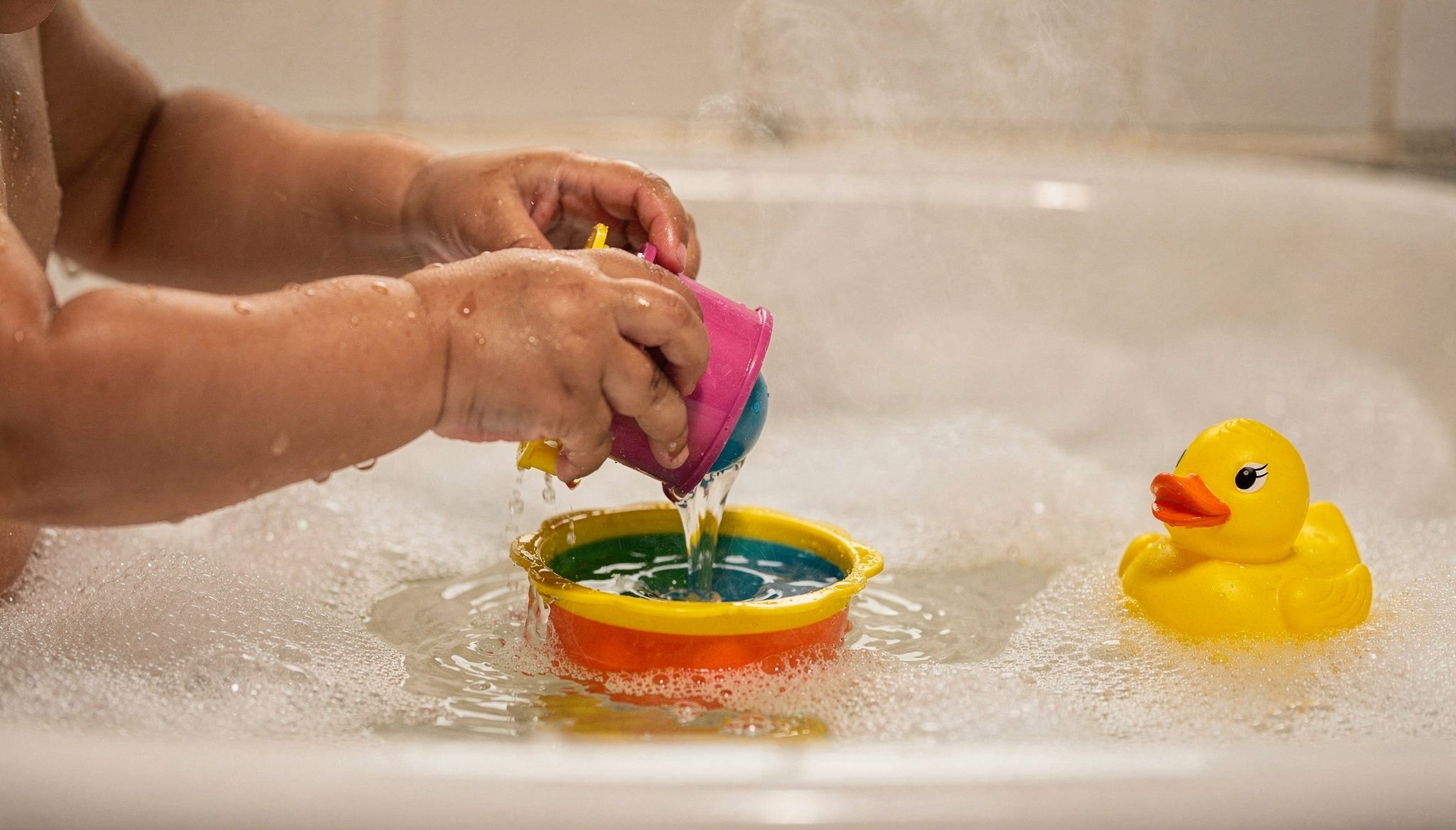
At this age water is fascinating on its own. The foam, the containers that fill and empty, the toys that float, the splashing: all of that is pure sensory play. The problem is that we often arrive at the bath in such a hurry to finish that we turn what could be exploration into a chore to resolve as quickly as possible.
Bringing a regular toy into the tub changes the framing: the bath stops being the place where play ends and becomes the place where play continues, now with water. Nothing special is needed. A cup from the kitchen, a small strainer, an empty plastic container: anything that can be filled, emptied, or submerged works.
From there, imagination almost always does the rest. Turning soaped-up hair into a mountain, foam into clouds, toys into characters in a story the child invents while bathing. None of that works every night, but it works enough times to be worth it.
When there is resistance to water or contact
Some children have higher sensory sensitivity. Water on the face, shampoo near the eyes, the noise of the drain, or a temperature that's perfect for you but not for them, generates real discomfort. It's not exaggeration or manipulation: it's a genuinely unpleasant experience. Forcing the issue in these cases usually has the opposite effect and reinforces the association between bath and unease.
If that's the resistance, it helps to lower the bar little by little: start with the lowest water level they tolerate well, avoid wetting their face directly if that's what most upsets them (there are temporary alternatives while they build confidence), and give them some control over what happens—let them pick which toy comes in, let them decide whether to wet their hair with the shower or with a cup.
It's worth distinguishing between the child who resists the transition and the one who resists physical contact. The first, once in, calms down. The second never quite settles even after some time in the water. If the latter shows up regularly, don't ignore it: it may be sensory sensitivity and asks for a slightly different kind of support.
When the problem is getting out
Sometimes the conflict isn't getting in but getting out. The same child who didn't want a bath now doesn't want the bath to end. It's the same transition seen in reverse.
Here, rather than a dry warning ('two minutes left'), it usually works better to offer a bounded choice: 'do we get out now, or do we stay a little longer and then get out?'. The difference matters. The warning only informs; the choice gives them some control over what happens, and at this age that matters a lot. Most of their day is decided by adults, and any real decision, however small, reduces resistance. If they ask for a little more time, you respect it and then close without renegotiating. If they choose to get out, they get out having chosen.
Three things to keep in mind for this to work:
- Both options have to be acceptable to you. If you don't want them to stay ten more minutes, don't offer it.
- 'A little longer' has to have a concrete end, not an open one. A couple of minutes, finishing filling the cup, whatever, but something measurable.
- After the 'little longer', there's no more negotiation. That's the firm part.
How the bath ends matters too. A calm exit makes the child associate the tub next time with something that had a reasonable ending, not with something that was snatched from their hands.
What Pom-Pom's mom does
In Splash! Into the Water, Pom-Pom, Pom-Pom is happily playing in the mud puddles in the garden when his mom, without taking him out of play, introduces the idea that it's bath time. She doesn't interrupt him or rush him along. She offers something else: the tub becomes a spaceship, a little train takes them there, the foam becomes part of the adventure.
It's not a trick to deceive. It's understanding that, at this age, play doesn't get left behind without cost: it transforms. And when that logic is respected, the child cooperates much more.

Splash! Into the Water, Pom-Pom
The Bubble Party
Pom-Pom is happily splashing in the muddy puddles in the yard with Mr. Duck. Mommy Pig uses playtime to peacefully introduce the idea of taking a bath using the little train. They slowly turn the fear of bathing into great space fun.
Read this children's story in the Semillita appThere's another transition that happens outside the home and is often harder than the bath or the diaper: separating at daycare. In the next article we look at separation anxiety—what falls within normal, when it's worth paying more attention, and what helps make those first goodbyes less hard for everyone.