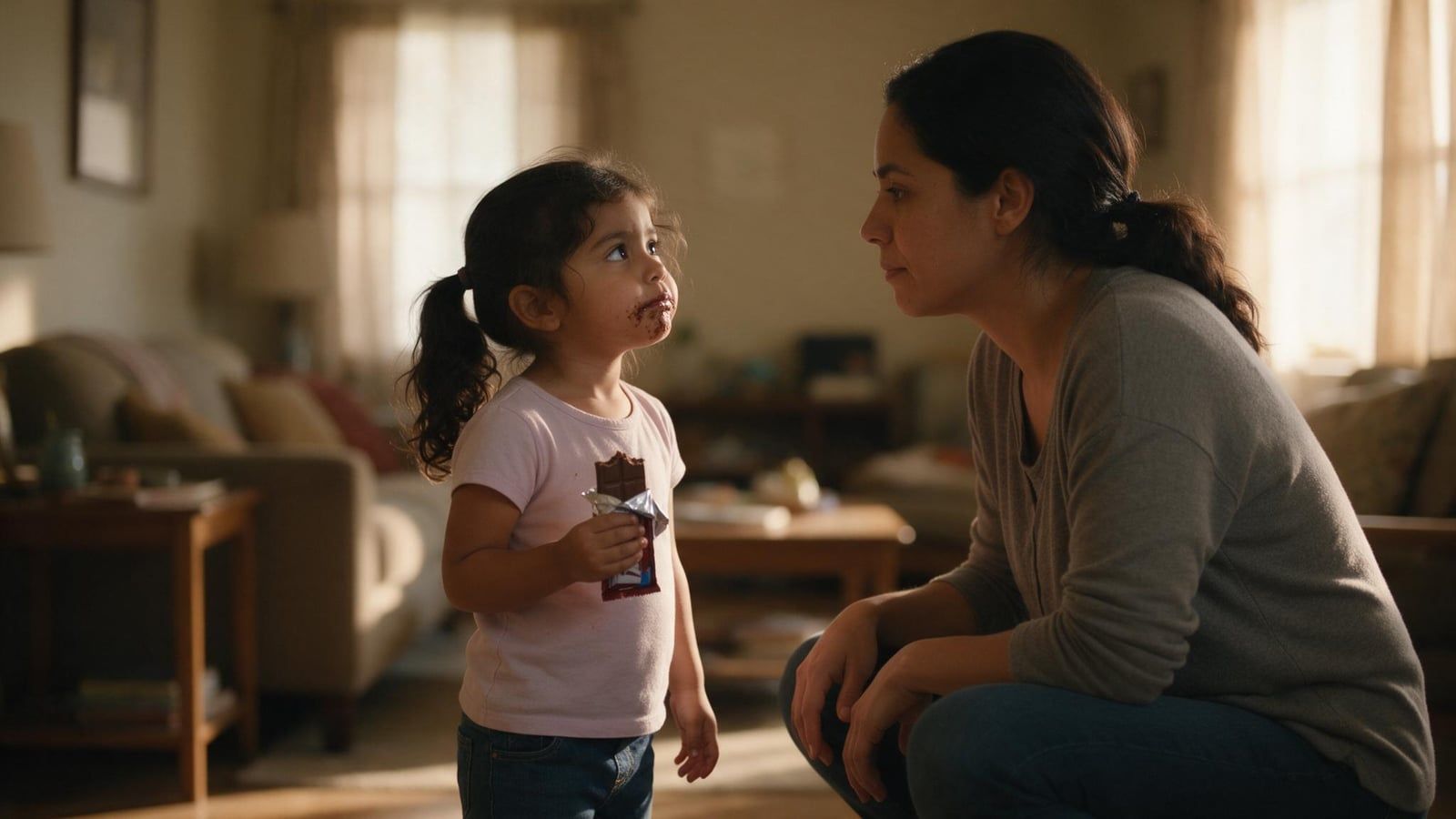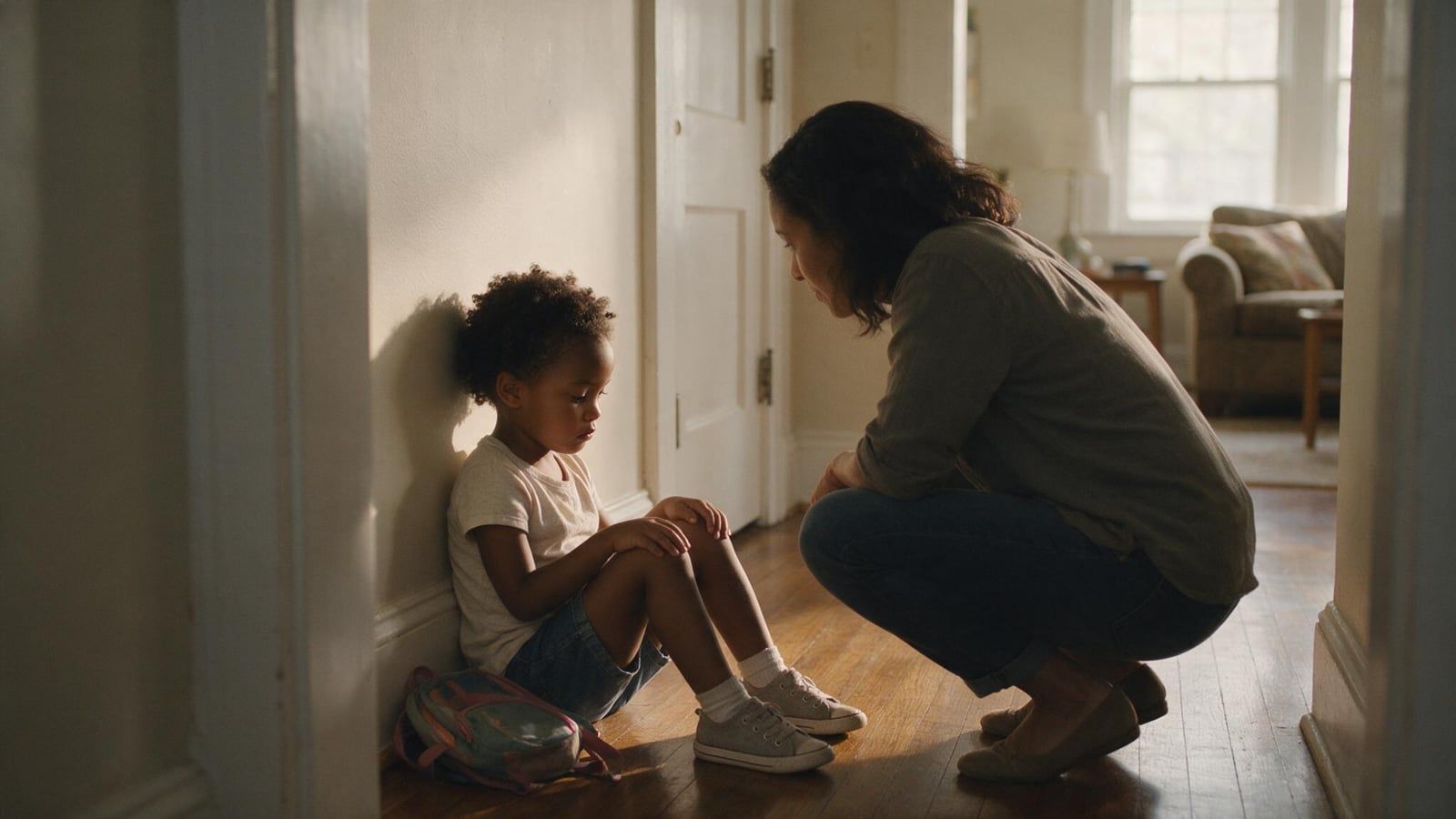


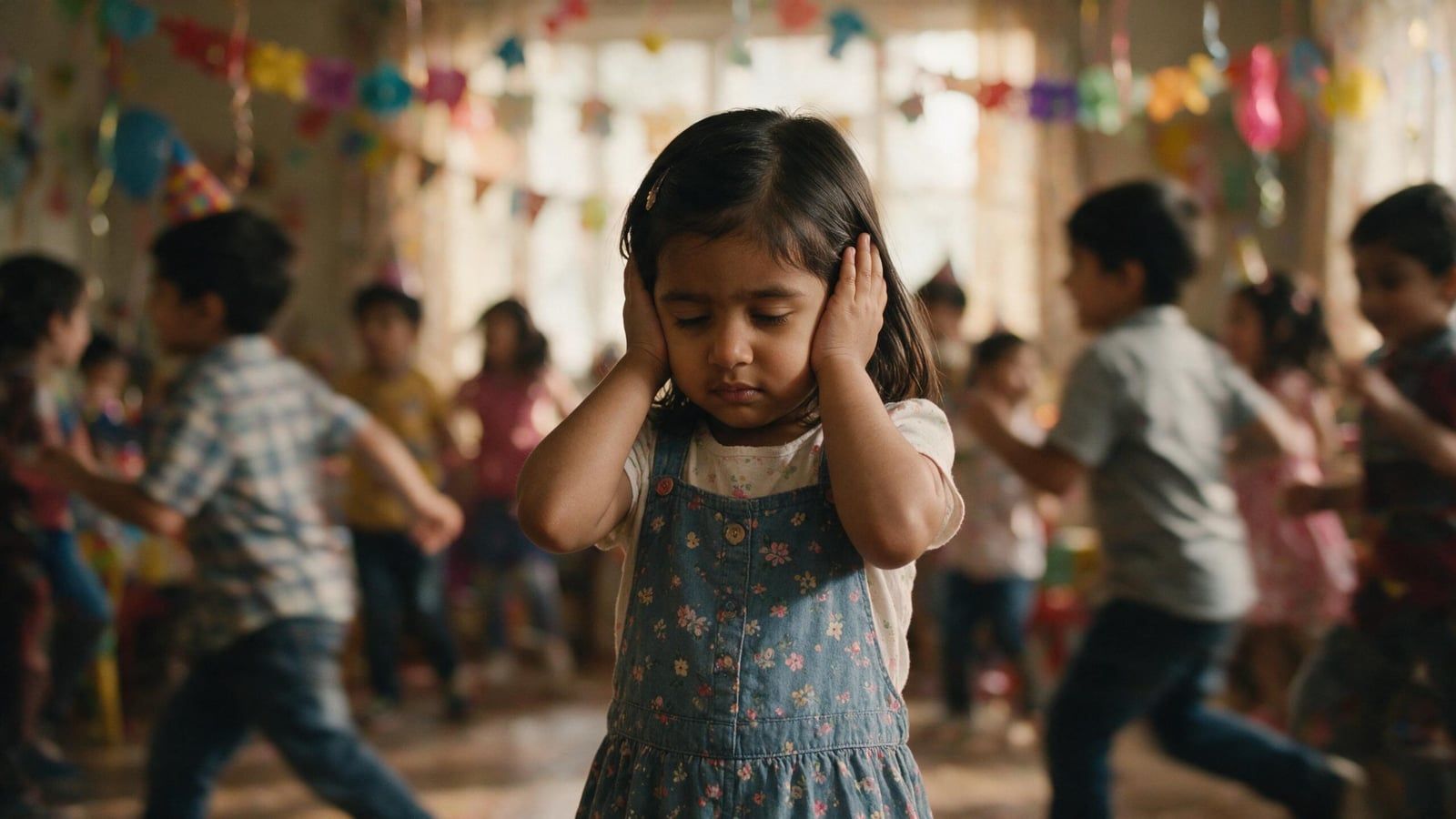
They had been asking all week when the birthday party was. You got there, they let go of your hand and ran in. Forty minutes later they are under the presents table with their hands over their ears, and the only thing you can get out of them is that they want to go home.
On the way to the car comes the line everyone says: and they were so looking forward to it.
There is almost never one thing to blame
The question we always ask is what happened. And often the honest answer is that nothing in particular happened.
The loud music, twenty children shouting at once, the costume that itches at the neck, the smell of the dining room, the ceiling light, the hand of an adult they don't know on their shoulder. On its own, none of that floors anyone. What floors them is the sum, which builds up over the day and doesn't clear by itself. And some children take all of it in more strongly than the rest, so they hit their limit quite a bit sooner.
You are asking them to point to a culprit when what they have is a strange tiredness they can't explain. That is why "what's wrong?" almost never gets anywhere.
And about "they were so looking forward to it": both things are true. They were, enormously, and they didn't have the energy for the full two hours.
There is something else that throws you: the moment the collapse arrives. It rarely happens inside the party. It comes on the way out, in the car, as the front door opens, with the person who treats them best. Holding it together around other people costs energy, and when the demand lets up is when whatever was being held up falls. It is worth taking this for what it is: something families and professionals who work with children repeat a lot, without a solid study behind it to prove it. It fits what people see, and that is as far as it goes.
If where the accumulated day shows most is at lights out, that is another conversation: you have it in Fear of the dark and imaginary monsters.
They are already under the table: what you do now
First, get them out of there before trying anything else. The hallway, the landing, the street, the car. As long as they are still inside the noise, no conversation is possible.
Outside, the fewer words the better, and in a low voice. No questions yet. Sitting down at their level and waiting as long as it takes is boring, and it is what works. If you want the detail of exactly what to do in those minutes, it is in five co-regulation techniques.
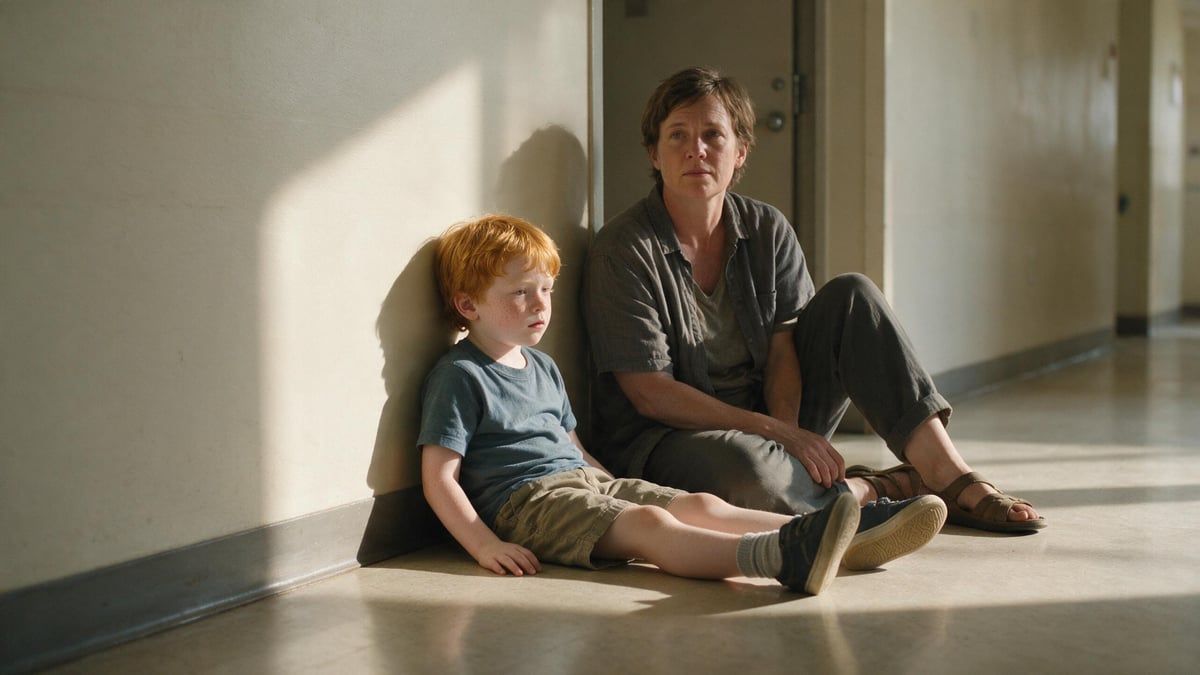
And then the uncomfortable decision: go back in or go home. If after a while outside they are available again, you go back in without ceremony. If they are the same, you leave, and you leave without a speech. Leaving after forty minutes with a calm goodbye makes for a better memory of that party than lasting two hours and being dragged out. That memory is the one they bring with them to the next birthday party.
Is "high sensitivity" a diagnosis?
No. It does not appear in the clinical manuals: it is the name some psychologists gave in the nineties to a temperament trait, and it is still disputed. It describes someone who processes what happens around them in more detail and, for that very reason, gets overloaded sooner. It is a matter of degree: your child can sit fairly high up without that turning them into a different category of child.
And there is something related that probably matters to you more than the definition, though it is still being researched: what is hard for these children and what takes care of them both reach them more strongly.
Before you put a name on it
Don't let the name close doors. Being sensitive to noise says nothing about where that sensitivity comes from, and there are things to look at before putting it down to temperament.
Hearing first. Recurrent ear infections (otitis media) and fluid in the middle ear do not usually cause an aversion to noise (rather the opposite: the child hears less well and turns the volume up), but they change how sound reaches them and they are worth ruling out. And there is a condition that looks quite like this from the outside and has a name of its own: hyperacusis, in which sounds at a normal volume are experienced as uncomfortable or painful. An ear check at the pediatrician's office rules out the first; the second is assessed in audiology, so if the suspicion is still there after the visit, ask for a referral.
It is not the only possible explanation. High reactivity to stimuli also appears in autism, in ADHD and in anxiety conditions. Noise bothering them does not point to any of those, and precisely for that reason "they're very sensitive" should not be the end of the search if something else does not sit right with you.
When it is worth asking a professional. When it really interferes with day-to-day life despite having tried adjustments: they cannot manage to eat in the school cafeteria even with accommodations, there is nowhere with people in it where they last a while, the distress is on most days rather than now and then. And if on top of that you notice that their language is slow to come or that they do not seek out other children, say so at the appointment even if it seems beside the point.
None of this is meant to frighten you. It is so that, if something more were needed, it does not stay hidden underneath an explanation that seemed good enough.
What helps
Counting the day the way you count a budget. One birthday party is usually manageable. A birthday party after the swimming pool and with no nap, much less so. When a day has two big events in it, pick one and leave the other for another day, even if they are looking forward to both.
Getting there before everyone else. Walking into an empty room that fills up little by little is very different from opening a door onto a party already in full swing. It works the same for the playground as for the first day of school.
Agreeing on the way out before you go in. "If at any point you want to step out for a bit, come find me and we'll go into the hallway." At four the agreement is forgotten the moment they see the cake, so count on repeating it. Even so, they go in knowing the door exists.
Having a quiet place that is not a punishment. A corner of the house, or the hallway next to the party. The difference from the time-out corner is that nobody goes there to reflect on anything: they go there to turn the volume down, and that is all.
Noise-reducing headphones or earplugs for the moments you know overwhelm them. If they help with fireworks, the hair dryer or the vacuum cleaner, let them use them. We do not ask a child who needs glasses to squint harder. The difference is that glasses are worn all day and these are not: there is debate about whether wearing them all the time ends up making the child more sensitive to noise, so better kept to the moments you already know about. And if where they have the worst time is at school, that is a conversation to have with the school before having it with them.
How far to protect them
Both easy ways out fail.
If you keep taking off the calendar everything they are bad at, their world shrinks without anyone deciding it, and getting back later into a place they stopped setting foot in costs a good deal more than having kept it going with adjustments.
If you put them in anyway and without help, on the idea that they will get used to it, what they learn is that in hard places they are on their own. What comes out of that is a more watchful child.
What tends to work is in between and is nothing dramatic: hard places in doses, with warning of what is going to happen, with a way out available and with recovery time afterward, without filling that gap with another activity.
And be careful with the label said out loud in front of them. "They're just very sensitive" slips out of all of us at the school gate and no harm is done by having said it, but repeated in front of them it can end up being the explanation they themselves use for not trying anything. Tell the teacher at another moment, with them out of earshot.
This does not go away with age the way a tooth falls out. What usually changes is that they learn to notice when they are filling up and to ask to leave before they reach the end, which is exactly what you are doing for them while they cannot.
A story where noise really does hurt
In The Captain of Silence there is a kraken that has spent a long time putting up with the din of the ships passing overhead. The captains who arrive see only a creature in the way of the route, and they try to shift it by force. Captain Leeward, who spends his life studying the animals of the sea, looks and listens before deciding anything, and he is the only one who understands what is going on down there.
And the ending is not about anyone winning. Nobody asks the kraken to get used to the noise and nobody sends the ships somewhere else: each side gives a little. That is more or less what lies behind a party with an agreed way out.

The Captain of Silence
A friendship born from respect
Captain Sotavento is a ten-year-old boy who loves the sea and studies marine creatures. When an important maritime route is blocked by a kraken, the governor of Coral Island offers a reward to whoever can reopen it. All the captains try to defeat the kraken with force, but Sotavento chooses to observe, listen, and understand. He discovers that the kraken isn't a monster, but a being who suffers from the constant noise of ships. While others fail with violence, Sotavento builds a friendship based on respect and shared silence.
Read this children's story in the Semillita appIn the next post: when overload comes out as a shove. Why so many children this age hit, and what really helps.