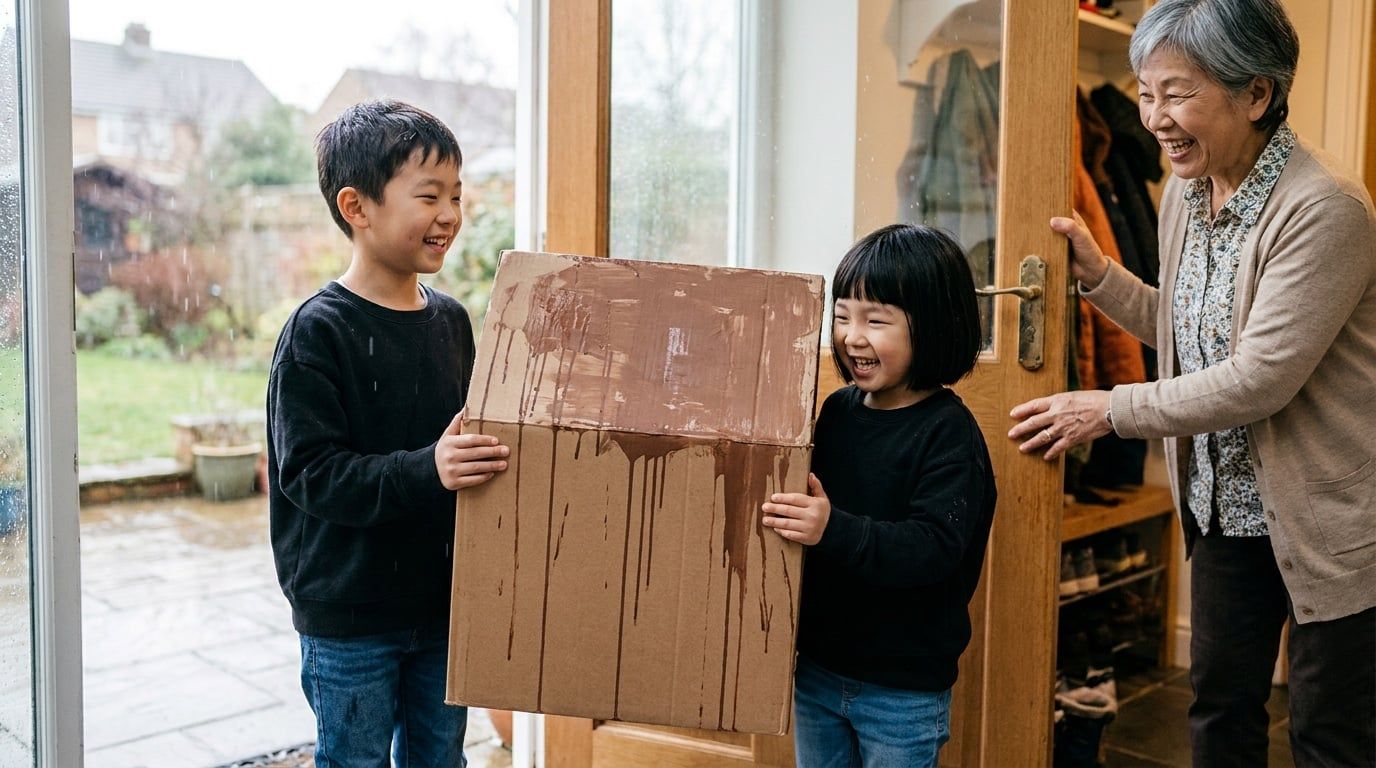


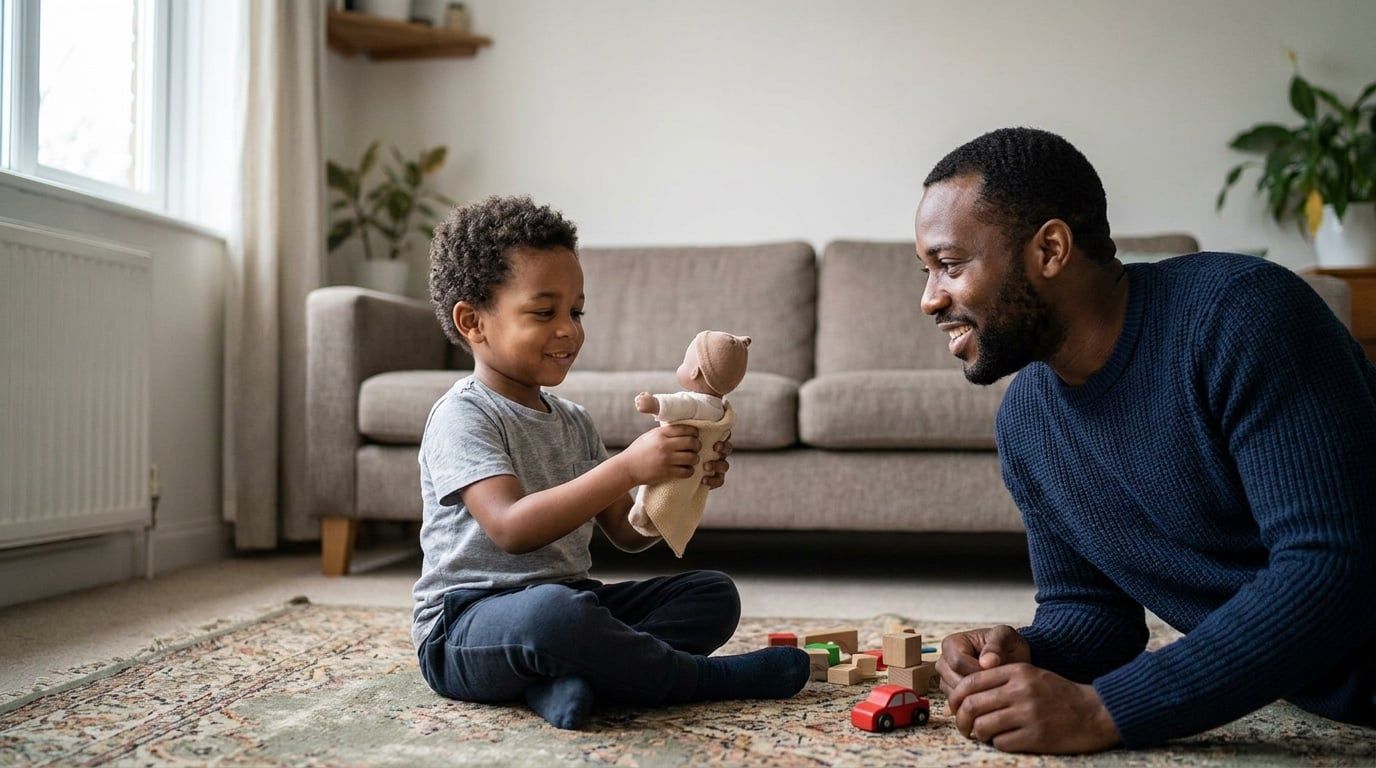
Your four-year-old son had been asking for the unicorn T-shirt for weeks. Today he comes home from school and won’t put it on: “It’s for girls. Max told me.” Or your seven-year-old daughter, who always played soccer with her cousin, now says soccer is for boys. And you’re not sure whether to correct them or let it go.
When “pink is for girls” first appears
Earlier than you might think. In a study of children aged 7 months to 5 years who were asked to choose between two objects, one of them always pink, girls began picking pink more often than boys did at around age 2, and at 2 and a half they already preferred it to the other colors. Boys, meanwhile, avoided it more and more (LoBue and DeLoache, 2011). The study tells us when the preference appears, not why.
The differences are real
On average, boys and girls don’t choose the same toys, and the difference is large. A meta-analysis of 75 studies of children up to age 11 found that boys show a much stronger preference for toys associated with boys, and girls for toys associated with girls, and that the difference grows with age. It came out larger when children were made to choose between two toys than when they were observed playing with several, so it’s best not to draw conclusions from a single choice; the pink study used that method (Davis and Hines, 2020).
The authors consider several explanations, all of them tentative: that the environment might push each child toward what’s “theirs” and that this push might build up over the years; that, starting from early preferences, children might seek out playmates and settings that reinforce them; and that hormones before birth and shortly after might combine with all of the above. How much weight each one carries hasn’t been settled.
A large difference means that most boys and girls follow that trend, not that all of them do. Those who don’t, in one direction or the other, have nothing that needs correcting. And a toy being more associated with boys or with girls doesn’t make it off-limits to anyone, nor does it mean children have to play with everything equally.
Why they get so strict at 4
It’s very common at this age, and it doesn’t mean you’re doing anything wrong at home. A study that followed 229 children from ages 3 to 5 found that most gender-linked behaviors (how they wanted to dress, what they played, what they dressed up as, whether they played only with boys or only with girls) became more rigid with age, especially between ages 3 and 4 (Halim et al., 2013).
And how long does it last? Another study asked 64 children every year, from ages 5 to 10, what they thought boys and girls could do. The stage when they saw it as a strict rule didn’t last long, whether it started earlier or later, and their ideas became more flexible once they had learned the categories well (Trautner et al., 2005). There’s no set age.
Its authors interpret it this way: the rigidity goes hand in hand with the moment children learn what it means to be a boy or a girl, and while they’re learning the category, they apply it without exceptions. It’s similar to what happens with grammar, as with the child who says “goed.” And what softens is the rule; their tastes may stay the same. At 7, a boy may think it’s fine for another boy to wear pink and still not want to wear it himself.
How to talk about this at home
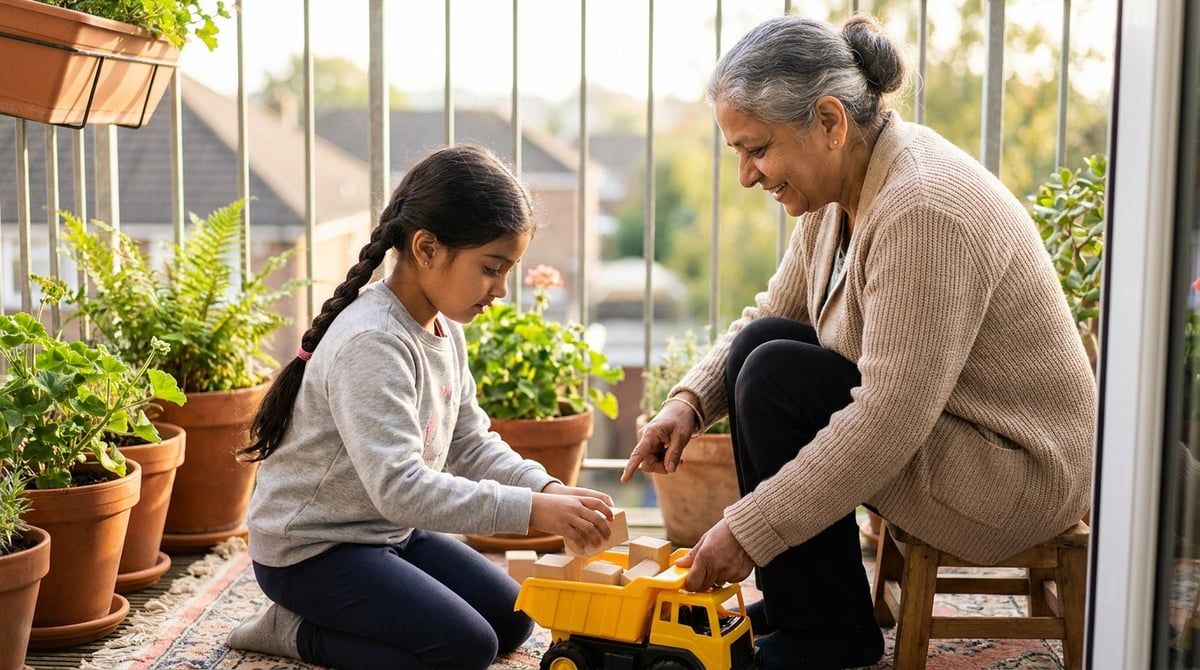
Ask before you correct. Questions like “Who says so?” or “And do you like it?” open the conversation without a lecture. Chances are they’ll answer “Max” and “Yes, but it’s for girls.” That’s where you can say what you think in a single sentence: “I think colors are for whoever wants to wear them. It’s up to you whether you put it on.” You don’t need to win the argument. And if the T-shirt is already in the drawer, leave it there, within reach: making them wear it turns it into a test.
Give examples of people they know. That their aunt fixes bikes or their friend’s dad is a nurse is something they can check for themselves. The American Academy of Pediatrics (AAP) also suggests books and puzzles that show men and women in a variety of roles, such as dads who take care of the home or women police officers (AAP, on choosing toys).
Leave plenty to choose from, without pushing. The same page advises keeping a variety of toys on hand: dolls, cars, action figures, blocks. If your daughter still wants everything pink, or your son only plays with cars, that’s fine. The options are there; whether they pick them up or not is up to them.
With older children, talk about what they can do. At 6 or 7, the line may be a different one: “soccer is for boys,” “dancing is for girls.” Real examples help here, like the female soccer player who was on the news or the boy down the street who takes dance classes, and a simple question: “And do you still like it?” or, if they’ve never tried it, “Would you like to give it a try?”
When another adult says it. If Grandpa blurts out “that’s for girls” in front of your son, there’s no need to argue right then. One calm sentence for him is enough: “Grandpa sees it that way; at home, everyone picks their own color.” If it happens again, it’s better to talk it over with Grandpa in private.
Notice what you say without thinking. We all let a stock phrase slip now and then, like “that’s so girly.” And if you almost always tell her how pretty she looks and him how strong he is, they may gradually pick up on what’s expected of each. It’s enough to notice and say something different next time, without making a big deal of it.
If they want to wear it to school, help them decide. If they want to go in the unicorn T-shirt and you know someone might say something, let them know and ask what they’d say back. “I like it” is a short answer that works. If they decide to wear it, good. If they’d rather keep it for home, that’s fine too: they’re learning to judge when and with whom. We talk about how to hold on to what they like under group pressure in “When everyone else is doing it”.
When to bring it up with the school or the pediatrician
If the teasing keeps happening or they’re often left out of games, talk to their teacher: the sooner the school knows, the sooner it can do something. If you see them having a hard time for weeks (they don’t want to go to school, they’re embarrassed or afraid that others will find out what they like, they’re sad or irritable almost every day), mention it to the pediatrician too. And if they feel left out of the group, we talk about how to be there for them in “My child feels left out”.
Liking colors or toys associated with the other sex isn’t, on its own, a reason to seek professional advice: what your child likes and whether they feel they’re a boy or a girl are two different things. If it’s the second one that concerns you, the pediatrician is a good place to talk it over calmly.
A mermaid with blue shells
In Marina and the Color of the Sea, a story for children ages 3 to 6, Marina is a mermaid with a pink tail who loves collecting blue shells. One day, the other mermaids ask her, “Why do you like blue if you have a pink tail?” and swim away together, laughing. Marina hides inside a giant shell, and there she finds Suno, a merman who is crying too: the others laugh at him because he likes shiny things and the color pink.
Marina wonders out loud: “colors are just colors, right?” Together they mix their two colors, paint their tails purple, and when they come out, the others want to be shown how. The story solves it in one afternoon, and on a playground it usually takes longer. But it gives your child someone who felt just the way they do.
The guide that comes with the story in the app suggests a question: “Do you think there are ‘boy colors’ and ‘girl colors’? Why?” At 4, they’ll probably say yes, and at that age that’s typical. It’s where the conversation begins.

Marina and the Color of the Sea
Colors have no gender
Marina is a young mermaid who loves the deep blue of the sea, but other mermaids exclude her because they say “blue is for boys.” Feeling lonely, she finds refuge in a giant seashell where she meets Suno, a merman who loves pink and sparkly things. He is also excluded by other children for his preferences. Together they discover that colors are just that: colors, and that everyone can enjoy what makes them happy regardless of what others say.
Read this children's story in the Semillita app