

You have just finished a story. Your child listened in their own way: caught up in some parts, impatient to turn the page in others. When it ended they wandered off to something else. A while later they sit down to color those same characters. The main character comes out an impossible purple. The sky, orange. And without anyone asking, they start telling themselves under their breath what was happening to him in the story.
That moment, which looks like nothing more than a quiet bit of entertainment, is doing quite a lot more than it seems.
From listening to doing
When a child listens to a story, their role is a receptive one: they take in the story, the pictures, the voice of whoever is reading. It is a valuable role, and listening is already doing plenty. But it stops halfway if the story ends and they never go near it again.
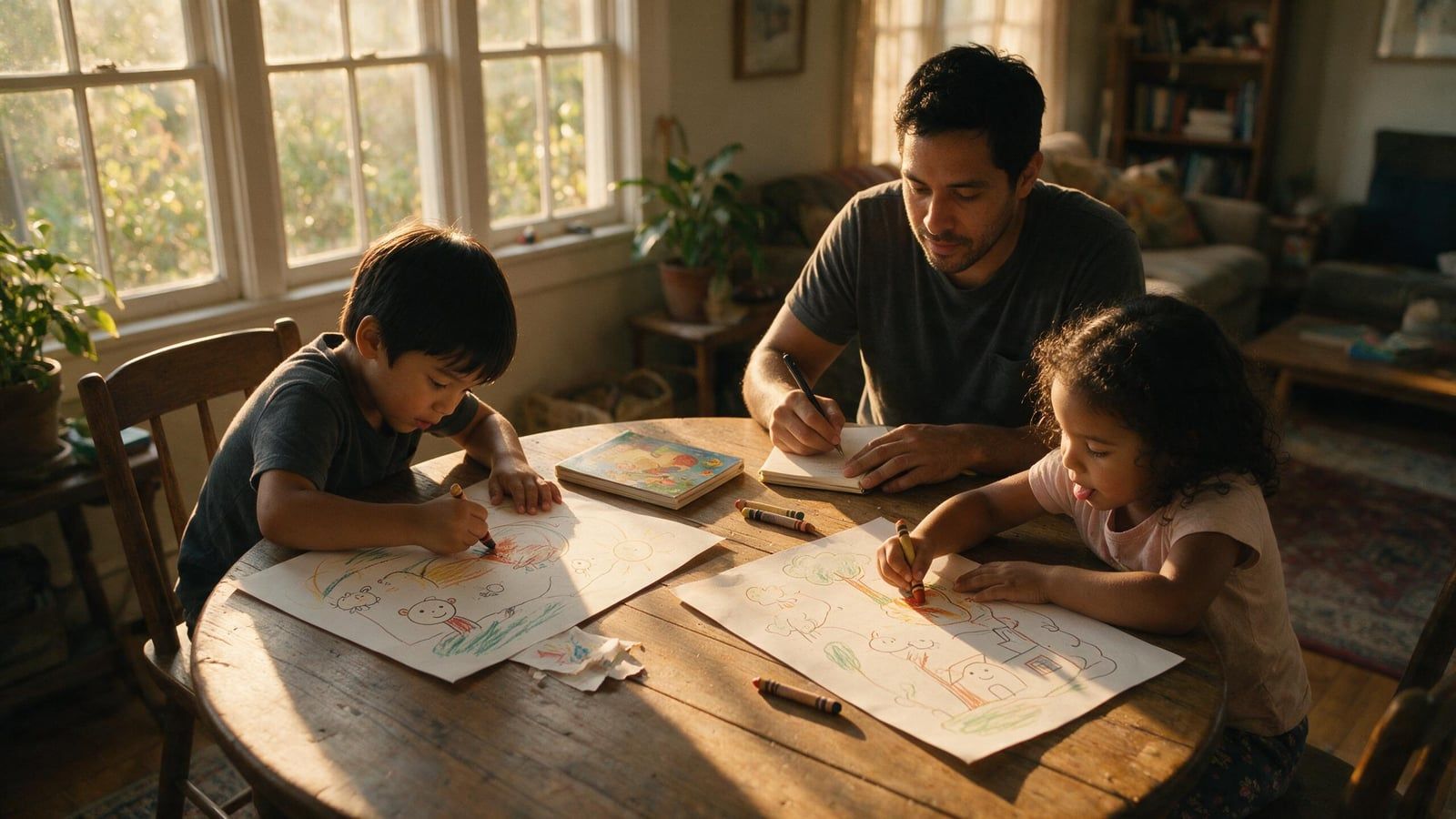
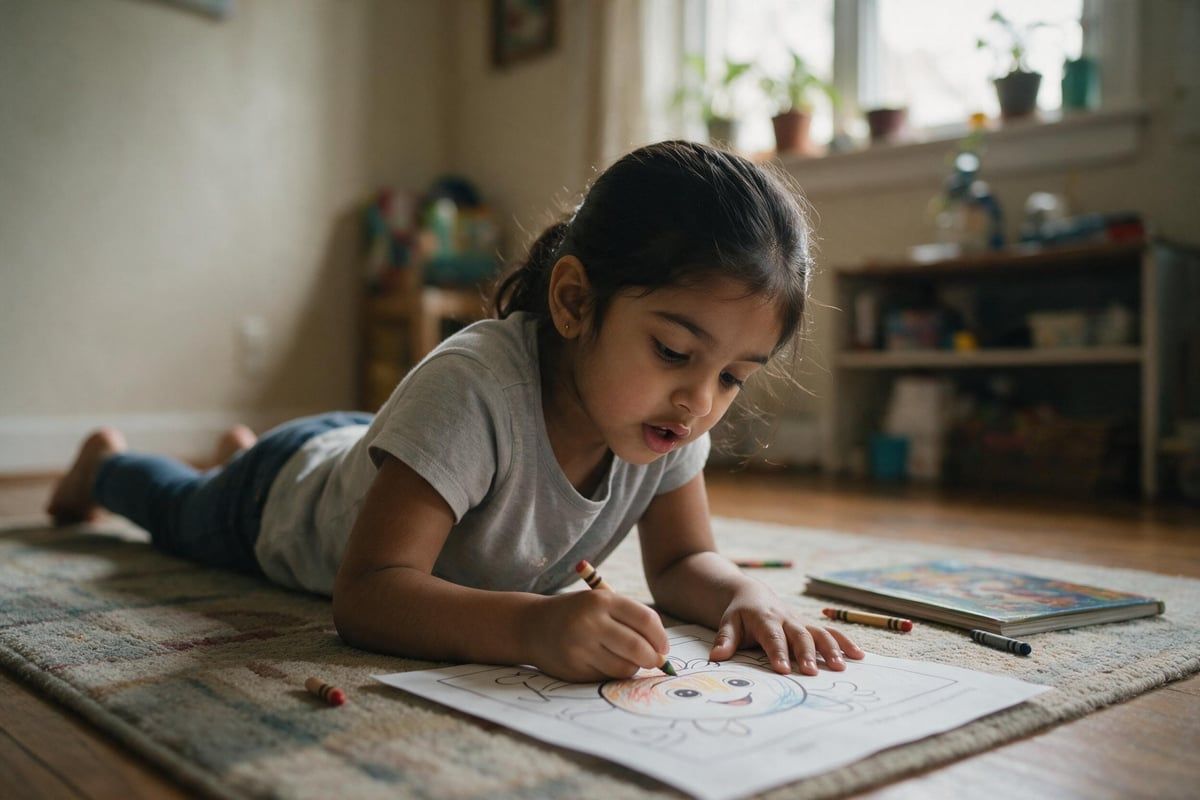
Coloring the characters after reading turns that role around. The child stops receiving the story and starts doing something with it: picking colors, deciding who to fill in first. They go back into the scene, this time with their hands.
In learning generally there is a well-established principle, retrieval practice: bringing something back and remaking it in your own words or with your own hands fixes it better than going over it passively. Applying that to a small child and to one particular story is another matter: there we are more in the territory of observation than of hard evidence, because the research on preschoolers and narrative is a good deal messier than what you usually read online. But it fits what a lot of families and teachers see.
Coloring afterwards, not instead of reading
Coloring while you read competes with the story for attention: at this age it is hard to follow two things that both ask for concentration. This is not a laboratory finding, but the effect shows up at home: if the child is coloring, the story goes by in the background. Once the reading is over there is nothing left to compete with, and coloring becomes a second visit to a place they already know.
It is not a test either. It does not matter if the sun comes out green or if the character looks nothing like the one in the book. There is no correct version here. What happens while they color (remembering the scene, feeling again what moved them) is worth far more than how close the drawing gets. If we turn the page into a piece of graded homework, we lose exactly what made it useful.
What goes on while they color
From the outside it hardly shows, but three things come together.
They go back to the story at their own pace. Reading moves at the pace of whoever is reading. The coloring page moves at theirs. They can spend ten minutes on the character that mattered most to them and skip the rest. That choice is already a way of digesting what they went through.
They go over what happened. As they rebuild the characters and the scenes, they run through the sequence of the story without it being an interrogation. Many children narrate under their breath while they color; that murmur is the story rearranging itself inside.
It gives what they felt a way out. If the story touched a strong emotion, whether a fear or the anger behind a tantrum, coming back to it once the moment has passed lets them get close without being overwhelmed. There is no need to give it any more of a name than that.
Where the coloring pages come from
You do not need anything special. A sheet of paper and some colored pencils will do: you can ask them to draw the scene they liked most, or sketch the characters roughly yourself for them to fill in. Many of the stories in Semillita also come with their own coloring pages inside, with the scenes exactly as they have just seen them, so there is nothing to improvise.
It works best between three and six, which is when a child can already hold a whole story in their head and still enjoys coloring it in.
The most useful thing is to leave the page within reach and not direct: if they sit down to color, being nearby is enough. Asking "and what was happening to him?" tends to cut off exactly what they were doing, because it pulls them out of their pace to attend to yours; if they want to tell you, they will do it on their own. It is a stretch of time to share in which nobody has to do it well.
And if one day they do not feel like it, that is fine too.
An example
In When Milo's Smoke Came Up, Milo's anger rises like a smoke that needs to get out. It is one of those stories that touch a big emotion, the kind a child recognizes right away because they have been there too.
That is why it is the kind of story that rewards a second visit. Coloring Milo after reading it lets a child go over the story and, along the way, come back to that anger with a pencil in hand instead of a body braced tight. There is no need to talk about it or draw a moral. And it is no substitute for what helps in the middle of a tantrum: it is what comes afterwards, once it has passed.

When Milo's Smoke Came Up
When Anger Wants Out
It's Milo's favorite afternoon — a little dragon enjoying his beloved jam-filled cookies. When his dad tells him he's had enough, Milo feels something new inside: the warm, quiet little sun he always carries in his belly starts to heat up in a different way, grows big, and smoke begins coming out of his nose without permission. He decides that if he doesn't let the smoke out, there won't be a problem.
Read this children's story in the Semillita appThere is not much more to it: paper, pencils and staying out of the way. The story does the rest.