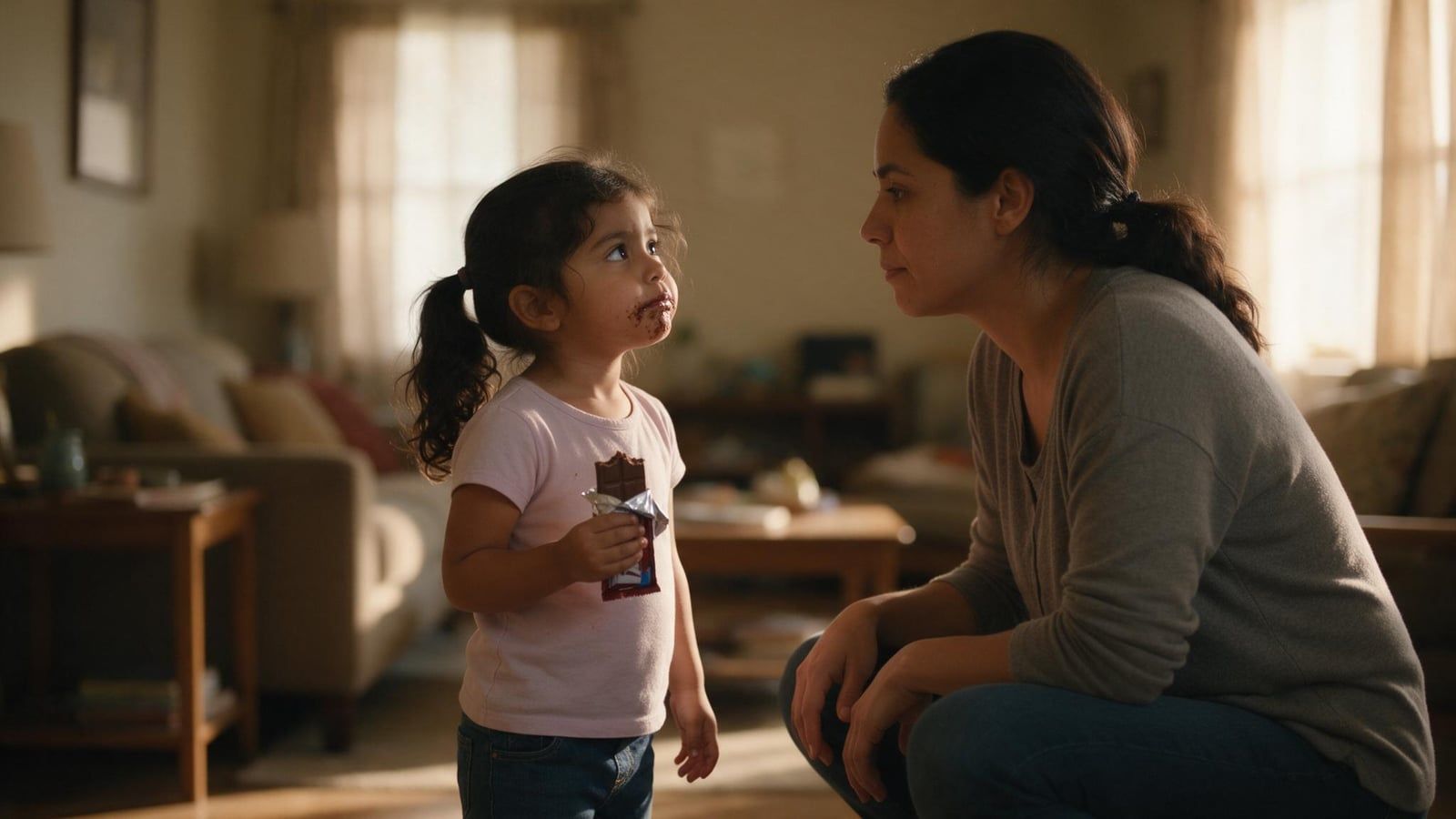


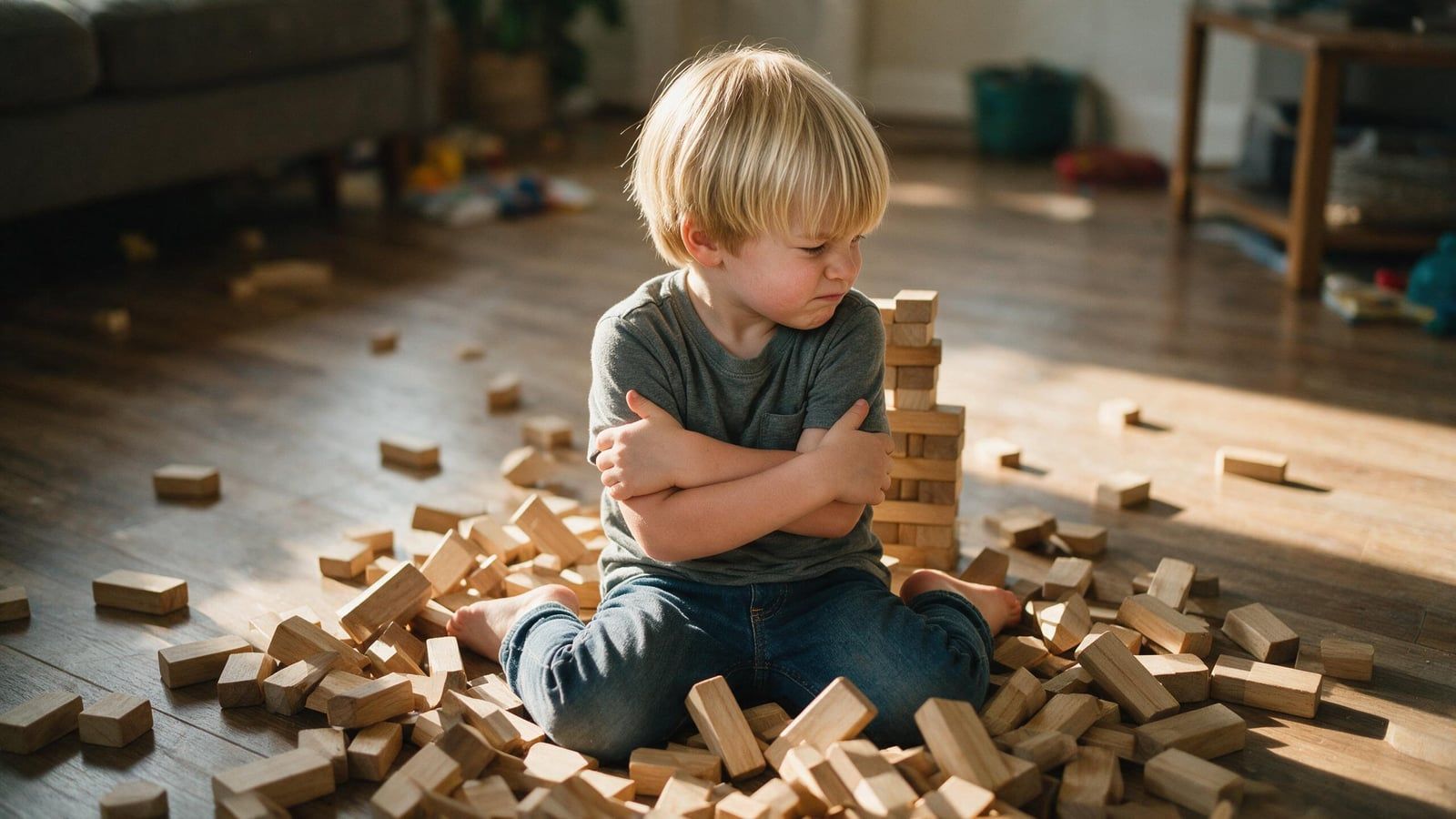
Twenty minutes on that tower. Slow going, tongue poking out, setting each piece in place. On the last one, a wrist grazed it and the whole thing came down.
A second later they've swept it all away with one arm, shoved the box with a foot, and said they're not playing anymore. You're standing a few feet away and you know exactly where that piece was going.
This is mostly about children between three and six.
Their head is ahead of their hands
At this age a child already knows fairly well what they want to build, and above all they spot straight away when what came out doesn't look like what they wanted. What they don't have yet are the fingers for it: the precision, the steady hand, the exact amount of force to let go of a piece without moving the ones underneath.
A good part of the anger lives in that gap. Nothing strange is happening to them, and explaining it doesn't fix it: the gap closes with the years and with a lot of hours of practice, and in the meantime this is what there is.
The next ten minutes
This is where you are right now, so let's start here.
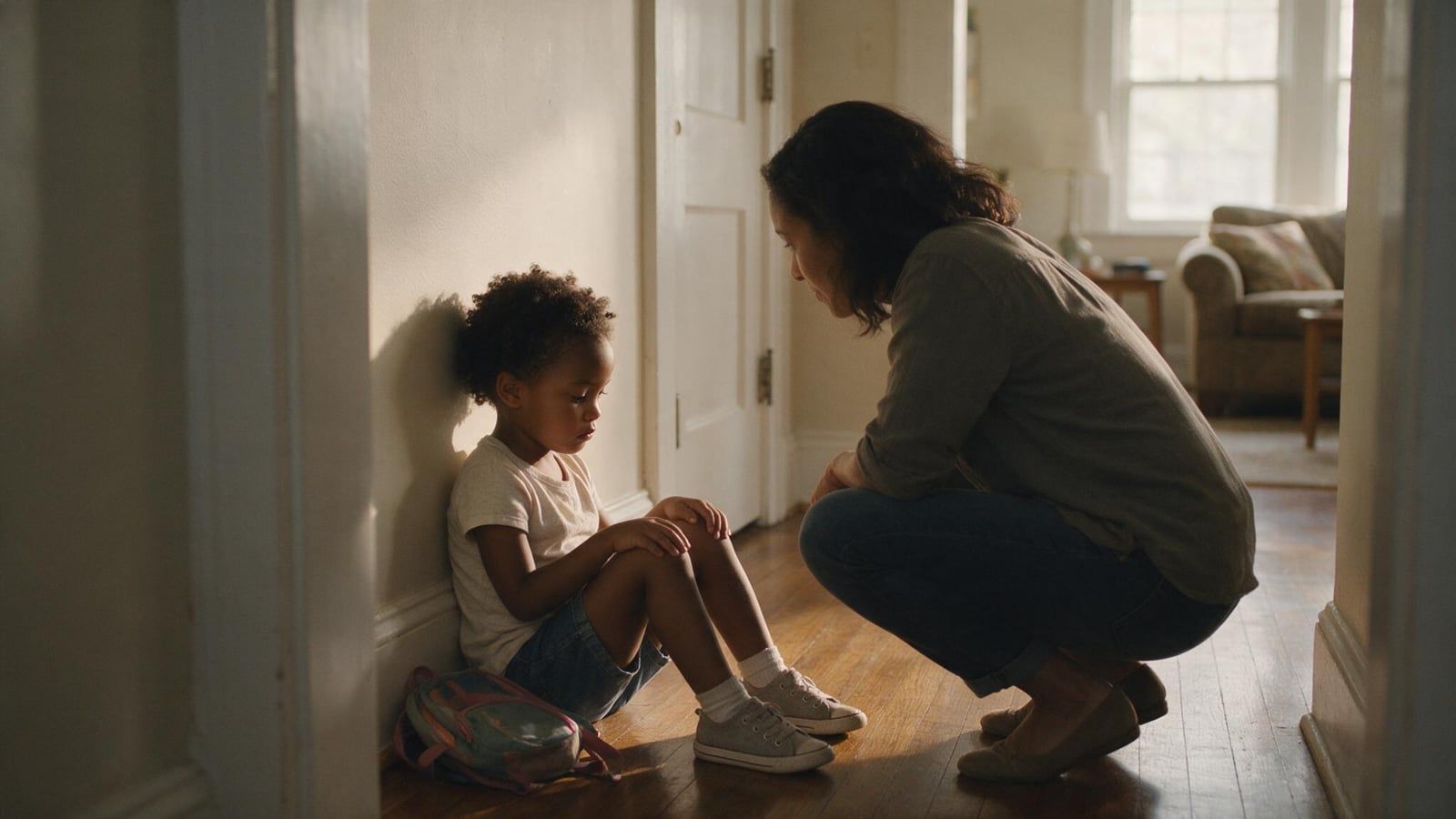
Say little, and say it early. One short line does more than a speech: "Ugh. And it was so tall." That's enough. It puts a name on what happened without asking them to calm down.
Don't argue with the anger. Explaining that it was only a tower, that it's fine, or that a minute ago they were having a great time, only leaves them frustrated and odd for being frustrated on top of it.
Don't pick up the blocks. It's the most automatic thing to do and the least helpful: tidying them while they're still angry takes the starting over away too. Leave them where they fell until they're onto something else, unless there's a baby sibling circling; and if they never come back to them, you pick them up together, without a word about it.
"I'm not playing anymore" isn't a decision. It's the last thing you say when you're furious, not a plan. If nobody turns it into a topic, they often come back a little later. And when they do, the most useful thing is to say nothing about it: no "see, you did want to", no cheering. Let them come back without having to admit anything.
If the anger is one of the big ones and doesn't come down, that's a tantrum and it's held differently: you have it in five co-regulation techniques. And if it ends up coming out as a shove at another child, in my child hits.
The two seconds when you could fix it
This one isn't for today, it's for the next tower.
You can see where the piece was going. Placing it takes two seconds and heads off the whole meltdown, and the temptation is enormous because it also looks like the kind thing to do.
What tends to happen when that repeats a lot is that the child starts asking for help a little earlier each time, at the point where they already know someone will show up. It can also work the other way round, mind: some children ask a lot from the start and some parents answer a lot because they're being asked, and from the outside there's no telling who began it. As a rule for everyday life it holds up just the same, and trying it costs nothing.
Lending your hands
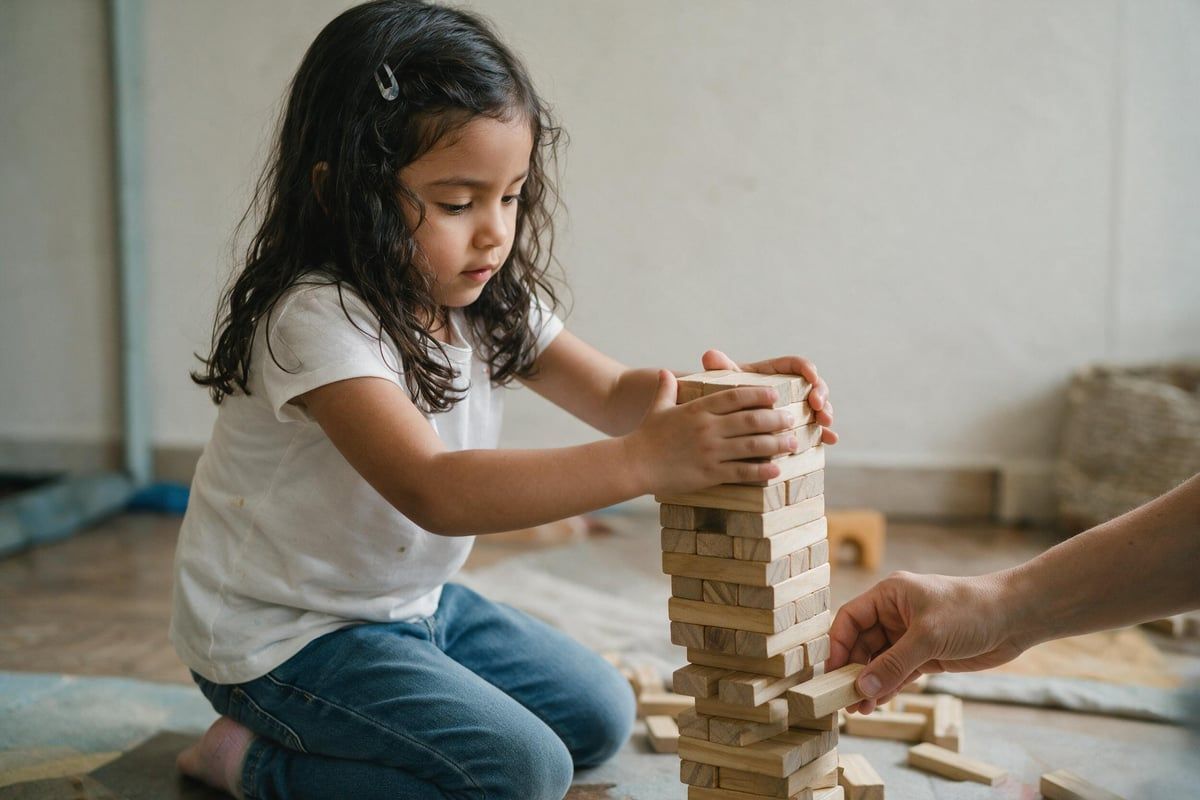
Steady it, don't place it. If the base is wobbling, put a finger on the base and let them put the piece on.
Do only the impossible stretch. Open the packet that won't give and hand the spoon back. Untangle the knot and let them get their foot into the boot.
Come closer without offering. Sitting down beside them without saying anything is often enough for them to have another go. Asking "want some help?" in the heat of it often sounds like "this is getting the better of you", and some children say no even when they need it. There are children for whom coming closer only fans the fire; with those, close by but hands off.
Ask which part. Once they've calmed down, "what should I hold?" leaves the work on their side and "shall I do it?" takes it away.
And sometimes the right answer is to help and be done with it. It's nine o'clock, they're wrecked, so are you, and doing up the shoe for them isn't going to ruin their character. This is about the general drift of the weeks, not about every single episode.
Adjust the difficulty of the task, not the child
The other thing you can do has nothing to do with the child and everything to do with what's in front of them.
A tower with a wide base holds up where a single column doesn't. A puzzle with fewer pieces gets finished, and finishing makes you want another go. If your blocks are the shiny plastic kind that slide, a cloth underneath or a thin rug already changes things a fair bit, without buying anything.
The point isn't that they don't fail, it's that the failure can be undone. A child with a task that recovers easily will have started over many more times than one stuck on something impossible, and starting over is exactly what we're hoping they'll practice.
When your patience is already spent
If it's the second time today, or the third, and you have none of this left in you, on days like that two things are enough: don't pick up the blocks and don't argue with the anger. That alone covers most of it. The rest, the finger on the base, the cloth underneath and the short line, is for the days when you can.
When to take a closer look
Getting very frustrated at these ages is normal. It's worth mentioning to your pediatrician if you see any of these:
- It's growing month by month instead of easing off.
- They hurt themselves when something goes wrong.
- They avoid anything new in case they can't do it, and the list of what they avoid keeps growing.
- They can't come out of the anger even when you change activity or offer something else.
- It happens the same at home and outside, and school notices it too.
- They've stopped doing things they used to do without any trouble.
- Managing their hands is far harder for them than for other children their age: things drop out of them, they avoid anything hands-on. That's something the pediatrician looks at separately.
- The frustration shows up above all when they can't make themselves understood.
Asking is a way to rule out what you can't see from home.
A story where nobody says "come on, try again"
In When the Tower Falls, Toki has spent days imagining one particular tower, and he builds it slowly, feeling out the place for each block with his fingers. As he goes to put the last piece on, a small turn of the wrist grazes it and the whole thing falls. Toki cries, and then a hot anger comes over him: he sweeps the blocks into the box, folds his arms and says "not anymore".
Then Serena arrives, and does the thing adults find hardest. She doesn't tell him it's fine, she doesn't encourage him to try again, and she doesn't pick up the blocks. She sits down nearby, picks up a piece, looks at both sides of it and asks the block, entirely seriously, where it wants to go. What Toki does from there is better discovered by reading it.
It's for the older ones in the house, five and up. At four it works if they can already sit through stories with more text than picture; at three it runs long, even though anyone would recognize the opening scene.

When the Tower Falls
After the Fall
Toki is a young raccoon who loves building block towers. For days he has been picturing one in particular: tall, exactly the way he sees it in his head. When he finally builds it, a single movement of his own brings it crashing down. The story follows what happens inside when something we made with great care collapses all at once.
Read this children's story in the Semillita appComing up next: how you teach a child to put a name to what they feel, and what changes once they have the word.