


When the Tower Falls
After the Fall
Read this story in the app
Stories are only read in the mobile app. Scan the QR to open this same page on your phone.
Tap to open the story if you already have the app. Otherwise, install it first.


How the story begins
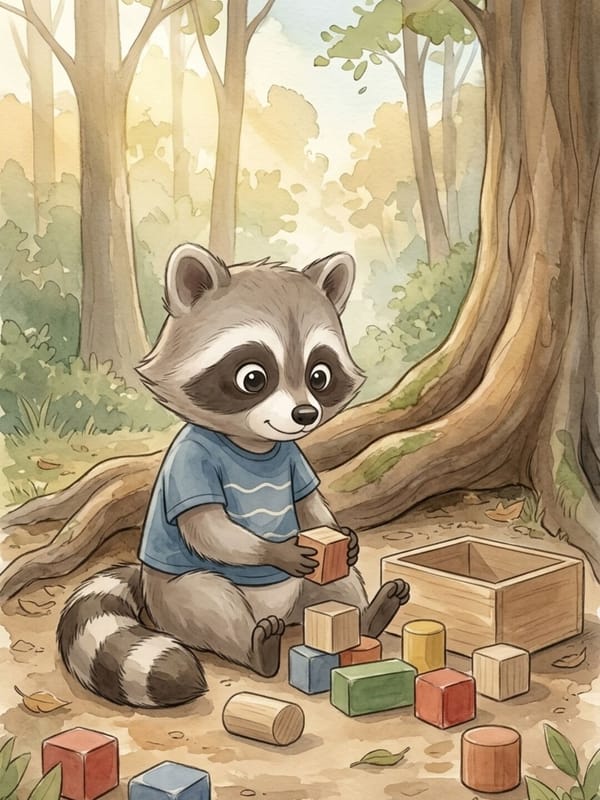
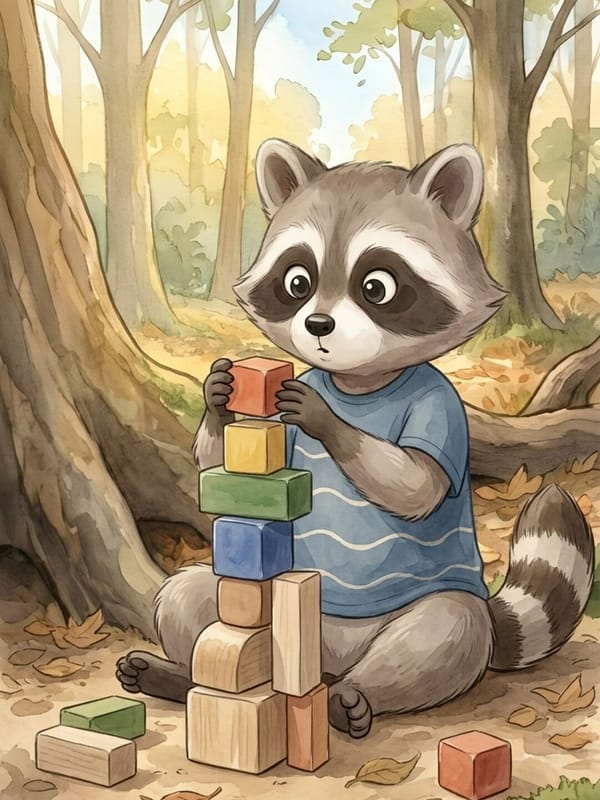
Toki had had his blocks since before he could remember. Some of wood, some of stone, some of paper-wrapped cardboard. His paws knew every one of them: this one is heavier on the inside, this one sounds hollow if you tap it with your fingernail. In the afternoons he would take them out to the patch of bare earth beside the big root. And he would build.
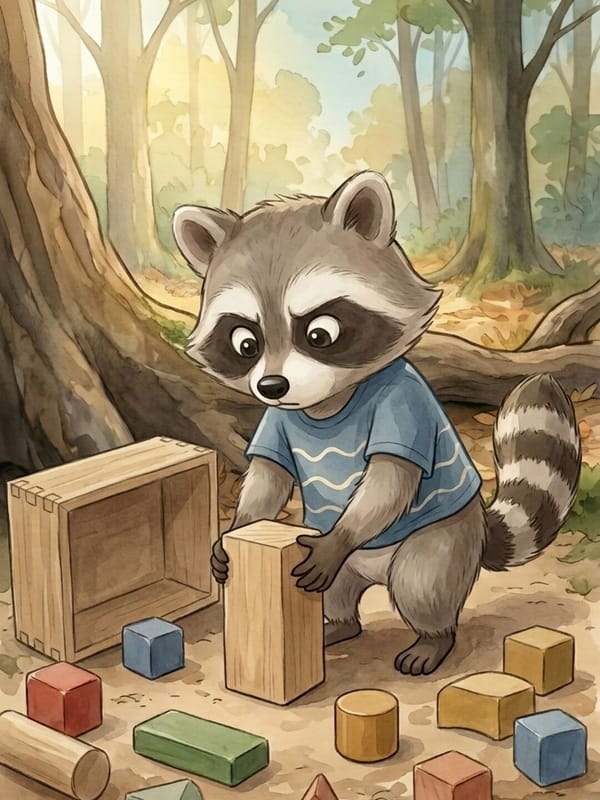
Today he wanted a tower. He had been thinking about it for many days: tall, really tall, exactly the way he had imagined it. He tipped the box out onto the earth. The blocks rolled and came to rest, waiting for him. Toki picked up the heaviest one and set it down. Toc. On top, the one with the rounded corners. Toc.
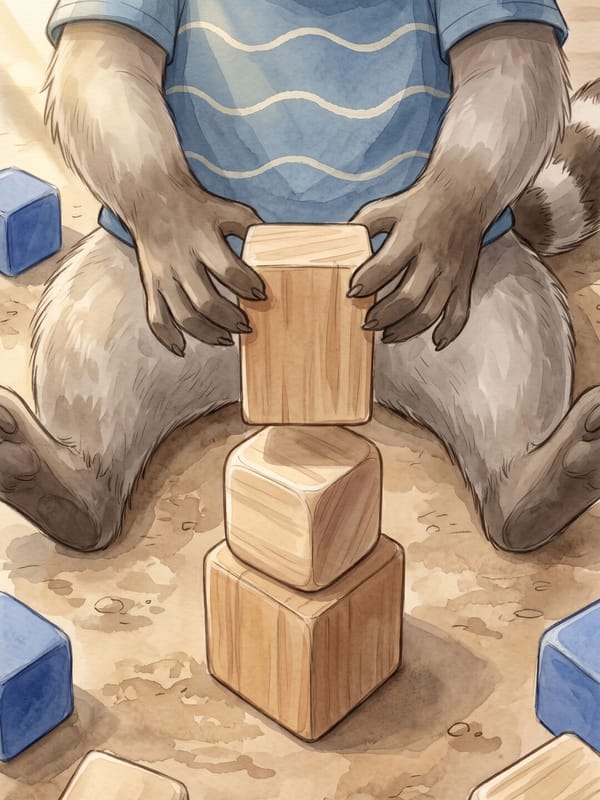
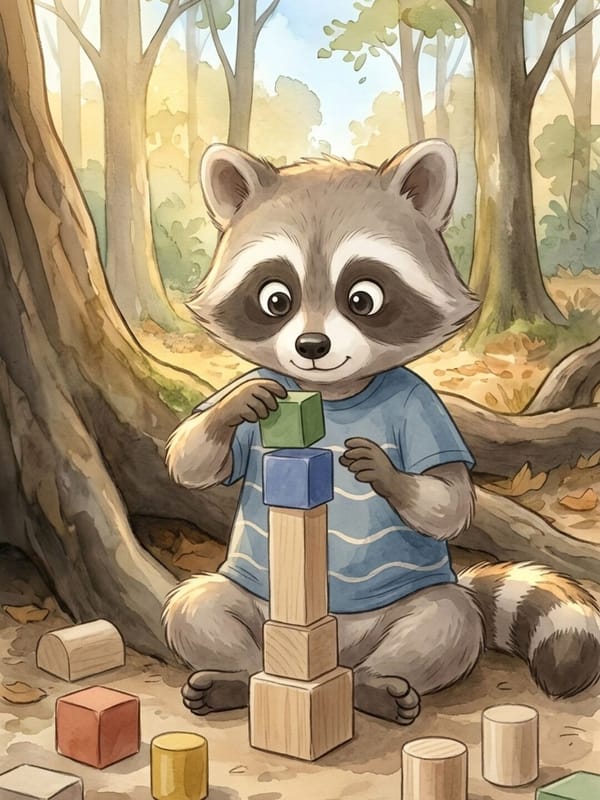
Toki built slowly. Each block had a place where it fit best, and he found it with his fingers. Sometimes he tried one upside down and it sounded different. He turned it. He set it down. Toc. The sun moved over the root, but he was looking at the tower.
Want to know what happens next? Read and listen to the full story in the free Semillita app — no ads.
Guide for families
💭 What is this story about?
Toki is a young raccoon who loves building block towers. For days he has been picturing one in particular: tall, exactly the way he sees it in his head. When he finally builds it, a single movement of his own brings it crashing down. The story follows what happens inside when something we made with great care collapses all at once.
🧠 What will children learn?
- Frustration after a failure is a normal, legitimate feeling that everyone experiences.
- Crying and anger aren't problems: they're honest responses that deserve their own time.
- The silent presence of someone next to us can help more than any explanation.
- Sometimes the body finds its way back to play before the mind decides to.
- Accepting a mistake doesn't mean pretending it didn't hurt: it means starting again when you're ready.
- What grows out of trying something differently doesn't have to be better to be worthwhile.
🤝 How to continue the conversation?
- "What do you feel in your body when something you were working on really carefully suddenly goes wrong?"
- "Has it ever happened to you that you got so upset with something you made that you wanted to push it away and not look at it again? What helped you feel better afterwards?"
- "What does someone who stays next to you do that helps, even without telling you what you should do?"
- "Are there things you enjoy doing even when they don't turn out exactly the way you had imagined?"
🎯 Educational approach
This story treats difficult emotions — frustration, anger, the urge to give up — as honest, complete responses, not problems to fix. The silent presence of someone who knows how to stay beside a child without explaining is one of the most valuable supports for an overwhelmed child. To young readers, it offers the implicit message that their feelings are valid; to the adults reading along, the possibility of staying close without having the right answer. The original tower is not rebuilt, and that is deliberate: accepting a mistake doesn't always mean trying the same thing again. Sometimes it means loosening the demand that made the fall so painful in the first place, and allowing yourself to play once more. What's new doesn't have to be better — it just has to be your own.
More stories you might like


