

They're two and a half and they say a handful of words, always the same ones. At the park, the child playing next to them comes out with whole sentences, and even explains things. Someone in the family has told you to wait, that children talk when they're ready. Someone else has told you, in the same calm tone, that at that age it should be there already.
And you go home counting words under your breath.
That running tally is exhausting, and on top of it the count is usually wrong, because language is the ground where children differ from one another the most. The American Academy of Pediatrics says it plainly in its guide to language at two years old: at these ages there is more variation in language development than in any other area. The park is, literally, the worst place to be looking.
What's actually expected at each age
The numbers are a guide, not a diagnosis. They're there to tell you whether it's worth asking, not to label anyone on an afternoon at the park.
That same American Academy of Pediatrics guide describes the two-year-old with a vocabulary of fifty words or more, growing fast, and with phrases of two or three words ("want water", "mama shoe") that over the course of the year stretch to four, five or six. What matters there isn't the fifty: it's that they put two words together, and that the list grows from one month to the next.
On being understood, there's one fact that puts a lot of people at ease. The American Speech-Language-Hearing Association describes in its communication milestones for ages 2 to 3 that at that age speech is getting clearer but someone who doesn't know the child may still not understand it. A neighbor not catching what a two-and-a-half-year-old says is to be expected. In its milestones for ages 3 to 4 it places the shift: by around four, a child speaks in a way that people understand most of what they say.
And a figure that helps put the fright in proportion: that same American Academy of Pediatrics guide estimates that around one in ten to fifteen children has some difficulty with understanding or with speech. It's neither very rare nor the usual thing.
Why pushing shuts down exactly what you want to switch on
The natural reaction, when you're worried, is to ask them to talk. "Say it." "Say water." "You're not getting it until you say it." "Come on, after me: ba-na-na."
The problem with turning every exchange into a test is that the child stops wanting to take part. Learning to talk depends on talking being worth it, and when every attempt of theirs gets corrected or put through a test, what's worth it is going quiet and pointing. Something similar happens with emotions: if every time they say what they feel someone revises it, they learn that saying it comes with a test attached. It's laid out in how a child learns to say what they feel.
Holding back something they want until they name it is the hard version of the same thing. It gets you the word once, and in exchange it teaches them that asking is a negotiation with you, not communicating.
What does make it grow
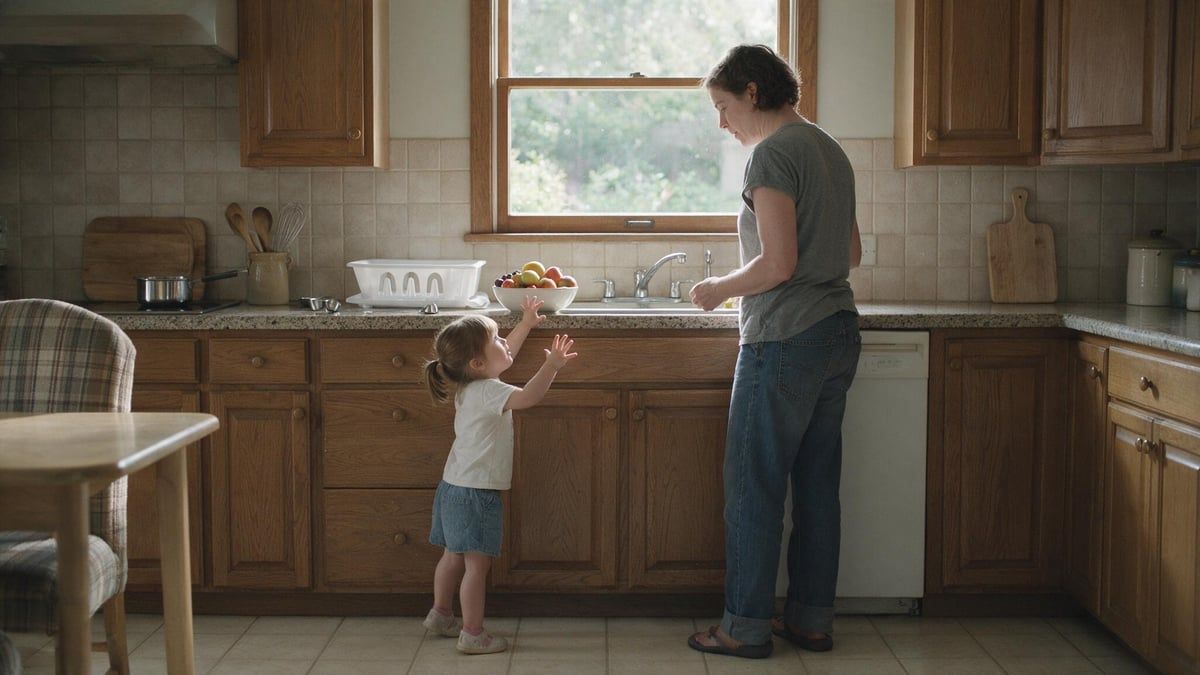
What builds language is the number of times something of theirs gets an answer, more than the number of words they come out with. Three things fit into any day, even a bad one:
- Answer what they already communicate. If they point at the fruit bowl, don't wait for the word: hand them the fruit and lay the name on top. "The apple. You wanted the apple." They communicated and it worked, and they've come away with the word into the bargain. That's the opposite of holding the fruit back until they name it.
- Give back what they say, one size bigger. They say "wawa". You say "water, yes, you want water". You're not correcting them: you're handing their attempt back complete, with the pieces that were missing.
- Leave the gap. After you ask something, count slowly to five before answering yourself. To adults that silence feels endless and we fill it nearly every time. Plenty of children need exactly that long to get going.
And one that costs no time because you're doing it already: narrating out loud what's happening while it happens. "Socks now. This foot and this other one." They don't need to answer. They're hearing what the things they can see sound like.
A gesture is already language
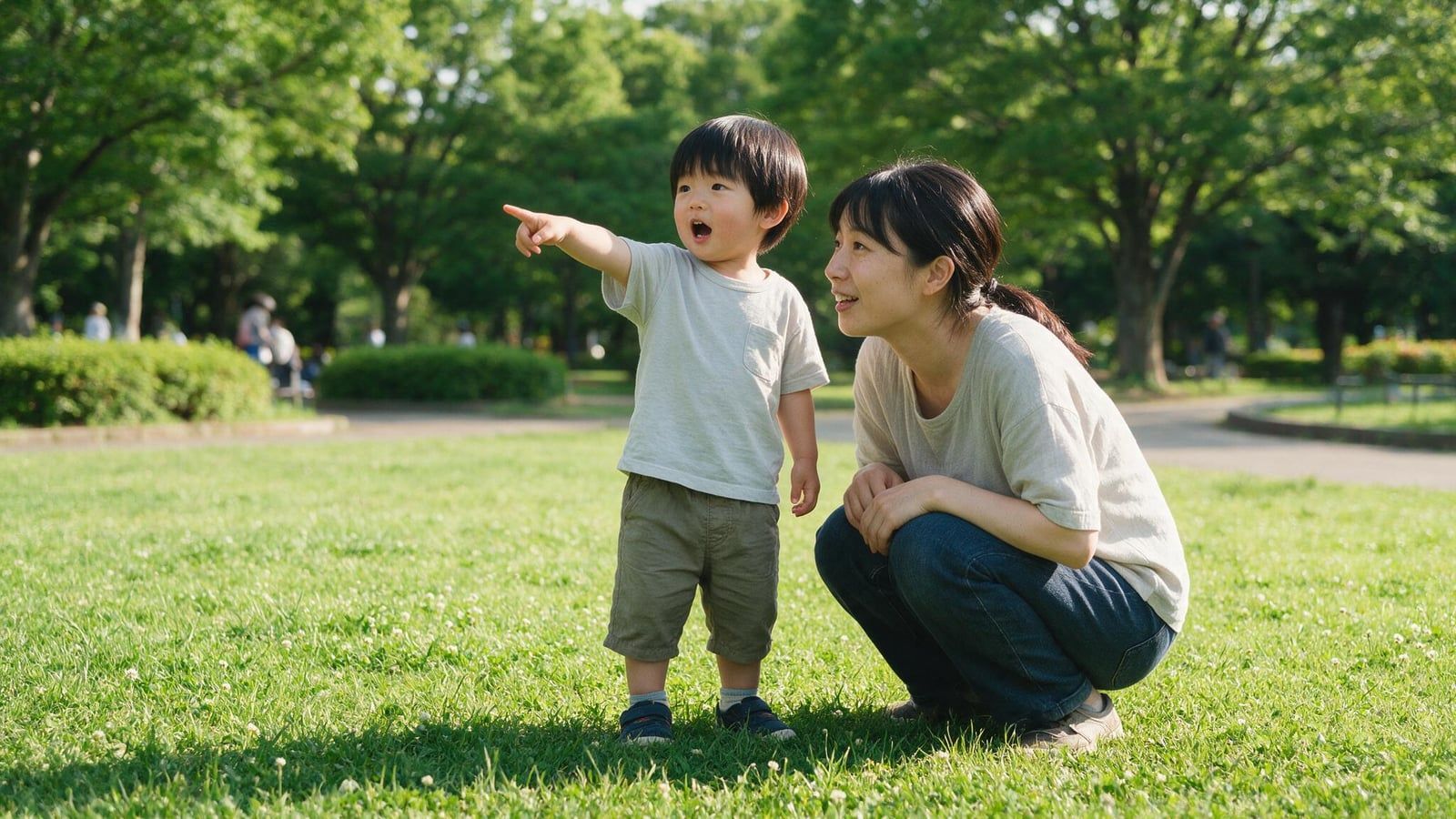
When a child points, pulls your hand, brings you an object or shakes their head, they aren't swapping speech for something worse. They're communicating, with what they have today.
It's worth knowing, because in a child who still talks very little, gestures are among the signs that look most promising. That same association's public-information site points out, in its material on children who are late to talk, that children who use a lot of gestures are more likely to catch up with children their age, and the same goes for those you can see understand well.
So if your child says little but understands everything you ask of them, seeks you out to show you things and makes themselves understood by pointing, what you have in front of you is a good deal more than the word count says.
When to stop waiting
This is where "they'll talk when they're ready" does its damage, because it has the shape of reassuring advice and works as a postponement.
That same site's recommendation is explicit: there's no need to wait and see before asking. Asking commits you to nothing, and at these ages an assessment in time costs far less than making up ground later.
Make an appointment, without leaving it for later, if you see any of these:
- They've stopped using words or gestures they were already using.
- They don't answer to their name, and don't seem to hear you when you speak to them from another part of the house.
- They don't understand what you ask of them, even when it's simple and everyday.
- They don't point, don't bring you things, don't look for your eyes to share something.
- By around two, they aren't putting two words together.
- By around three, even at home you understand almost nothing of what they say.
The first step is usually to rule out hearing: mild hearing loss or repeated ear infections can go unnoticed at home and hold language back without anyone connecting the two.
And if two languages are spoken in your home, that isn't the explanation. The same site says it without qualification in its material on growing up with more than one language: using several languages doesn't confuse children or cause speech or language delays. What is worth doing is not counting only one of the two, because what they say is split between both.
A story where the smallest voice fits just the same
In Who Says Moo?, a chick wakes up wanting to sing and the only sound it knows is "cheep". It heads out to the meadow to find someone to sing with, and keeps running into enormous voices: the pig, the cow, the horse. Every encounter works the same way. The chick tries the other one's sound and it comes out teeny. The other one tries the chick's and it comes out gigantic. And they both laugh.
Nobody asks the chick to trade its "cheep" for something bigger. By the end of the day its teeny sound fits right in the middle of all the others, and the story closes by saying that every animal sings its own way.
It's a story for two- to three-year-olds, and it's built as a back-and-forth game: you make the sound, your child answers however they can, and that answer is what turns their voice into a conversation. It works just as well whether they answer with the word, with the sound, or by pointing at the picture.

Who Says Moo?
The Meadow Concert
A chick wakes up in the nest bursting to sing. All it knows how to make is “cheep,” but it wants to sing with someone, so it heads out into the meadow to find company. Along the way it meets enormous voices that take it by surprise: the cow, the pig, and the horse. Each meeting is a back-and-forth of sounds, a game of listening, imitating, and answering.
Read this children's story in the Semillita appIn the next post: my child lies, and why at three or four it's almost never a lie.