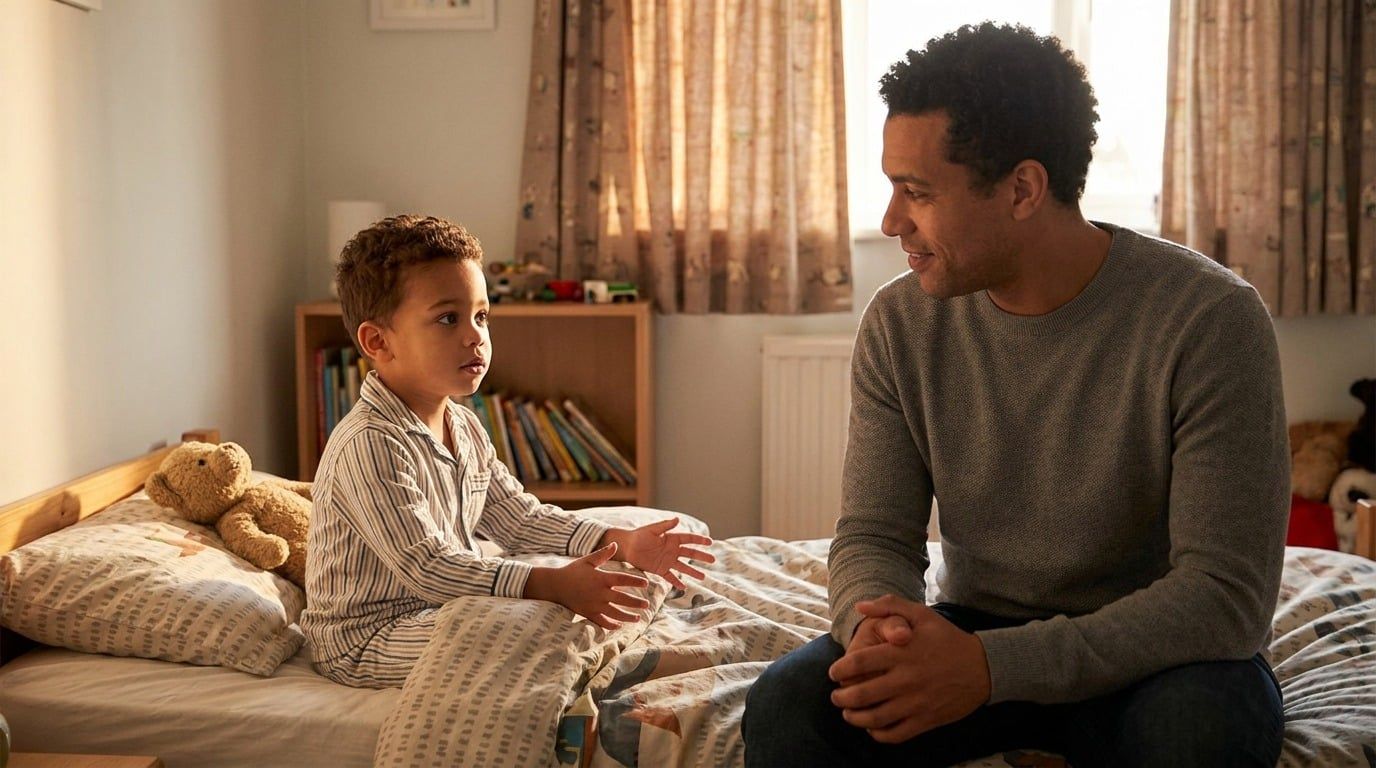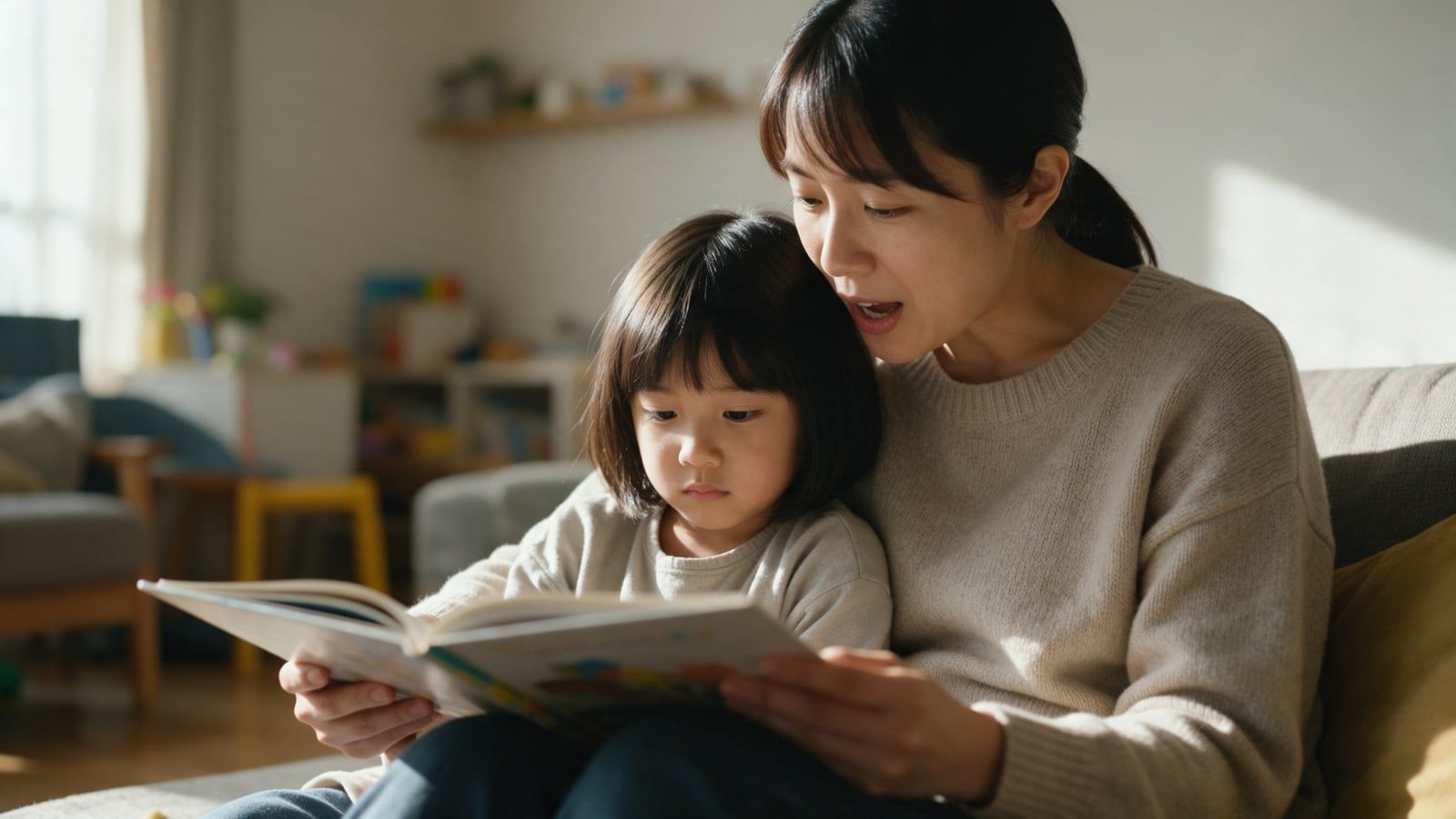


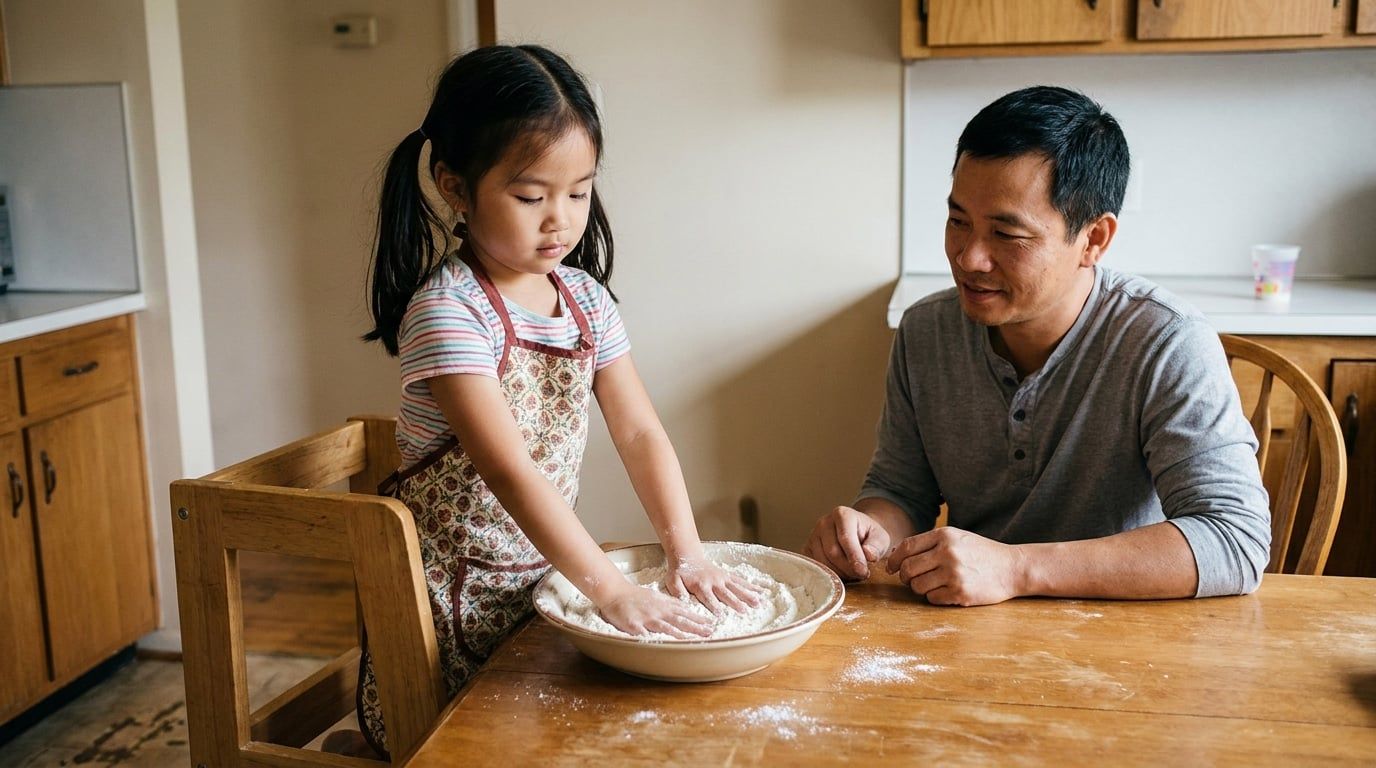
You’re showing your child how to make dough. “Flour first, nice and slow, or else…” Before you finish the sentence, their fingers are already in the bag, and there’s a white cloud in the kitchen.
The most natural reaction is to repeat the explanation a little louder: “Are you listening to me?” Behind it is a reasonable question: do they have trouble paying attention, or is this how they learn at their age? At 3, 4, or 5, diving in hands-first before listening is very common. The ability to hold back an impulse is still maturing, and on its own, this says nothing about their attention.
Learning by doing, but with an adult alongside
What we take away from several studies: children learn more when they take part, with an adult who sets up the task and comments on what they’re doing, than when they’re on their own or only listening. Touching is one way to take part, not the only one.
In one experiment, 70 children aged 4 and 5 spent about 15 minutes learning what four geometric shapes are like. Some learned through guided play: they built the shapes themselves out of sticks and explained how they were like the ones on the cards, with an adult who set them the task. Others were only taught while they watched and listened, and others played freely with the shapes. The guided play group recognized the shapes better, including the less typical ones, and it still showed a week later (Fisher et al., 2013).
A meta-analysis of 164 studies, with people of all ages and not just children, found that letting people discover things without help produced worse results than teaching them directly. Assisted discovery (feedback on what they’re doing, gradual support, asking them to explain what they’ve noticed) produced better results than other methods, direct instruction included (Alfieri et al., 2011).
And there’s a nuance when it comes to teaching. In an experiment with preschoolers, when an adult taught them how a toy worked, the children focused almost entirely on that one function. The ones who hadn’t been taught explored more. Teaching worked for what was taught, and the trade-off, in that experiment, was that they explored less on their own (Bonawitz et al., 2011).
That doesn’t mean there are “hands-on” children and “listening” children: these studies are about children in general, and a 2008 review concluded that there isn’t enough evidence to tailor teaching to each child’s “learning style” (Pashler et al., 2008). The experiments are small and involve specific tasks (geometric shapes, a toy with hidden functions), and none of them says listening is bad.
What to do at home
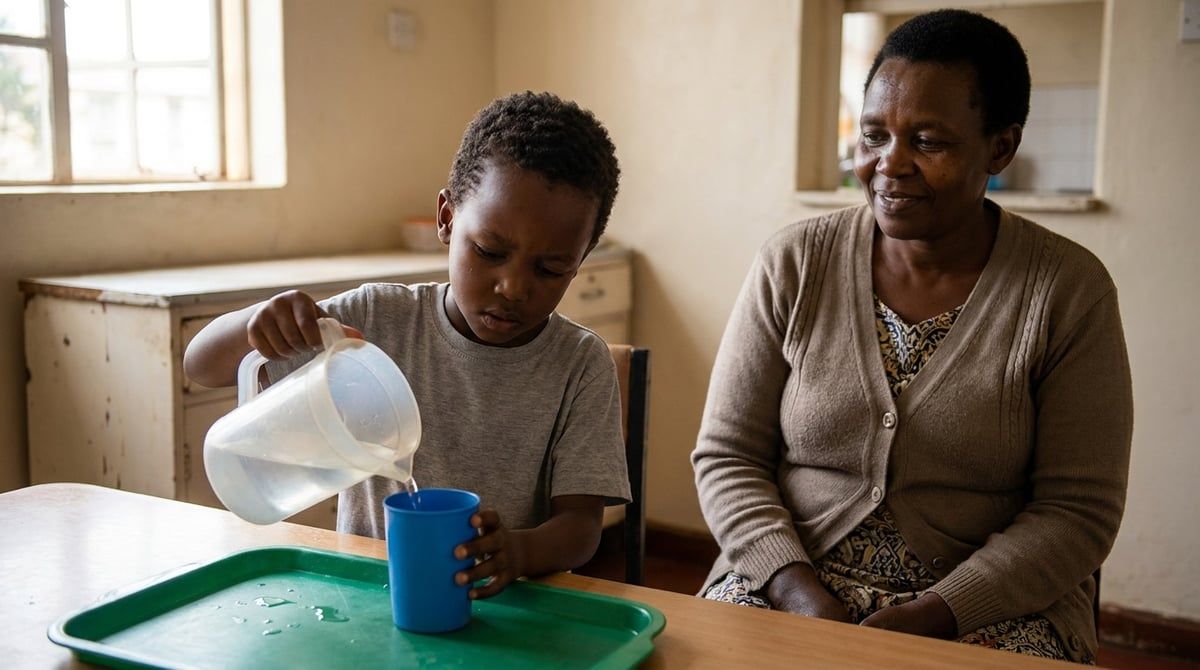
Some of these ideas come from the studies, and others are common practice.
Set up the task and stay by their side. “Let’s see what happens to the flour when we add water.” Then comment on what they’re doing without directing them: “You’re squishing it with your fingers.” With younger children, it helps to offer a choice: “Is it sticky or dry?”
Let them experiment before you explain. Instead of repeating the explanation, hand them the spoon or the bowl and watch what they do. If what matters is that the dough turns out, explain it; if what you want is for them to explore, wait a little. This is an inference from the toy experiment, not something that has been measured in a kitchen.
Ask before you tell. “What do you notice?” “What do you think will happen if…?” Asking them to put what they’ve seen into their own words is one of the kinds of support the meta-analysis points to.
Step in when they get stuck. If they’ve been wrestling with the lid for a while, don’t open it for them: show them where to put their hand. Some time spent not knowing what to do is good for them too, and we talk about that in “Boredom isn’t the enemy”.
Prepare a spot where a mistake doesn’t matter. A bowl with a little flour instead of the whole bag, a tray underneath, and, if they climb on a stool, make sure it’s stable and that an adult is right beside them. Extra flour or spilled water can be wiped up with a cloth.
Hands on, but nothing in the mouth. While you cook together, they can touch the flour and the dough. The FDA asks that no one taste or eat raw flour or raw dough (which often contains raw egg, too), that children not play with raw dough or use it as modeling clay, and that everyone wash their hands after touching it (FDA, on handling flour safely).
Keep the rules that have a reason behind them. Anything that burns, cuts, or plugs in is the adult’s job. With little ones, explaining isn’t enough: what protects them is distance and supervision.
Keep telling stories and reading. Learning by doing doesn’t make the stories you tell and read any less valuable. In its advice for children ages 4 to 6, the American Academy of Pediatrics suggests telling them stories and asking what they remember, and encouraging their school to offer playful learning in addition to more structured activities, like reading (AAP, on the power of play).
None of this is only for the kitchen: it works for getting dressed, tidying up, or doing a puzzle, and there’s no need to set it up every day.
When to look more closely
Diving in hands-first before listening isn’t a diagnosis. In general, a professional doesn’t look at whether a child prefers to touch, but at whether they struggle to keep their attention, both at home and at school, for months, and whether that gets in the way of everyday life. If they also seem not to hear well or not to understand what’s said to them, hearing and language are the first things to check. That’s assessed at an appointment, and the pediatrician is the first step.
And if it’s the other way around and they don’t want to touch, offer them the spoon and don’t force them. If they strongly and persistently avoid getting messy or touching certain textures, there may be a sensory sensitivity behind it, and it’s worth mentioning that to the pediatrician too.
A story where the recipe isn’t enough
In The Curious Robot, a story for children ages 4 to 7, Chip is a robot who knows the name of everything in his workshop and has read all the manuals, but asks very little. A hungry mouse asks him to bake cookies together. Chip has the whole recipe in his memory and has never cooked.
The mouse sticks a paw into the bag of flour, blows, and a white cloud floats up. Chip stops in the middle of his explanation, reaches out his hand, and touches the flour. From there, he starts asking questions of his own: why the dough stretches, what happens to chocolate when it melts. When the mouse dumps the whole bag at once and they both end up white with flour, Chip calls it an “error in established protocol,” and the mouse replies that it was a “fun error.”
The story doesn’t pit touching against following the rules: when the cookies come out of the oven, it’s Chip himself who insists on waiting nine minutes for them to cool, because the instructions say so.
The guide that comes with the story in the app suggests a question for after reading: “If you could do a cooking experiment like Chip, what would you like to make?”

The Curious Robot
Discovering the world through metal eyes
Chip is a young robot who lives in a laboratory full of books and tools. He has access to all the knowledge in the world and can remember thousands of facts without forgetting anything, but he has never felt true curiosity to experiment with his own hands. One day, Spark, a hungry and tremendously curious mouse, asks him for help making chocolate chip cookies. Although Chip knows the recipe by heart, he has never cooked. Together they discover that knowing the theory is not the same as living the experience, and that the most interesting questions arise when you touch, mix, and observe the world with your own senses. Through this culinary experiment, Chip learns that curiosity is not about having answers, but about daring to ask “why?” and “how?” while you do things.
Read this children's story in the Semillita app