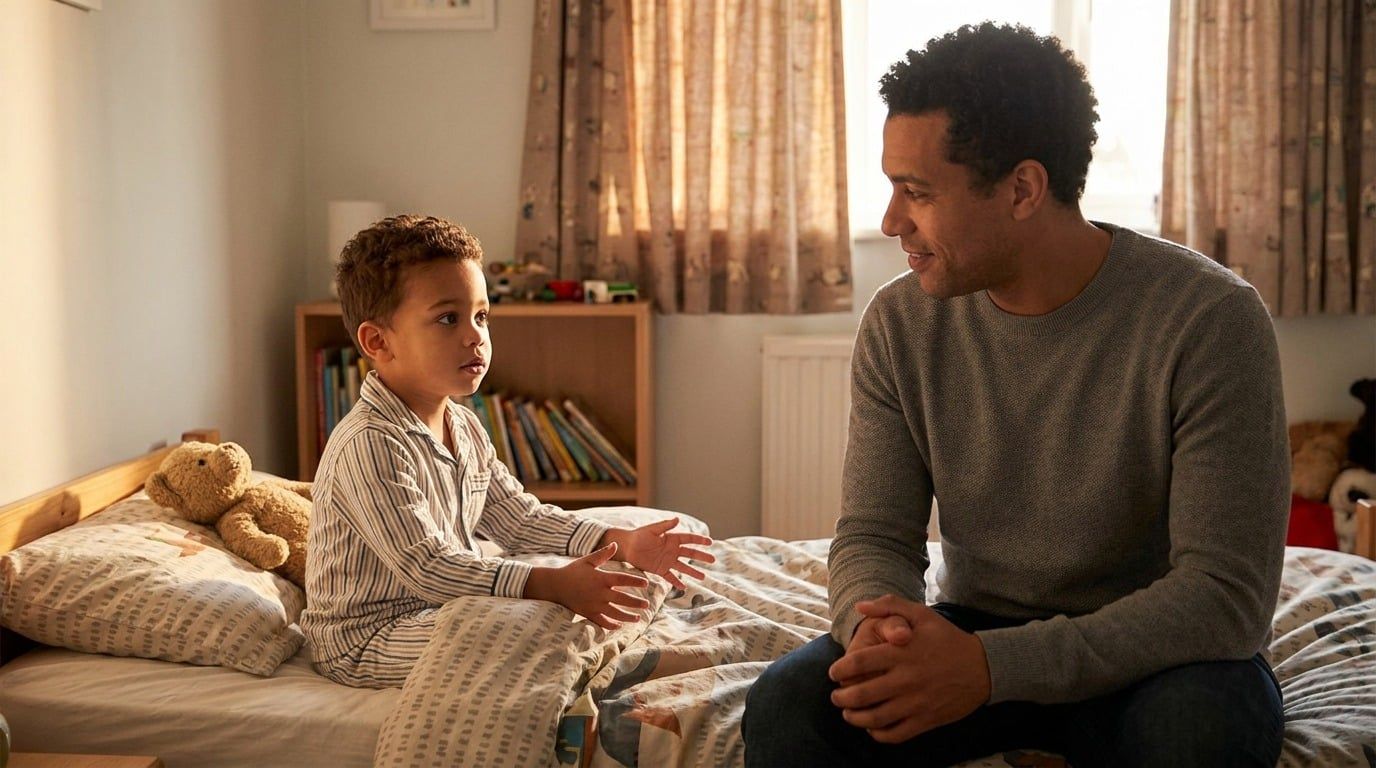


It's a long afternoon with nothing planned. It's raining outside, or it's too hot, or there's simply no school, no activity, no visitors. Your child paces around the living room, hangs upside down off the edge of the couch, opens a drawer and shuts it, and before long comes the same old line, dragging out every syllable: “I'm booored, there's nothing to dooo.”
And you feel that tug. The urge to fix it as fast as you can. To suggest a game, to pull out the paint set or, if the day has already gotten the better of you, to put on a cartoon and buy yourself fifteen minutes of peace. Whatever the way out, they all share the same impulse: to switch off that boredom before it turns into whining, into a meltdown, or into guilt over not having something ready for them.
That impulse makes sense. But it's worth pausing on it for a moment, because the stretch of boredom we're so eager to get rid of is often the most useful part of the afternoon. Let me tell you why, and, above all, what to do the next time you hear it.
Why it makes us so uneasy when they're bored
It's hard to stand there and watch a child be bored. Partly because their discomfort stirs something in us and we want to ease it, like we do with almost everything. And partly because of an idea we carry around without realizing it: that a good childhood is a full one, stimulated, with something interesting always going on.
By that yardstick, a bored child looks like a glitch in the system, a gap that needs filling. And since filling that gap is so easy these days, almost always just a button away, we've gradually lost the habit of leaving it open.
The trouble is that inside that gap, even though you can't see it, is exactly where something starts to happen.
What goes on in the mind of a bored child
When we stop paying attention to anything in particular, the brain doesn't shut off. It slips into a state where it wanders, sifts through memories, dreams up scenarios, connects things that had nothing to do with each other. It's the same state an idea comes from when a grown-up thinks of something in the shower or while washing the dishes, mind seemingly blank.
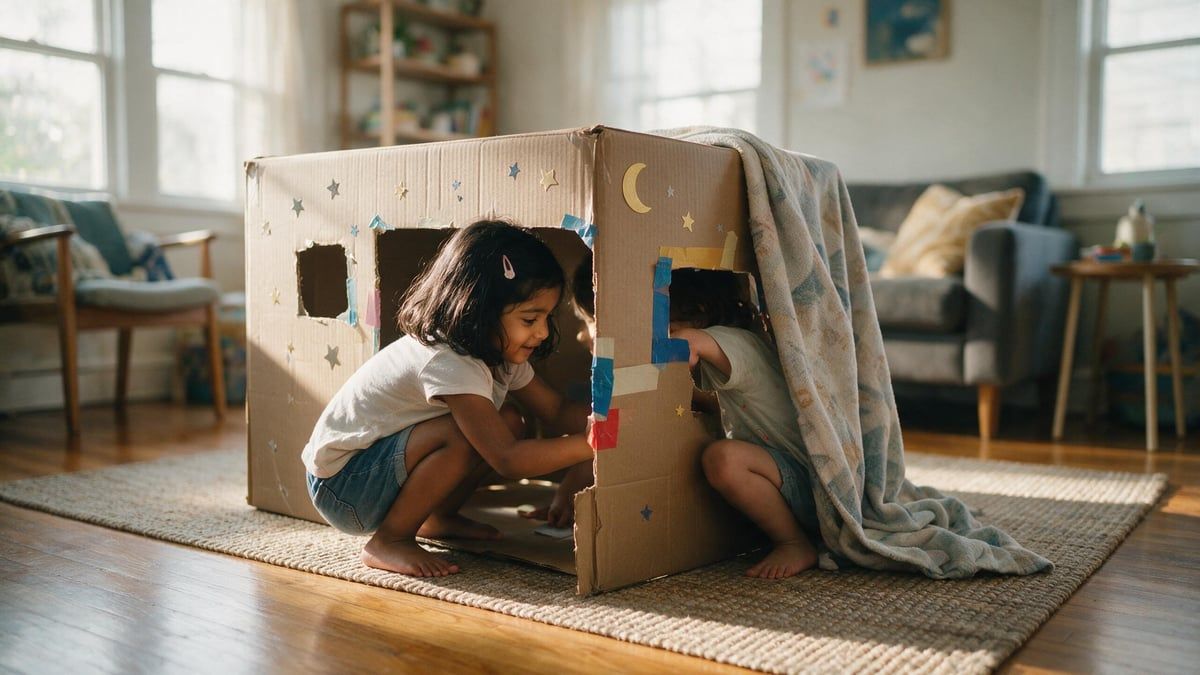
In a child that mechanism really shows, because their imagination takes off with fewer brakes than ours. When nothing is entertaining them from the outside, they start, little by little, to build something from within. The couch becomes a boat, or a blanket over two chairs becomes a cave. And a whole afternoon with nothing planned ends up being the stage for a story they direct themselves.
The key phrase is little by little, because that spark isn't instant. First comes the uncomfortable part: the complaints, the aimless wandering around the house with no idea what to do. That restless stretch is exactly where, a little later, the play tends to come from. And if we fill it right away with a screen or a plan, we take the most interesting part away from the child.
It's worth being honest about what we actually know: a good deal of the research on boredom and creativity has been done with adults and with older kids, so applying it straight to a three-year-old is a reasonable inference, not a settled certainty. But it fits with something many families notice at home: that the best afternoons of play are rarely the most scheduled ones.
Screens and the gap they fill
Screens have their place in a child's life, and there's no need to live them with guilt.
What really matters is the moment they tend to show up: almost always in that uncomfortable gap, before anything has a chance to happen. A screen entertains from the outside and with no effort at all. It hands over image, sound and rhythm ready-made, and the child only has to take them in. It's pleasant, and that's why it hooks. But while they're taking it in, their mind isn't building anything of its own: it's following what someone else built. When that becomes the automatic answer to every bout of boredom, the invent-it-yourself engine gets used less and less, like a muscle we stop moving.
Receiving fun that's ready-made is one thing; learning to invent it is another. Both fit into a child's life; we just need to make sure the first doesn't crowd out the second.
How to be with boredom without rescuing them from it
Being with boredom doesn't mean leaving your child stranded in their discomfort. It means holding that uncomfortable stretch alongside them, without rushing to fix it. A few things that help:
Don't fill the gap right away. The next time you hear “I'm bored,” resist that first impulse. Sit with the silence a little longer than your gut wants you to. Often, if the boredom lasts long enough, the child finds their own way into play. That discovery, when it comes, is worth far more if it was theirs.
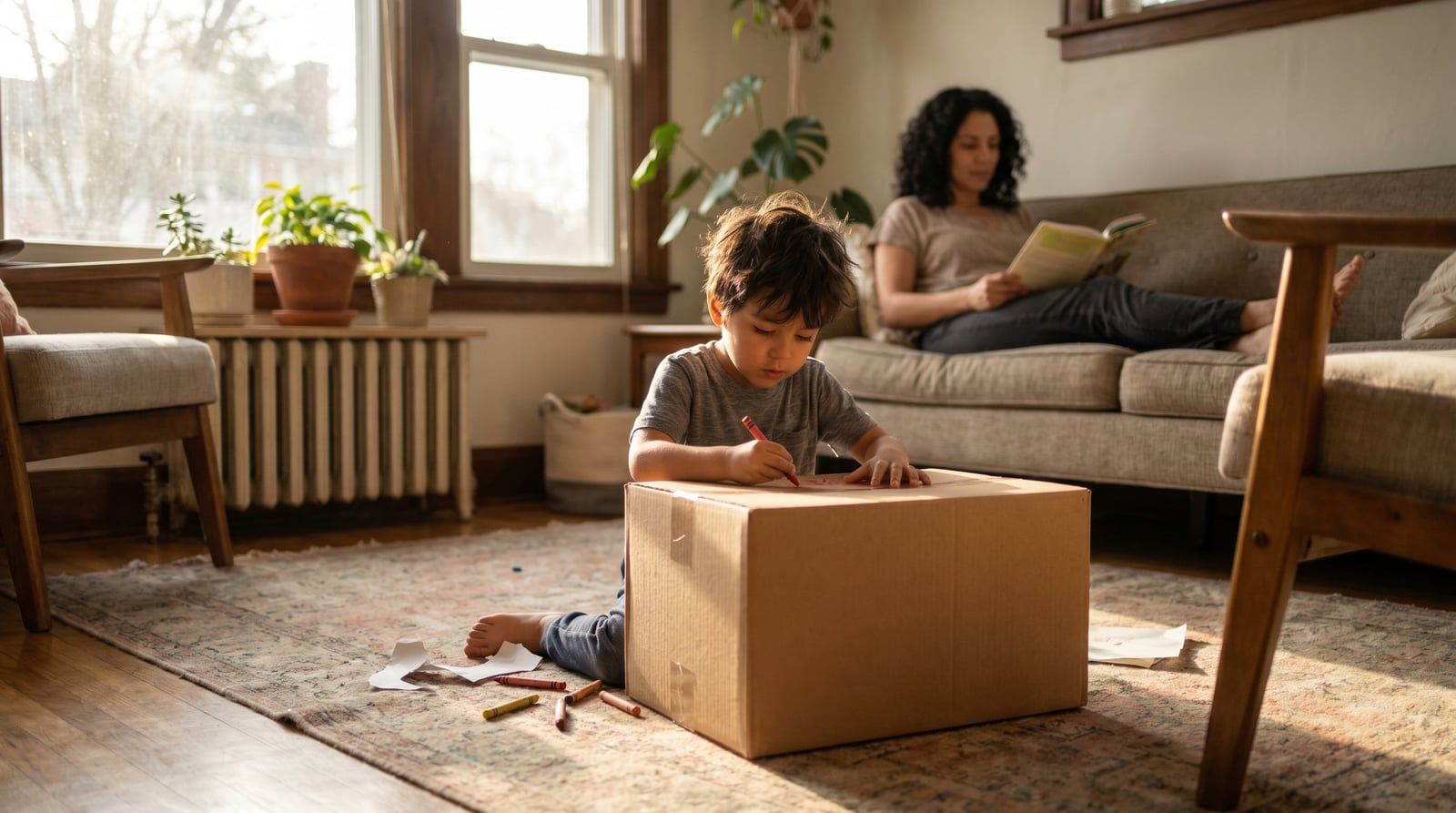
Offer materials, not plans. You don't need an organized activity or new toys. Quite the opposite: the more a toy does for you, the less room it leaves to imagine. An empty cardboard box, a few blankets, some markers forgotten in a drawer go further than most battery-powered toys. Leave the stuff out in plain sight and step back.
Let the complaint exist. “I'm bored” isn't an emergency you have to put out. You can acknowledge it without solving it: “Yeah, having nothing to do can be boring sometimes; let's see what you come up with.” You hand the ball back to them warmly, without making a drama of it and without taking on the job of entertaining them yourself.
Let go of the guilt of being their entertainer. It's not your job to keep your child's schedule full at all times. A grown-up who's nearby, available but not putting on a show, gives them something more valuable than a plan: permission to manage their own time.
Make the most of shared boredom. If there's another little one around, also bored, all the better. When two kids who don't know what to do get together, the game they invent tends to be bigger than either one could come up with alone.
When “I'm bored” means something else
A word of caution, so we don't take this too far. Not every “I'm bored” is an invitation to imagination waiting to bloom. Sometimes that line is the label a small child sticks on something else they can't yet name: that they're hungry, that they're tired, that they've had an off day, or that they simply miss you and want some time with you.
The clue is in the tone and the timing. Boredom that melts away the moment the child gets absorbed in a game was the good kind, the kind that gets things going. The kind that builds, that turns into distress, or that always shows up hand in hand with tiredness or a need for cuddles, is asking for a different answer: almost never an activity, almost always a little connection. Five minutes of real attention are worth more than any plan.
And if what's thrown off is the schedule, because vacation has arrived and the rhythm at home has fallen apart, we've already talked about whether it's worth keeping routines when there's no school. Boredom goes down a lot easier on top of a day that's more or less predictable.
A story to look at boredom with new eyes
All of this is exactly what happens to Nora in The Boredom Portal. A stormy afternoon leaves her with no power and no internet, and her screen goes dark all at once. At first she drifts around, complains, counts the floor tiles, doesn't know what to do with that emptiness. Until her eyes land on an old cardboard box and some markers that hadn't been touched in ages, and what a moment ago was a wasted afternoon turns into a journey. The story doesn't speak ill of screens or ask her to give them up: it only shows what's on the other side of a stretch without them, when we give it time.
It's a way of telling your child, without a lecture, that sometimes, when there's nothing to do, that's exactly when the good part begins.

The Boredom Portal
A Screen-Free Adventure
One rainy afternoon, a storm leaves Nora with no power and no internet. Her screen goes dark all at once and, for the first time all afternoon, there is nothing to entertain her from the outside. Nora wanders around, complains, counts floor tiles, hangs upside down off the couch… until, in a corner, her eyes land on an old cardboard box and some markers she hadn't touched in ages.
Read this children's story in the Semillita appIn the next article we flip the coin: what happens when a child's schedule is so full that there's no time left to be bored, how to spot that they're overloaded, and how to give them back a rhythm that's more their own.