


Who Says Moo?
The Meadow Concert
Read this story in the app
Stories are only read in the mobile app. Scan the QR to open this same page on your phone.
Tap to open the story if you already have the app. Otherwise, install it first.


How the story begins
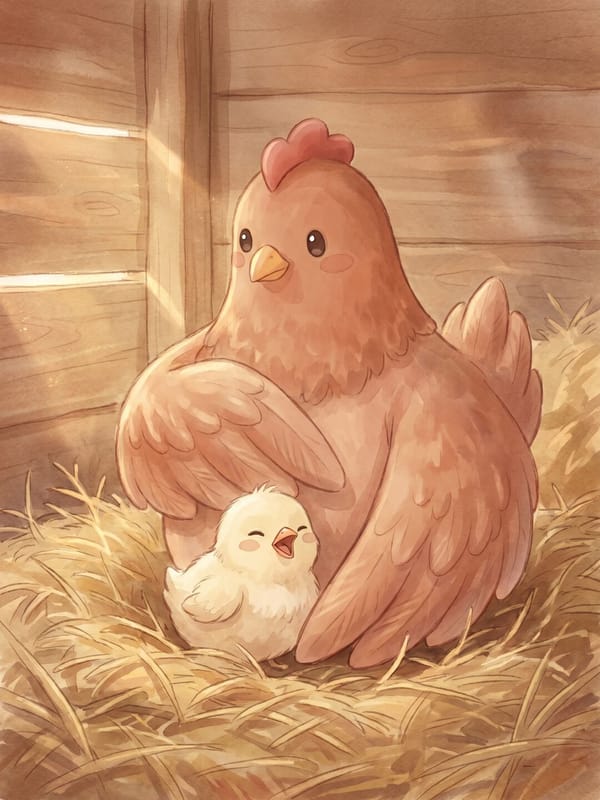
The first light came into the nest. The chick opened one eye. Then the other. Then it opened its beak: “cheep.” Mama hen lifted her wing, slowly. Underneath it smelled of warm feathers.
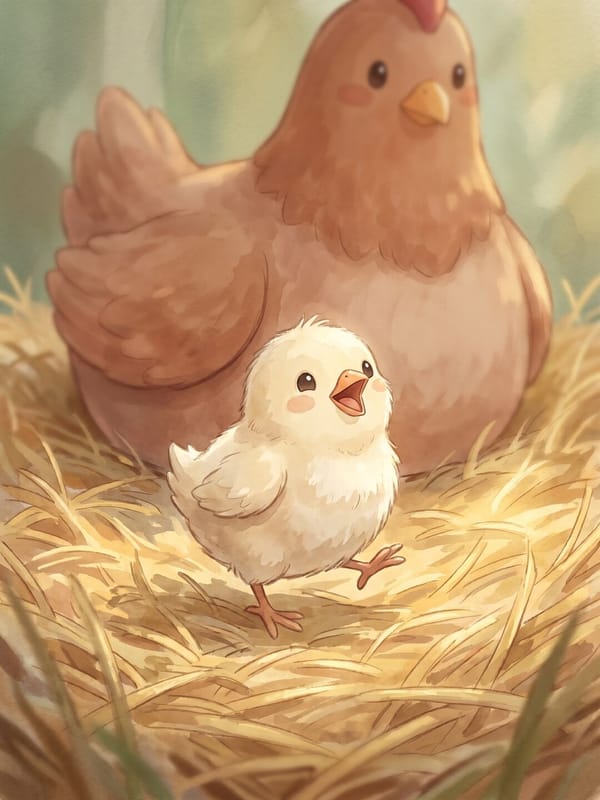
The chick sang again: “cheep, cheep.” The song tickled its beak. It gave a little hop in the straw. And another. Mama hen watched it, big and calm.
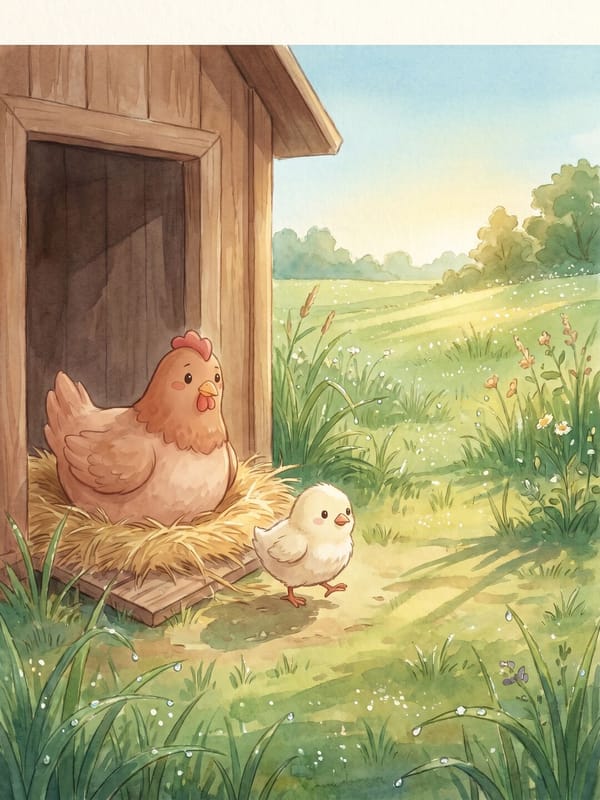
That morning, the chick wanted to sing with someone. It left the nest with tiny, determined steps. The meadow grass sparkled with dew. Mama hen kept watching from the straw.
Want to know what happens next? Read and listen to the full story in the free Semillita app — no ads.
Guide for families
💭 What is this story about?
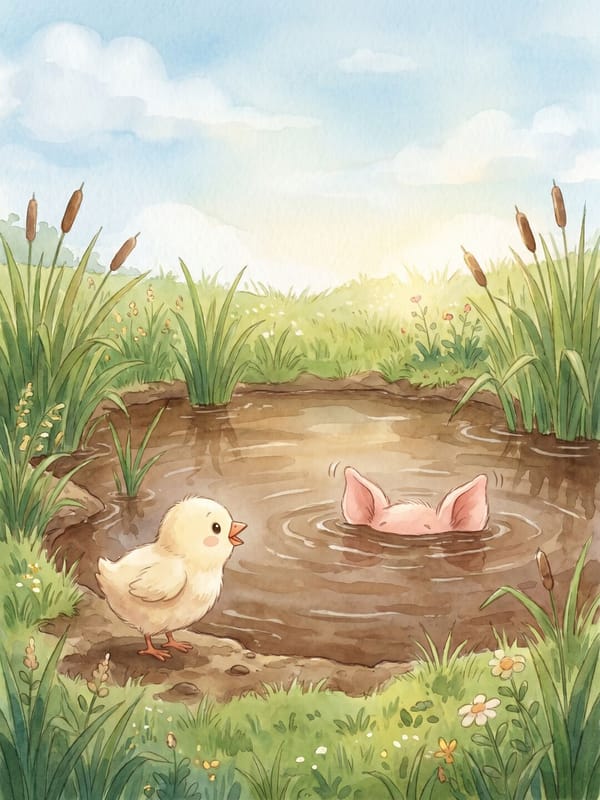
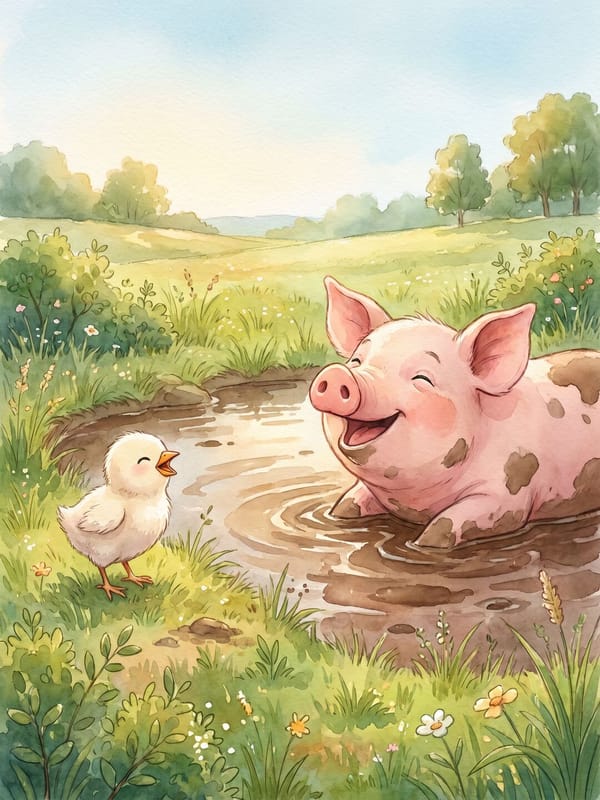
A chick wakes up in the nest bursting to sing. All it knows how to make is “cheep,” but it wants to sing with someone, so it heads out into the meadow to find company. Along the way it meets enormous voices that take it by surprise: the cow, the pig, and the horse. Each meeting is a back-and-forth of sounds, a game of listening, imitating, and answering.
🧠 What will children learn?
- Back-and-forth communication: when I make a sound, someone answers me, and that answer is what turns my voice into a conversation
- That their own voice counts just as it sounds today: the chick doesn’t trade its “cheep” for some bigger sound; it tries everything for fun and comes happily back to its own
- The first shared “words”—animal sounds—which at this age are among the easiest and most joyful for any little one to say, whatever language they speak
- That something enormous can be fun and not scary: a giant voice arrives with a kind face and ends in laughter, not fright
- Playful give-and-take: the big animals try the “cheep” too, and it comes out huge and clumsy, and the laughter is shared by both—one never laughs at the other
- That the smallest voice has its place: in the meadow moment, the “cheep” joins in and the others gather it up, without anyone having to sing louder than anyone else
🤝 How can you keep this conversation going?
- At this age the best “conversation” is to keep playing with the voice. A two- or three-minute game with no materials, for after reading: “Who says…?” around the house. First round, the grown-up asks: “Who says moo?” The little one can answer however they like—saying “the cow,” pointing at the page, or making the sound—and all three answers count the same and are celebrated the same.
- Second round, and here is the real game: swap turns. Now the little one makes a sound—any sound, even a made-up one—and the grown-up guesses it or repeats it in an exaggerated way, the way the horse gave the “cheep” back to the chick. That way the little one discovers with their whole body that their voice gets an answer. It stretches on around the house or the street, following whatever they look at (“who says woof?,” “who says vroom?”), and it ends when they get tired, not when it is “finished.”
- “What sounds fill your day? Which ones do the little ones make when they play, when they ask for something, or when they protest, and which ones do you invent together?” It helps to see each child’s way of sounding as the chick’s “cheep”: complete communication, not half-formed speech.
- “When a little one tells you something in their own way—a sound, a gesture, a half-started word—how do they know you have heard them? What do you do with your face, your body, or your voice to give it back to them?”
- “What quiet little ‘cheep’ do children make when they are already calm, right before sleep? What does the day’s goodbye sound like in your home?”
🎯 Educational approach
This story doesn’t explain any lesson: it makes it happen. On every page, someone answers the chick’s sound, and that experience—I make a noise, I get an answer, I exist for someone else—is exactly how two- and three-year-olds learn to communicate. The main character doesn’t fix or improve its voice: its own small voice finds its place among the big ones. Reading it aloud and making the sounds together turns the reading moment itself into that back-and-forth: the grown-up asks, the little one sounds out, the grown-up celebrates that they made a sound. The story builds in play up to the meadow and comes slowly back down to the nest, so that the last sound of the day is the quietest one.
More stories you might like


