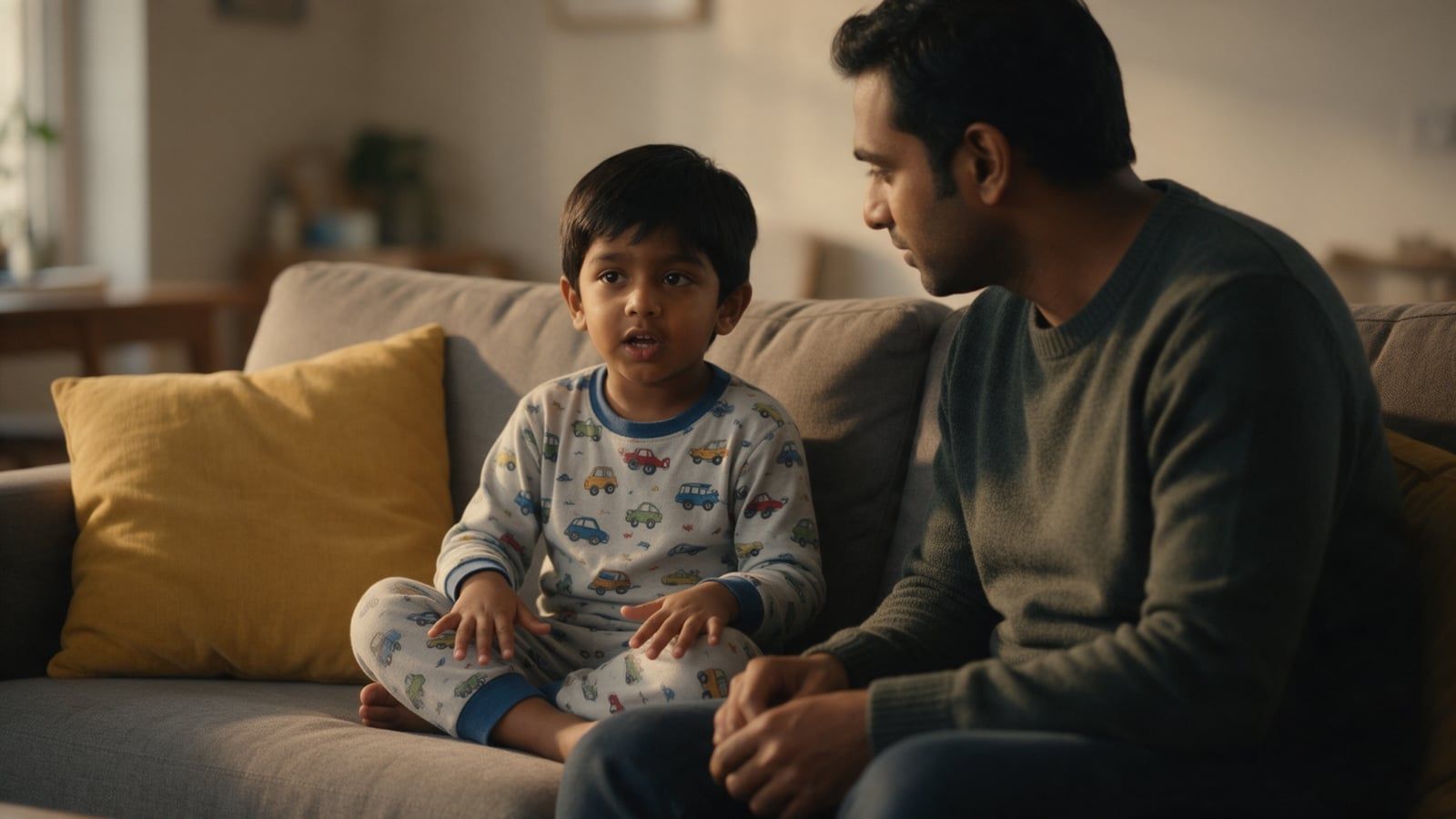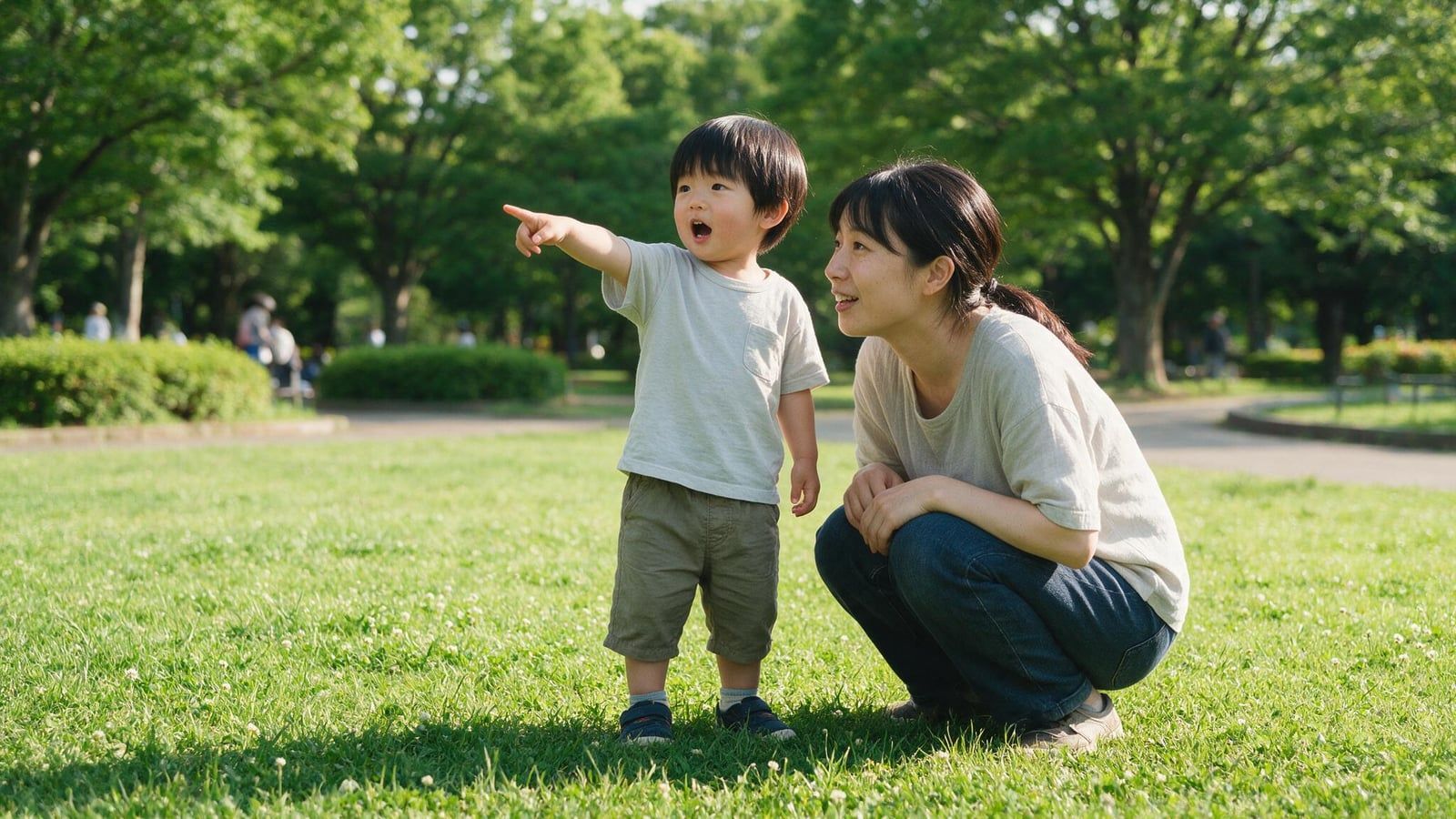


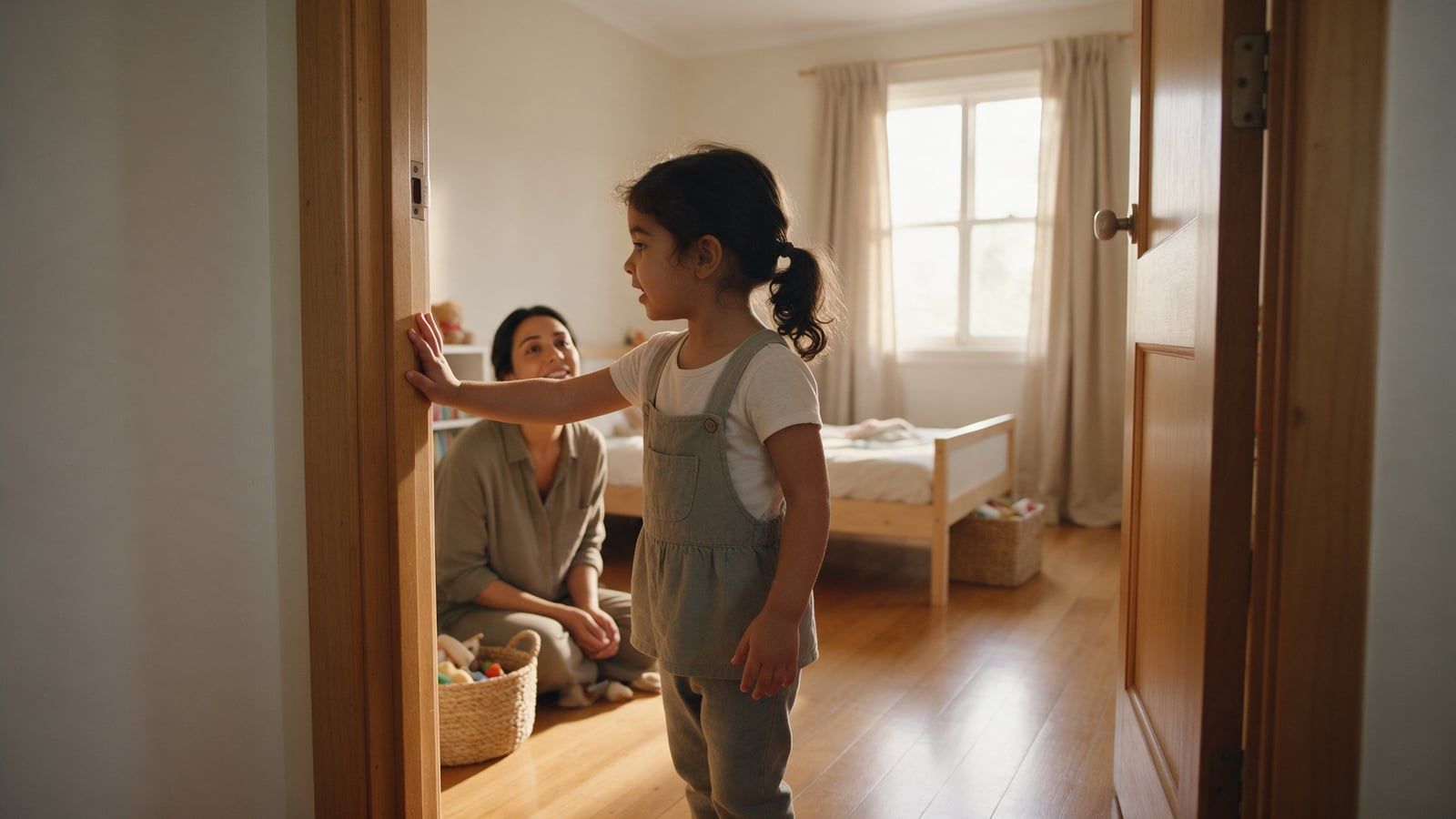
You arrive at some friends' house, and before you've even gotten their coat off, they're already down the hall. They push open a bedroom door, spot a police car on the shelf, and carry it back out to the living room. They haven't asked. It hasn't even crossed their mind to ask.
You've explained it to them many times, with the same words and the same patience. And it keeps happening exactly the same way.
In the previous post we talked about their body, secrets, and boundaries. Asking permission is the same idea, seen from the other side: whatever isn't theirs — a room, or another child's body — gets asked for before you touch it.
Why the hand moves before the question does
Braking when something pulls at you that hard is one of the last skills to arrive, well after a child understands the rule. Harvard's Center on the Developing Child explains how executive function and self-control develop: they build over years, with ages three to five as a key stage, and keep being refined all through adolescence.
In that hallway, it looks like this: the rule is in their head, but it arrives late. First comes the police car, then the wanting, and only at the end — if it makes it in time — the sentence that says this isn't theirs.
Kids vary a lot on this, and almost all of that range is normal: some brake on their own at three when you remind them, and some are still barreling in like a whirlwind at five. And if your child has trouble noticing that the other child is asking them to stop, it isn't that they don't care.
It's worth mentioning to the pediatrician or the school when several things line up and have been going on for months: they don't back down at all even with you right there, they cause real harm and do it often, they don't register the other child's distress even afterward, once things are calm. And, separately, if by age three they still can't put words together to ask you for what they want.
One rule that covers almost everything
A young child can hold on to one rule better than five. And there's one that covers almost everything: what isn't yours, you ask for before you touch it. That works for the car on the shelf and for their sister's room, and it works just the same for another child's body.
The phrases are short, and you can hand them ready-made:
- "Can I have that?" before picking something up.
- "Can I come in?" before opening a door.
- "Can I give you a hug?" before throwing themselves at another child.
Many kids start out asking and grabbing the toy in the same motion. The question is learned early; what's hard is staying still until the answer arrives.
That's easier to practice at home than at the park, because at the park there's already a toy being fought over and someone crying. At home, you can ask them for things of theirs and really wait for their answer — including when the answer is no.
And part of the work happens before you even go in. On the landing, while you wait for someone to open the door, there's room for one sentence: "There are toys in there that aren't yours. If you want one, tell me and we'll ask." You say it there, calmly, with nothing else going on, instead of calling it across the living room once it's already in their hand.
When it's already in their hand and the owner isn't there, the question still applies: you find the adult of the house and ask them. If the host settles it with a "let them take whatever they want," you don't need to argue the point in front of the child. You tell them what actually happened: "We asked, and they said yes."
Careful not to confuse this with sharing. Sharing means letting go of something you already have in your hand, and that's a different skill on a different timeline.
The hard part starts when they're told no
As long as the answer is yes, asking permission goes pretty well. The problem starts the day someone tells them no.
And there's something on our end to watch for, and it happens for very understandable reasons: you're in someone else's home, a meltdown is brewing, and you feel embarrassed. But if the other child's "no" always ends up renegotiated by an adult, what your child takes away is that asking is just the formality you go through before getting what you want. Sometimes you have to sit with the frustration and repeat the same thing twice: "They said no. Let's find something else."
When they don't stop, explaining it from across the room doesn't work. Get close, step between the two of them without pulling your child away, and say little: "They said no." And attend to the other child first, the one who wasn't listened to; if yours is the only one who gets conversation and comfort, it's easy for the other child to walk away thinking their "stop" doesn't move anyone. The long explanation comes later, once you're both calm.
"But we were just playing" is true a lot of the time, and the game still has to stop anyway. In a chase, whoever's running in front decides when it's over. If your child is grabbing the other one's hat, or has them pinned to the ground, the signal is the same: if the other child says "stop" or pulls away, it's over, even if both of them were laughing a second earlier.
And when they forget, which they will, often, there's no need for a speech or a rushed-out "sorry" just to get back to playing. What helps is giving back what they took and asking again, this time waiting for the answer. The same goes for the police car from the hallway: you go back to the room with it, put it where it was, and ask — even if you're already putting your coats on to leave.
This doesn't click in one afternoon, and what works at home takes a while to show up at the park. If your child is five and it's still happening, you're not behind: the brakes keep being built for years.
Ask them, too
Some of this, they learn from how you treat them. Zero to Three, a US organization focused on the first three years, has a guide on consent at this age that starts exactly there: telling them before you touch them, even before they can talk. "I'm going to pick you up." "I'm going to wipe your face."
Nothing here is a technique with measured effectiveness: no one has proven that giving a heads-up before a diaper change produces an adult who respects boundaries. It's what people who work with young children recommend, it costs one second, and it doesn't hurt anyone. That's the whole argument.
The same guide suggests committing to respecting their "no" and their "stop," whether it's a hug, a tickle, or a kiss. And that gets hard exactly when it's uncomfortable for you: when it's their grandmother waiting for the kiss, or when an older cousin has them by the arm, laughing, and nobody wants to make a scene.
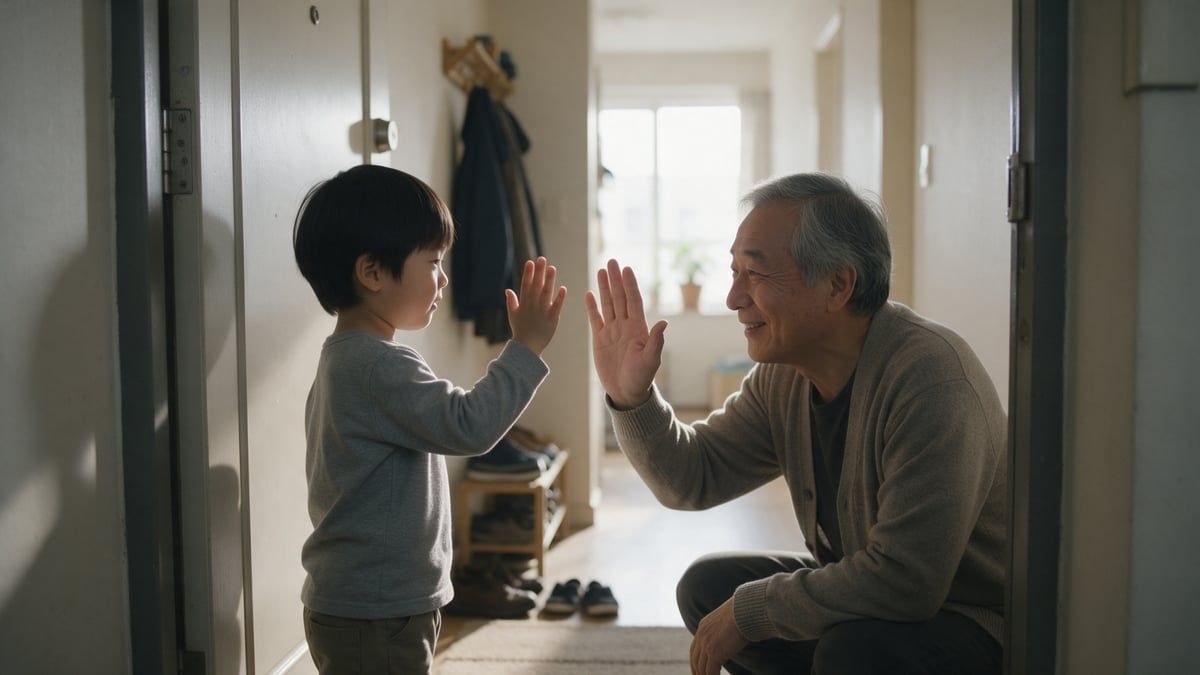
At the door, instead of pushing them toward grandma, you can give them a choice: a hug, a high five, or a wave. In families where you greet people with two kisses, the same applies: tell them how greetings work in your family, and let them choose anyway.
The sentence is the easy part. The awkward bit comes later, when your mother makes a face and the comment shows up at the dinner table. That's a conversation to have with her another day, without the child there, and it usually goes better if you explain why you're doing it: so that they know how to say no on the day it really matters.
And the other half needs saying too, or the rule falls apart on first contact. Not everything is up for asking. Changing them, bathing them, buckling them into the car seat, or letting the pediatrician look in their ears aren't things they get to decide. There, you don't ask permission — you give notice: "I'm changing your diaper now."
Those exceptions are always about health or hygiene, and they're carried out by whoever cares for the child, or by someone with you present. If someone ever asks the child not to tell you about it, it's no longer an exception.
A Story With the Door Left Ajar
In Semillita's A Retelling of Goldilocks, the one who arrives at the little house in the woods is Risi, a starving fox cub. The door is ajar, inside it smells like soup, and there's no one home. No one to say "come in," and no one to say "wait."
Her paw stretches out on its own, and she's already stepping over the threshold. What stops her is her grandpa's voice, which used to tell her that before touching what isn't yours, you ask permission. From there, the story takes its time with the hard part: what Risi does next, with the hunger still there.
It's meant for children ages four to six. Three-year-olds can hear it too: what stays with them is the image of the open door you don't walk through. When you finish it, you can ask them what they would have done.

A Retelling of Goldilocks
May I Come In?
Risi is a curious little fox who wanders alone through a bright, warm forest. Very hungry, she finds a little wooden house with the door ajar and a smell of soup that calls to her from within. No one is home, and the soup is right there, within a paw's reach. The story explores that powerful tug of desire in the face of something simple and hard at the same time: what is inside is not hers. 💡 A little curiosity: the girl with golden curls we now picture in this tale is fairly recent. In the first written version, almost two centuries ago, the one who wandered into the bears' house was an old woman; and in even older versions that scholars trace back, it was a sly fox who slipped inside. That is why our heroine is Risi, a little golden fox: a small nod to the oldest root of the story.
Read this children's story in the Semillita appIn the next post: how to help a child say no to an adult, when what they've always been taught is to obey.