

I first shared this reflection with my newsletter subscribers on 21 May 2026. If you'd like to receive them before anyone else, subscribe here.
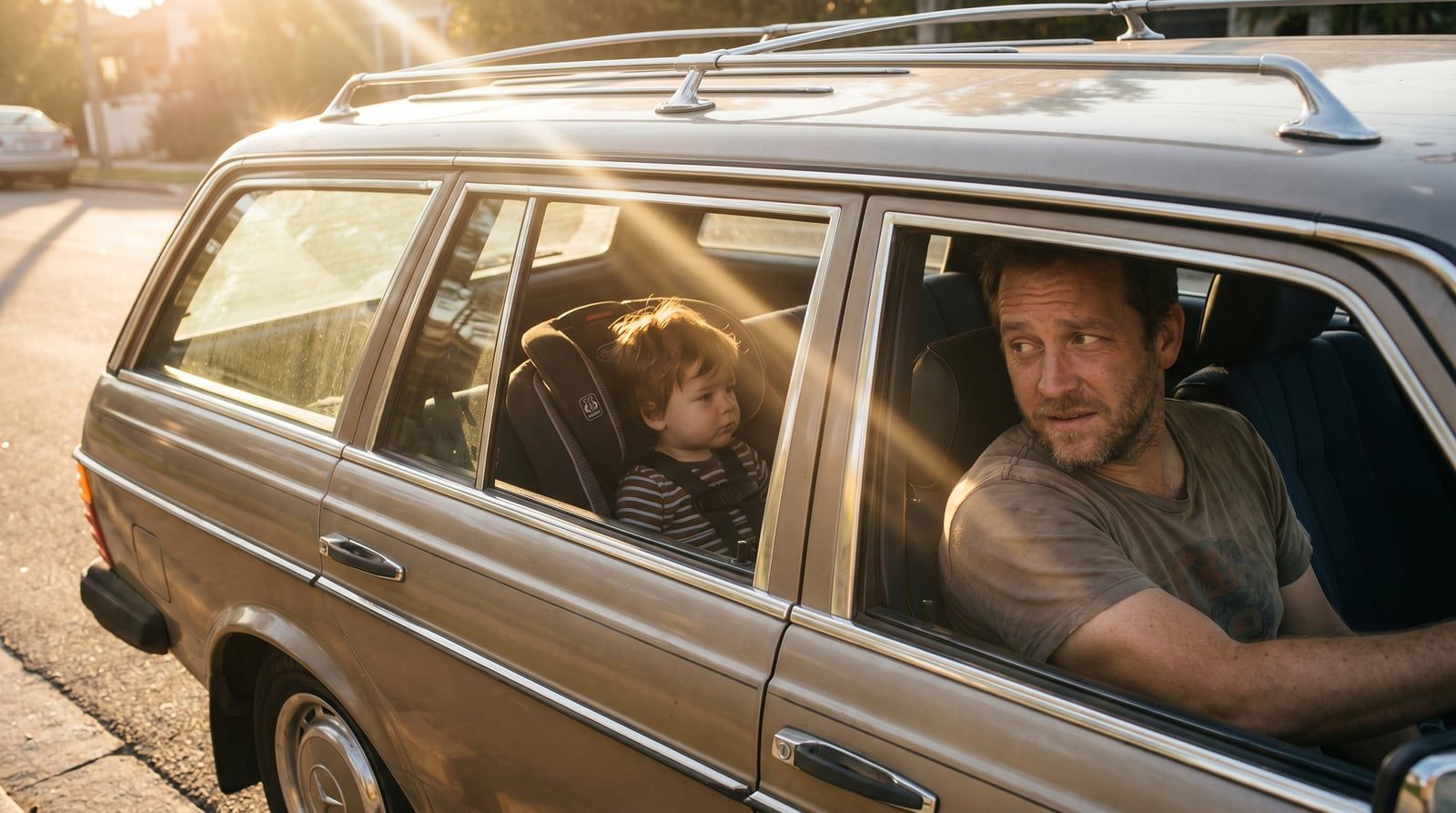
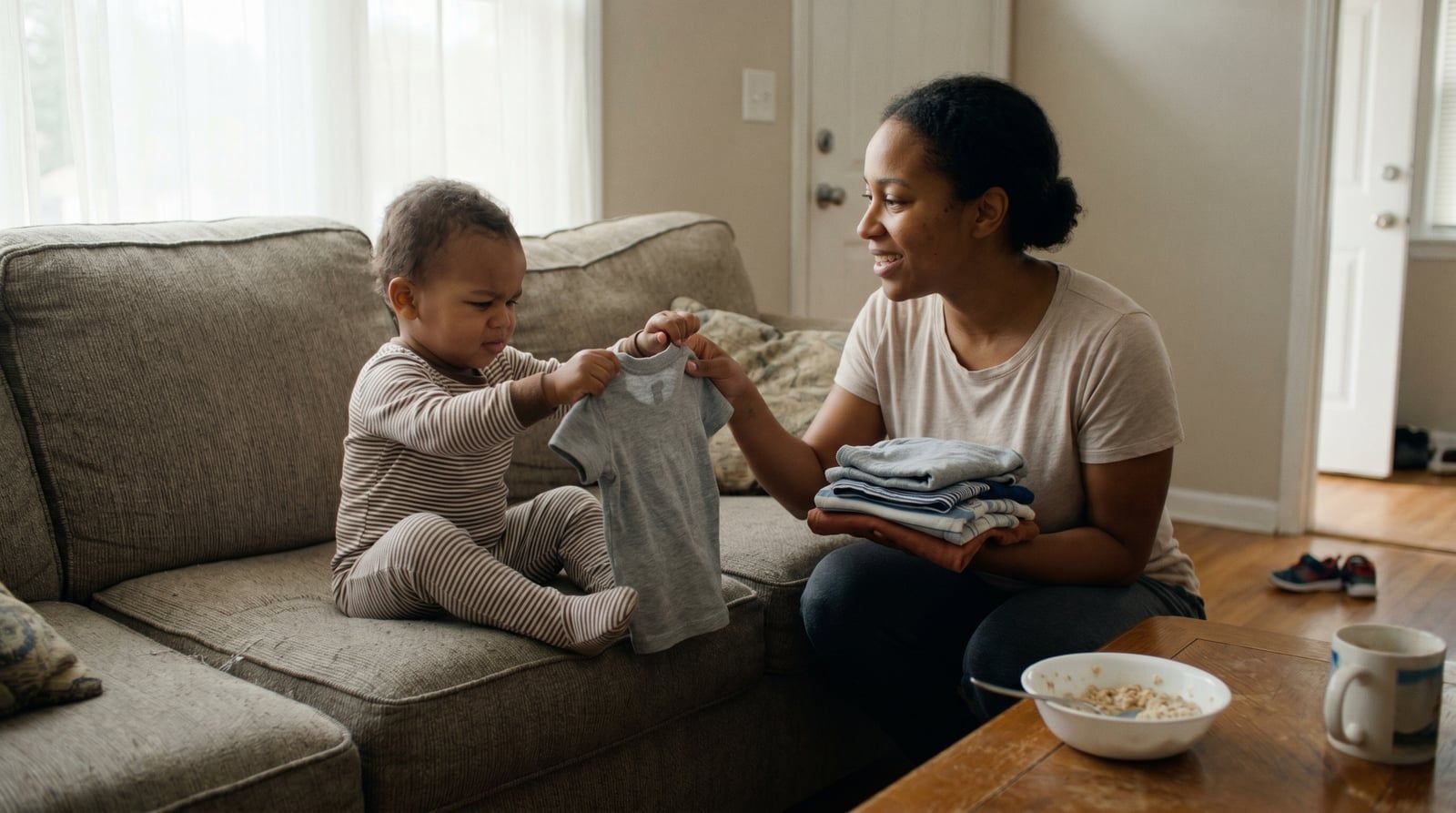
It's 8:15. My little boy is on the sofa, where we bring him every morning so he can wake up slowly. I hand him his clothes and, barely glancing at them, he comes out with: “not that t-shirt, I want another one”.
We'd had this scene almost every morning for months. It took us quite a while to understand that the problem wasn't the t-shirt. I'm telling it because along the way we learned something that, read in time, would have saved us a fair few arguments at that not-very-diplomatic hour of the day.
What's behind the “no”
Between 18 months and 3 years, many children go through what the psychologist Erik Erikson called the stage of autonomy. They discover something enormous for such a small brain: that they can decide for themselves, push back, act with a will of their own.
Ours was nothing out of the ordinary. Developmental psychology has spent decades describing this stage with scenes almost identical to the one in my kitchen: choosing clothes, refusing to put on a particular thing, insisting on doing it “all by myself”. If the why interests you with more calm, we tell it in full in the “no” phase.
How we worked it out at home
While I make his sandwich for school, I leave his clothes next to the sofa. If they suit him, great. If not, he digs in: “not that t-shirt, I want another one”, and goes to the wardrobe himself to fetch his own.
When we were tight on time, we'd try to talk him round: “come on, this one's clean, this one looks good on you, we're running late”. It made no difference. His answer was always the same: “we'll make it”. And, looking back, he had a point. We let him choose, he got dressed, we made it.
After several mornings like that, we stopped arguing about it. Now we'd rather he chooses directly, instead of suggesting and waiting for the “no”. And something curious has happened: he almost never rejects what we leave out. Either he's relaxed, or we've finally learned which garments he doesn't want. Probably both at once.
What we did understand is something bigger: the time problem was ours to see. For him the equation was simple: go to the wardrobe, open it, choose and put on another t-shirt, a minute's work. Talking him out of it could take twenty. At that age he doesn't yet live the clock the way adults do.
What works for us now, almost never in this order:
- Offer two options that work for everyone. “The blue or the green?”. Both are clean and both are fine for leaving the house. He decides; we set the frame.
- When he says not that one, let him go to the wardrobe. It often ends sooner than an argument, and the decision stays his.
- Don't get into long negotiations when the clock is pressing. The urgency is ours to feel; he doesn't yet anticipate time the way an adult does.
- Explain more and order less. “We have twenty minutes before we leave” opens a conversation; “get dressed now” closes it. Parenting that supports autonomy has spent decades observing that explaining the why of a request helps cooperation more than barking orders.
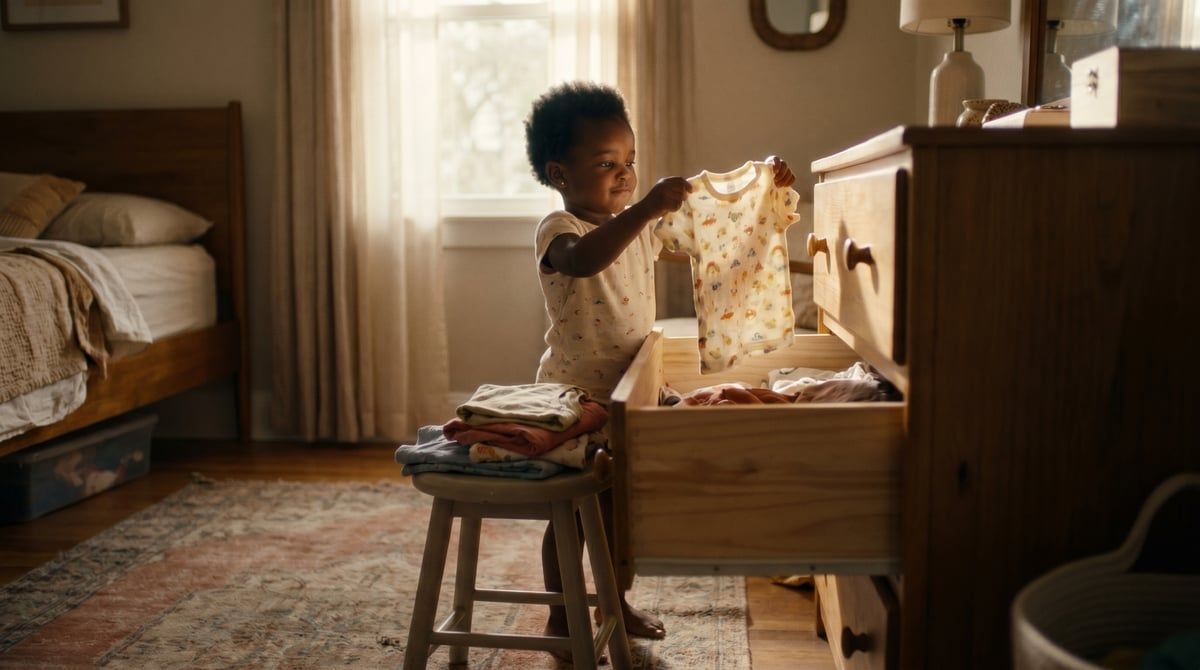
It doesn't matter whether you're their mother, their father, their grandmother or their grandfather. When a child says “not that one, I want another”, they're almost never defying you: they're practising deciding. And that, however hard it is to see at 8:15, is exactly what should be happening at their age.
The story we read after the hard mornings
There's a story we end up reading a lot right after a morning like this: Leo’s Little “No”. Leo discovers he has a voice and one day starts using it for everything. Its subtitle sums it up better than I can: “The Superpower of Choosing”. Sometimes it helps to put words to what the little one felt in the morning, and seeing it in someone else, in Leo, makes it easier for him.

Not Without My Sweater
The Superpower of Choosing
It's a rushed morning at Leo's house. His parents have picked out his clothes, but Leo doesn't want to put them on — he wants his favorite sweater, even though it's really hot outside. The more they explain and hurry him, the louder his “no” becomes. Until someone stops, gets down to his level, and truly sees him.
Read this children's story in the Semillita appA hug, and lots of patience if tomorrow brings the t-shirt thing all over again.
— Adrián, from Semillita