


I first shared this reflection with my newsletter subscribers on 1 June 2026. If you'd like to receive them before anyone else, subscribe here.
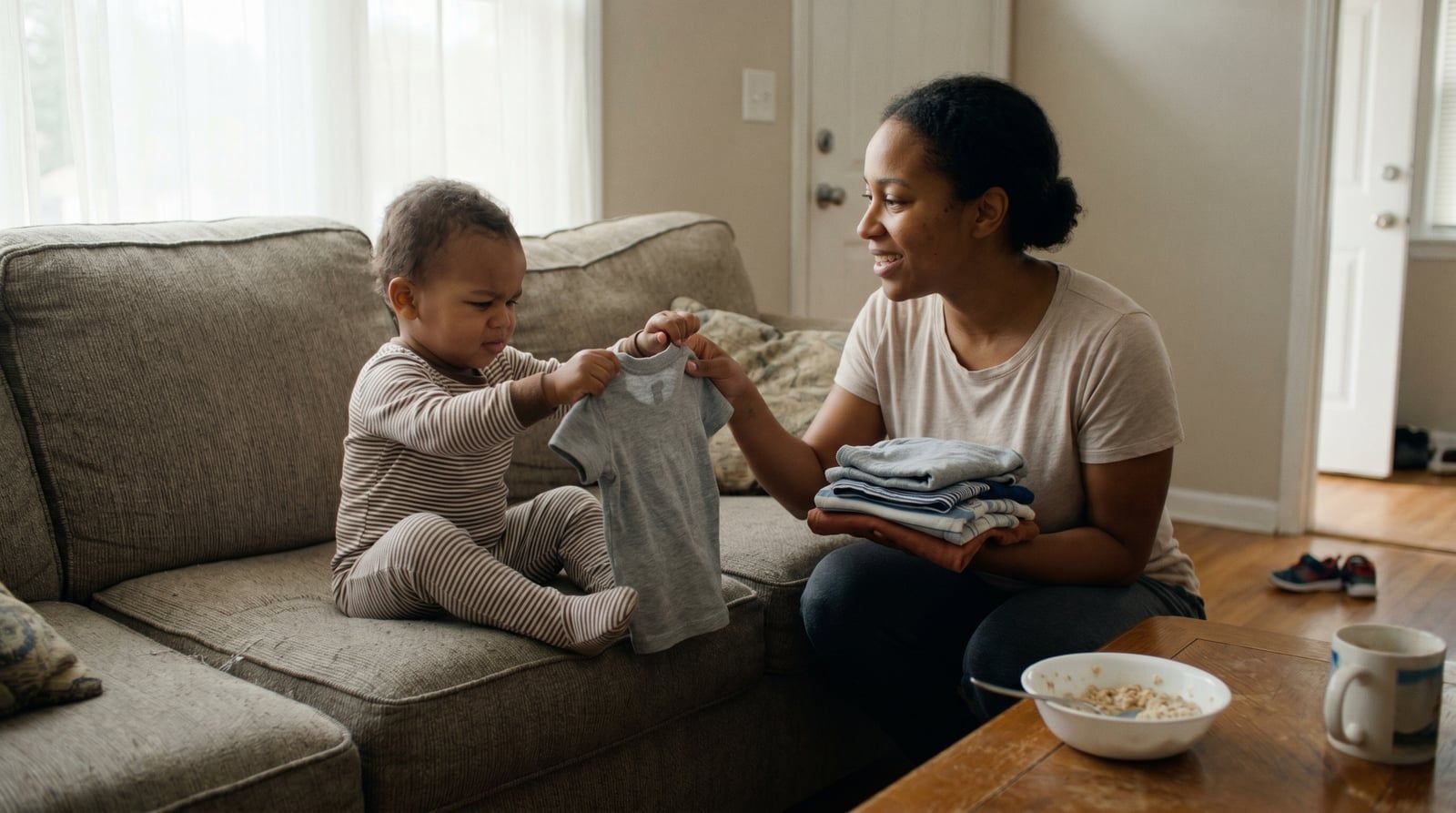
We were at the park when my son fell. Not one of the dramatic ones: his feet got tangled, his knees hit the ground and he froze for a second in that silence where you already know exactly what comes next. Then he burst into tears. And the first thing out of my mouth, almost before I crouched down, was: "it's nothing, don't cry, it was nothing".
I said it fast, with the best of intentions, the way I'd said it a hundred times before. But that afternoon, I don't know why, I heard myself. And I landed on something uncomfortable: I wasn't saying it for him, I was saying it for me, because his crying made me anxious and I wanted it to stop as soon as possible. Something was happening to him: his knees stung and he'd had a fright. My phrase erased none of that. It only asked him to keep it to himself.
I kept turning it over afterwards, which is why I'm writing it down. "It's nothing" is one of those phrases we say on autopilot and that, repeated a thousand times, end up teaching something we never meant to teach.
What the body says before words do
Before a small child can explain what they feel, their body is already telling them: the heart speeds up and that lump of wanting to cry rises in the throat. That ability to notice what's going on inside —psychologists call it interoception— is being honed precisely in these first years. It's the foundation on which the whole "knowing what's happening to me" is later built.
When we answer those signals with "don't cry" or "it's nothing", we're not doing irreparable harm; children are far more resilient than our worst afternoons. But, turned into a habit, the message that lands is an odd one: what your body tells you isn't to be trusted. And a child who learns to ignore their own alarm will find it harder to trust it on the day it really matters.
I'll admit it honestly: the precise science here is less clear-cut than it sounds in a tidy article. Nobody can measure the exact effect of a single phrase in a park. What is fairly clear is the direction: it helps children more when we put words to what they feel than when we pretend they don't feel it.
What we changed at home (and what still slips out)
We reinvented nothing. We just changed the reflex. Instead of cutting off the crying, I try first to name what I see:
- "I can see you got a fright and it hurts." Before comforting, acknowledge. Sometimes that's enough for him to ease off, because he feels accompanied rather than corrected.
- "What do you notice in your body?" With the youngest it's almost a game: does it sting?, does it feel tight in here? Putting a name to the sensation makes it more manageable.
- Letting the crying run without switching it off. Crying is his way of releasing the fright, so I stay alongside it instead of fighting it. Funnily enough, since I chase the stopping less, it stops sooner.
- Holding back the "it's nothing". I swapped it for a "it's over, I'm here", which is true and which doesn't argue with what he feels.
Do I always do it this way? Not at all. When we're in a rush, or I'm tired, or it catches me at a bad moment, the old "come on, don't cry" still slips out. I don't beat myself up about it. What counts is what I do most of the time, not nailing a perfect script.

The story that helps us talk about this
There's a story we read a lot when I want to open this conversation without a lecture: What Is My Tummy Saying?. Fanti, a little elephant, notices odd things in her tummy and, instead of someone telling her it's nothing, her dad gives her the time and space to listen to what her body wants to say. Little ones love it because it's about something very much their own, that feeling of noticing your tummy from the inside. And it gives me the perfect excuse to ask him, another day and with no tumble involved, what he notices when something makes him nervous.

What Is My Tummy Saying?
Learning to Listen to My Body
Fanti is a little elephant right in the middle of a fascinating game when she begins to feel strange sounds and movements in her tummy. Quite scared, she looks for a private corner behind the big sofa at home to try to figure out what is happening and what her body is trying to tell her, while patient Papa Elephant stays close with respect, giving Fanti all the space and time she needs without any interruptions.
Read this children's story in the Semillita appIf you want the why with more calm and less of my anecdote, we tell it in full in teaching children to listen to their body.
The next time your little one cries over something that looks small to you, try to hold yourself back that half second before the "it's nothing". Often, the only thing they need to hear is that you can see that yes, something is happening to them.
A hug, and patience for the scraped knees and the frights still to come.
— Adrián, from Semillita