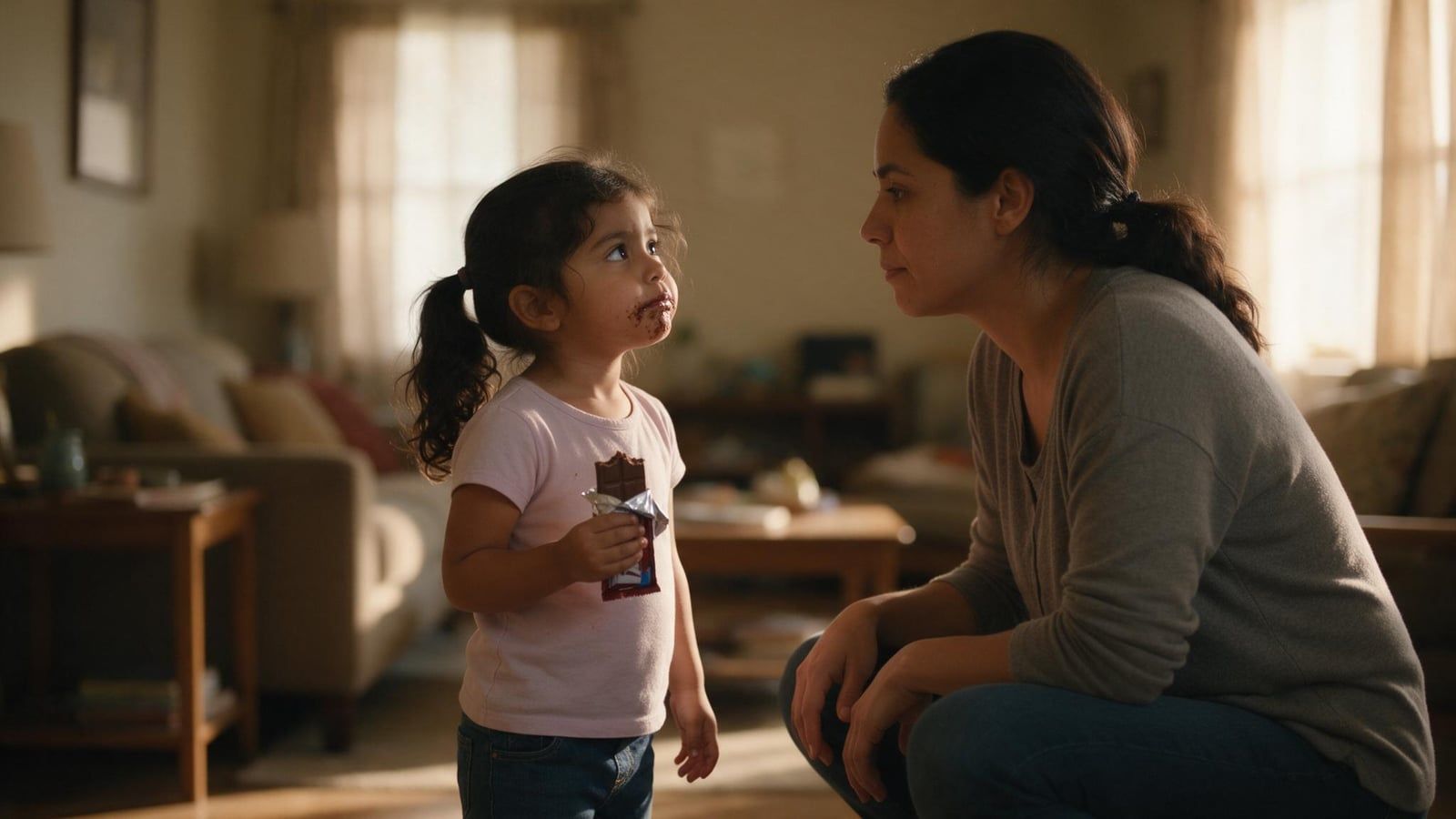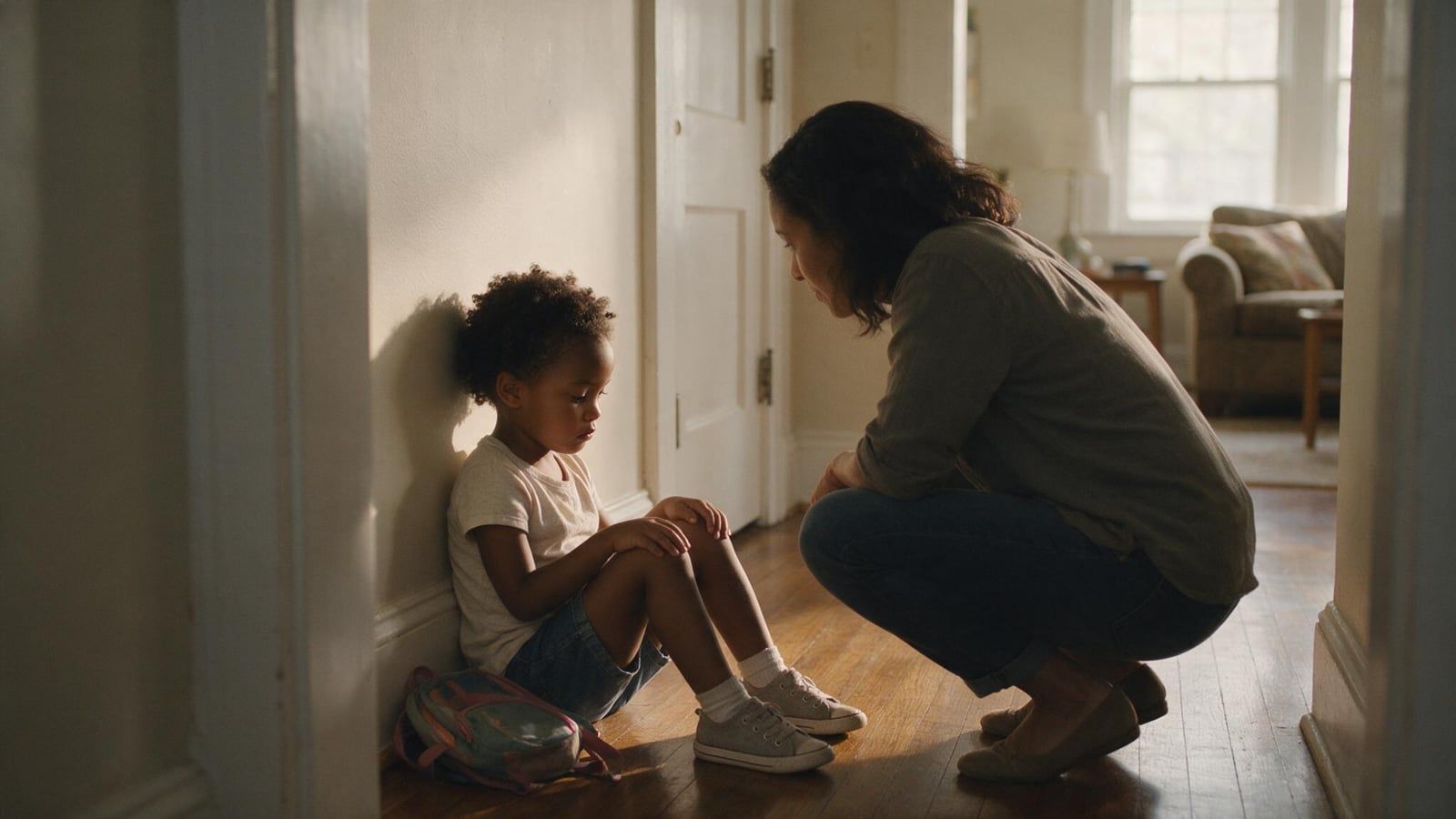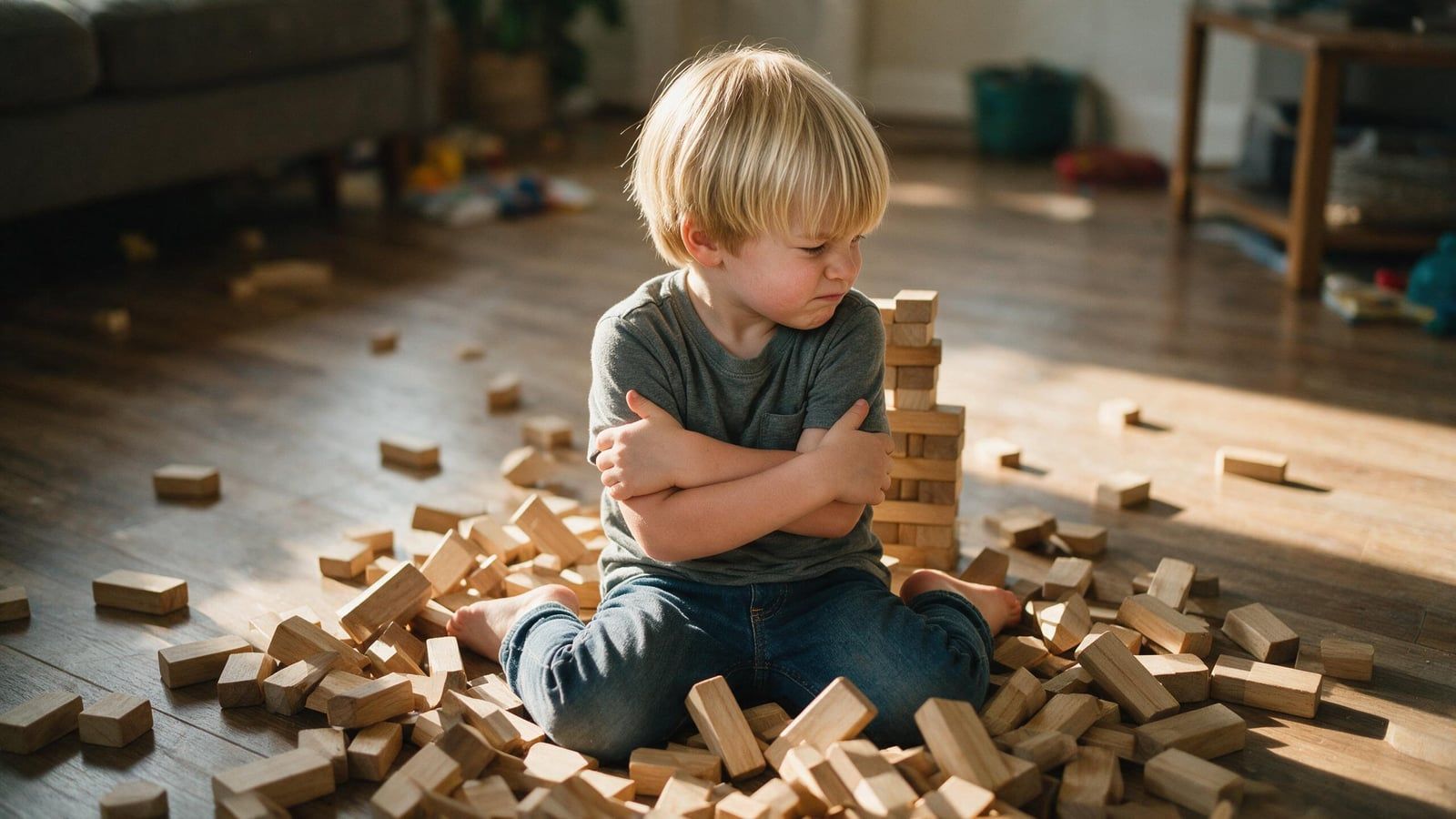


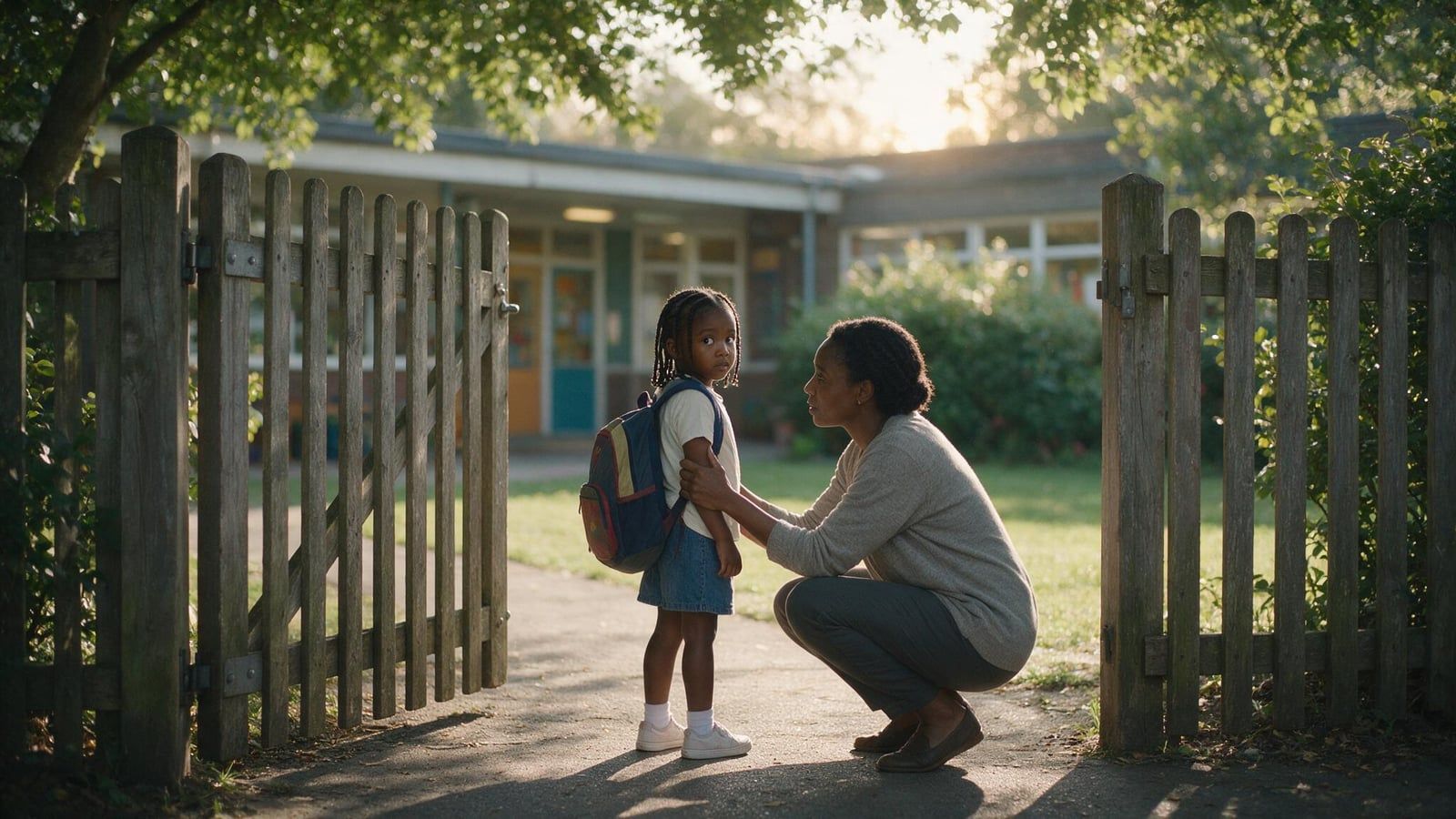
Last week your child was happy, running around barefoot through the long afternoons of the holidays. And suddenly they have turned clingy, they cry over things that never used to matter, and on Sunday night, out of nowhere, their tummy hurts. They haven't said "I'm scared of going back to school". At this age they don't have those words yet. But something has shifted inside.
Going back to school is usually treated as a logistics problem: early mornings, uniforms, getting the schedule back on track. And it is. But underneath that there is something else your child is carrying without being able to name it, and it's worth not overlooking.
What they can't put into words yet
A small child rarely explains that a change is making them anxious. They feel it, no doubt, but they don't yet have the language to name what they notice in their chest or their tummy. So it comes out where it can: through the body and through behaviour.
That is exactly what families and teachers tend to see in these weeks. Children can express stress through physical symptoms such as tummy aches or headaches, refusing to sleep without an adult nearby, recurring nightmares, and seeking more closeness and comfort from their caregivers. Sometimes there are also small regressions in things that seemed settled, or more tantrums than usual.
And the first thing that helps is knowing that almost none of this is alarming. Most children go through this phase without much difficulty, and many have brief spells of unease when facing new situations, such as the start of a school year. It's the normal toll of a transition, not a sign that something is wrong.
Why going back weighs so much
It isn't only that the freedom of the holidays is over. For a small child several things land at once:
Separation. Going back to school means separating again, after weeks of having you much closer. Children who already find separating a little hard see their anxiety spike at moments of stress or transition, and the start of the year is especially hard when it's a year of change.
Uncertainty. New teacher, new classroom, maybe friends who are no longer there. It's also stressful if the child's social support changes, for example if a good friend has moved away or they've been given a different teacher. For someone who lives very much in the present, not knowing what they'll find weighs more than it does for us.
And if the school itself is new. Starting at a different school isn't a return, it's a big change: everything moves at once, the building, the faces, the routines and often the friends too. It has more in common with a house move or a new baby in the family than with an ordinary start of term, and it deserves that weight: more warning, more room to breathe and less hurry for them to be "settled in already".
The anticipating itself. Sometimes what unsettles them isn't school but the eve of it: that Sunday night when the body already knows that tomorrow everything changes.
Neither playing it down nor blowing it up
This is where almost everything is decided, and where it's easy to slip to one side or the other. If we play down what they feel ("it's not that bad, you love school"), the child gets the message that their emotion doesn't count, and learns to keep it to themselves instead of bringing it to us. If we go to the other extreme and surround them with worry and long faces, we confirm without meaning to that there really is something to fear.
The middle ground is simpler than it looks: acknowledge what they feel and, at the same time, pass on your confidence that they can do it. Something like "I know going back is a bit hard and you miss our mornings at home; that's normal, and I know you're going to be fine". That is, in fact, what specialists recommend: the parent's job is to be a support without amplifying the child's worries.
What actually helps
Tell them what's coming. Explaining calmly what will happen, when, and who will be there takes the edge off the uncertainty. If it's possible, it helps a lot if they can meet the teacher or see the classroom before the chaotic first day, when all the other children are there.
Bring the routines back before day one. Easing into the schedule again reduces the number of things that change all at once. If you're coming out of holidays with everything out of place, what we wrote in Holidays and routines: should you keep to the schedule? may help.
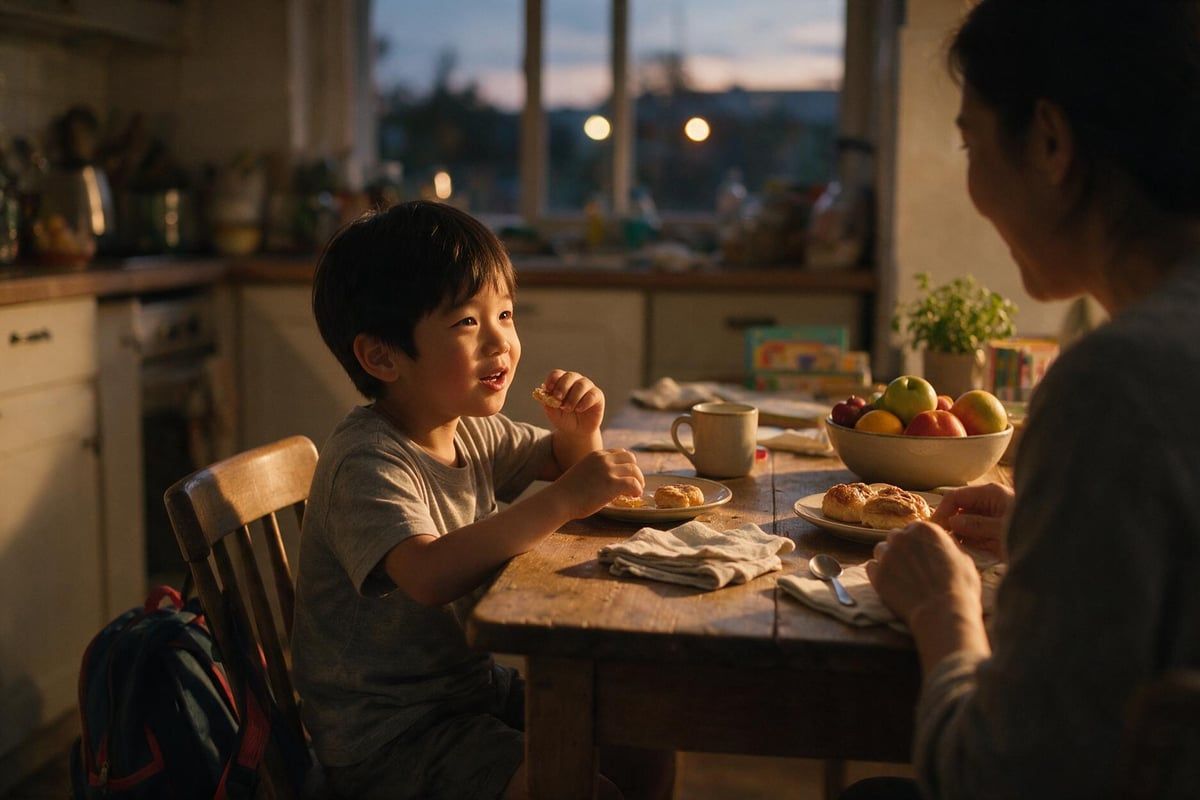
Keep one fixed point in the day. A small guaranteed reunion — the snack together, the moment of telling each other how it went — gives them something steady to hold on to while everything else is new.
Give it time. Most of this unease dissolves over the first few weeks, as the child starts to feel safe in the new place.
When to look more closely
Almost all of this resolves on its own. But it's worth knowing where the line is. If separation anxiety persists beyond the normal settling-in period, which is usually a few weeks, or goes on for more than a month, or clearly interferes with the child's daily life, their development or family life, it may deserve a closer look. In that case, talking to your paediatrician or to the school team is the sensible thing to do.
And one note of honesty about physical symptoms: a tummy ache or a headache fits with stress, but it isn't automatically emotional. It's not wise to assume these complaints are always anxiety without mentioning them to a doctor, because they can also point to something else. Supporting the emotion and ruling out the physical are not mutually exclusive.
A story for naming what weighs
Sometimes what a child can't say is easier to understand inside a story. In The Heart Mama Drew for Me, a little one who finds separating hard discovers a very concrete way of taking his mother with him: a heart drawn on his hand that is still there even when she isn't. It's a way of saying something that's hard to grasp in the abstract at that age — that the bond doesn't break when you're apart — and it works just as well on the eve of the first day as at the school gate.

The Heart Mama Drew for Me
A gift that fits in your hand
Teddy and Mommabear arrive at preschool on a cold day. The noise and the new surroundings feel overwhelming for Teddy, who becomes anxious at the separation and clings tight to Mommabear's soft coat. With great tenderness, Mommabear draws a red heart on the palm of his hand and gives it a gentle kiss. That small gesture becomes a tool that Teddy uses throughout the day to find calm and feel ready to play.
Read this children's story in the Semillita appThis closes our run through the transitions of the calendar: the end of the school year, the holidays and the return. They all share the same logic: circumstances change, and what really holds a child steady is still having someone close and some fixed point to hold on to, even when everything else is moving.