


Another Tale of “The Hare and the Tortoise”
Each in Her Own Way
Read this story in the app
Stories are only read in the mobile app. Scan the QR to open this same page on your phone.
Tap to open the story if you already have the app. Otherwise, install it first.


How the story begins
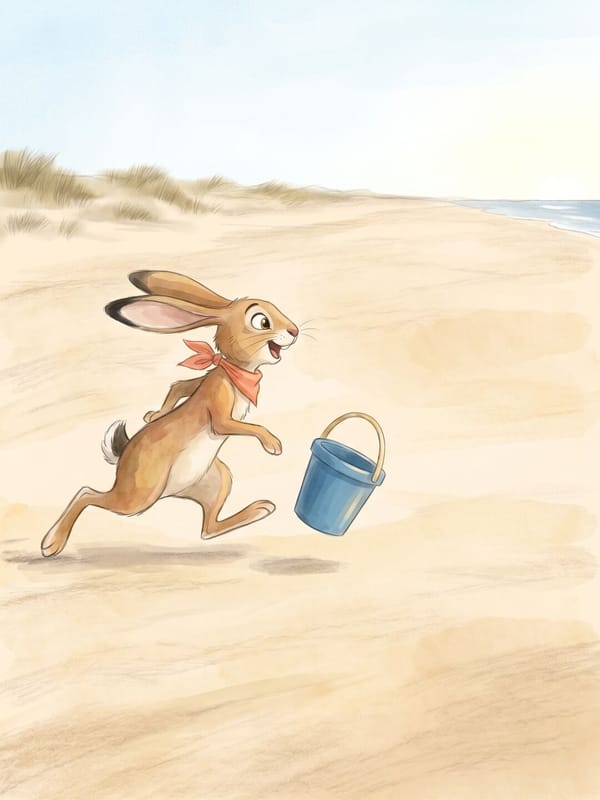
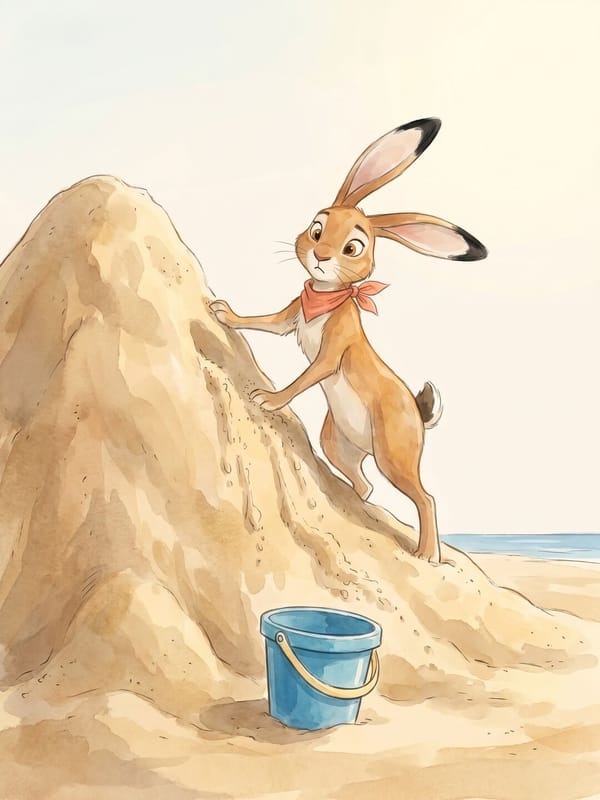
Vinca raced onto the beach, her bucket swinging at her side. She ran across the dry sand, way up high, far from the water. Up there was plenty of room to run and run. She stopped, huffed happily, and looked out at all that sand, all to herself.
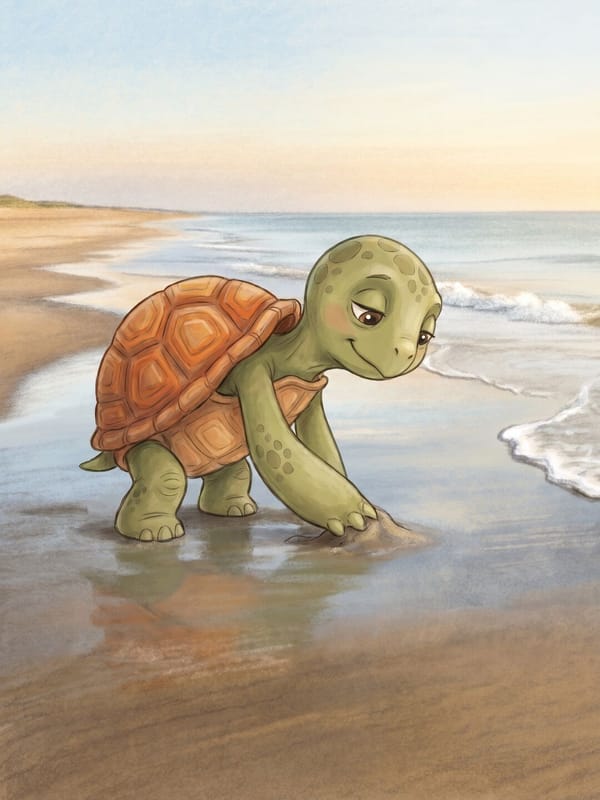
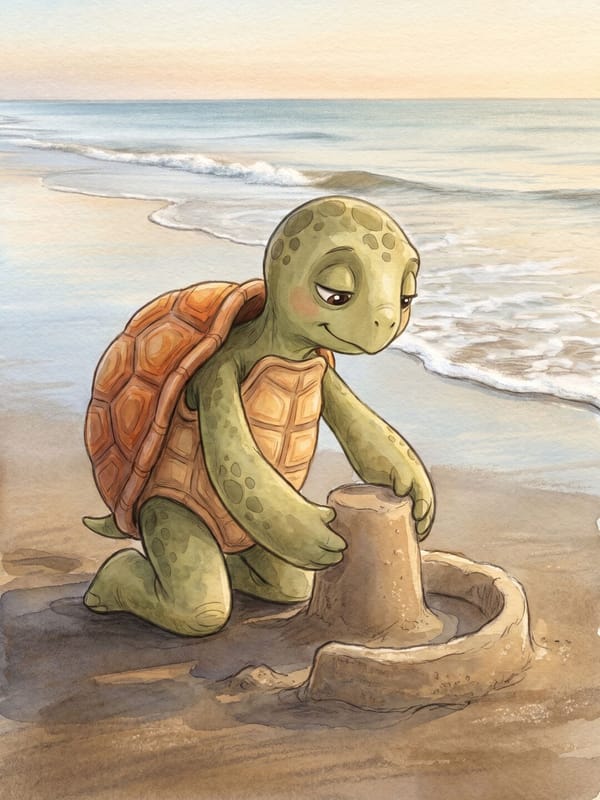
Serena arrived in no hurry at all, step by step. She settled right at the water’s edge, where the sand was damp and soft. She pressed the sand with one hand. It squeezed together and held its shape: perfect for working slowly.
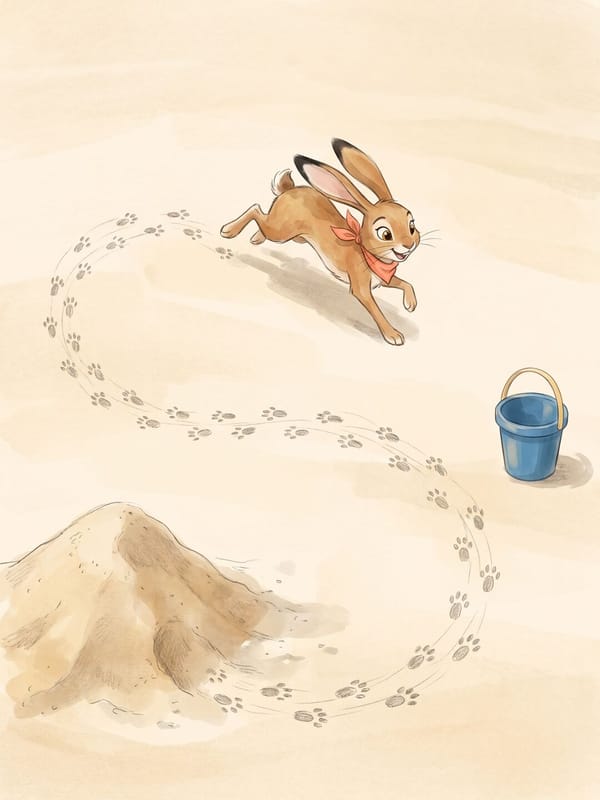
Digging with her paws, Vinca began to pile up sand. She dashed back and forth without stopping, up and down, up and down. Each run was more fun than the last. The pile grew toward the sky, higher and higher.
Want to know what happens next? Read and listen to the full story in the free Semillita app — no ads.
Guide for families
💭 What is this story about?
Vinca is a hare who loves to run, and Serena is a patient tortoise who works slowly and with great care. One afternoon at the beach, each builds in her own way: Vinca races back and forth and heaps up a towering mountain of dry sand, far from the water, while Serena molds a beautiful castle from damp sand, right by the shore. But dry sand won’t hold a shape, and the waves reach all the way to the shore: each one runs into a problem her own way of doing things hadn’t foreseen.
🧠 What will children learn?
- That going fast or going slow is neither a flaw nor a merit: each pace is worth something in itself, not only when it happens to be useful
- That what looks like a failure can be the foundation of something great: sometimes what “didn’t work out” holds exactly what was needed
- That looking at your own stumble with calm and curiosity, instead of only sadness, lets you discover things no one else sees
- That working together isn’t about someone changing who they are, but about each person bringing what they are good at and enjoy
- That in shared work no contribution is “the main one” and another “just the help”: both are equally necessary
- That sand has its own rules: dry sand slips away and won’t hold a shape, while damp sand can be molded — something you can test with your own hands at any beach
🤝 How can you keep this conversation going?
- “Is there something you do very fast, and something you like to do slowly, taking all the time you want, with no one rushing you?”
- “Have you ever done something that didn’t turn out the way you wanted, and then it turned out to be useful for something else? How did you notice?”
- “When you do something with another person, what are the things you help with best, and what things do you prefer to let the other person do?”
- “Have you tried squeezing dry sand and wet sand in your hands? What happens with each one?” This question invites children to test at the beach or in the sandbox the very same physics that Vinca and Serena discover.
- “Vinca and Serena do things in very different ways. Do you know someone who does something very differently from you? What happens when you do it together?”
🎯 Educational approach
This story affirms that each pace is worth something in itself: running is Vinca’s joy and shaping sand slowly is Serena’s, and neither one needs to change who she is for things to turn out well. The story’s discoveries grow out of both characters’ stumbles, one from each, so that no one plays the “clever one” or the “rescued one”: both observe, both learn, and both contribute. The story also rests on the real physics of sand — dry sand won’t pack together, damp sand will — so the next trip to the beach can become the best possible sequel to this tale.
More stories you might like


