
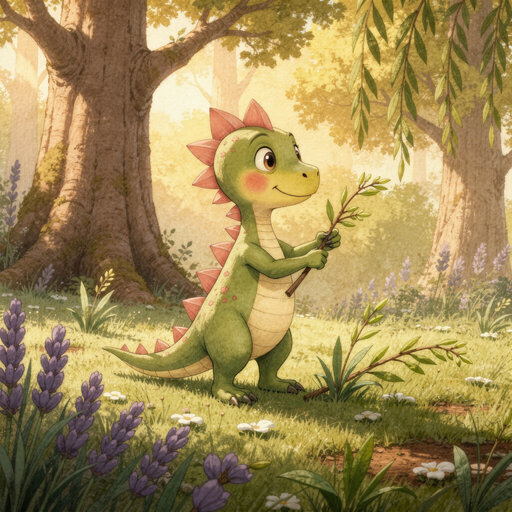
The Little Victory
A story about staying true to your tastes
⚠️ Content warnings
🎯 Educator's Guide: "The Little Victory"
💭 What is this story about?
Herbi is a young dinosaur who doesn't like cocoa. This makes her feel different because all the other dinosaurs her age love everything made with cocoa beans and think it's "the best thing in the forest."
🧠 What will children learn?
- That their personal tastes are valid, even when they're different from most people's
- That saying "no" politely is respectable and brave
- To recognize when they're doing something because of social pressure, not because they really want to
- That giving in to pressure can make them feel bad, even when there's no physical danger
- That being authentic is more important than fitting in with everyone
- That doing the right thing can be uncomfortable, and that's okay
🤔 How to continue this conversation?
- "Have you ever done something just because everyone else was doing it? How did you feel afterward?"
- "Is there something your friends love but you don't like as much?"
- "How do you feel when someone tells you 'you have to try it'?"
- "What would you do if a friend laughed at something you like but they don't?"
- "Is it easier to say 'no' when you're alone or when you're with friends? Why?"
- "Have you ever stood up for someone who chose something different from everyone else?"
- "What do you think being brave means? Just doing hard things or also saying 'no'?"
🎯 Educational Focus
This story addresses a fundamental theme in child development: personal autonomy versus peer pressure. Through Herbi's experience with cocoa (a morally neutral food she simply doesn't enjoy), we explore how children can feel obligated to conform to the majority's preferences, even in something as personal as taste.
Cocoa functions as a metaphor for any situation where a child feels they must do something because "everyone does it": playing certain games, watching certain shows, dressing a certain way. The story validates the emotional discomfort that arises when we give in to external pressures, even when there are no negative physical consequences. This discomfort is real and deserves to be named.
Grandpa Otto represents the adult who validates without judging, who doesn't try to "convince" or "educate the palate," but helps Herbi reflect on her own experience through questions. Instead of giving answers, Otto guides Herbi to reach her own conclusions. When he asks "What do you think?", he's giving her space to develop her own inner voice. His observation that "we're all a bit different, though not everyone has the courage to admit it" reframes difference as something universal and authenticity as an act of courage that begins with honesty toward oneself.
The scene at Kito's birthday party is pedagogically rich because it shows several realistic social dynamics. First, when Herbi explains she doesn't like cocoa, Kito's mom is genuinely surprised. Her surprise isn't ill-intentioned, but she inadvertently feeds the teasing from other kids by marking Herbi as unusual. This is an important reminder for educators: even our well-meaning reactions can make a child feel more exposed or different.
But then something crucial happens: Kito, the birthday boy, validates Herbi by sharing that he doesn't like fizzy drinks either. This moment of peer support is pedagogically valuable because: (1) not everyone teases, which is more realistic than presenting the group as a monolithic block; (2) Herbi discovers she's not alone in having different preferences; (3) the ally is precisely the birthday boy, whose opinion carries social weight. Children learn that there can always be someone who understands, even when we don't expect it.
The "quiet little victory" Herbi feels at the end isn't triumphant or perfect. She still feels heat in her cheeks. It's still hard. But there's something new: the internal feeling of having been true to herself. The story's ending is honest and direct: "The easy thing would have been to eat the cake, but she chose to be true to her tastes, she chose to be brave." This message recognizes that authenticity requires a conscious choice and courage, especially when the easy thing would be to give in. Children learn that courage isn't just about doing hard things, but also about holding onto our personal preferences when there's pressure to conform.
Cultivate your garden with more stories like this in the Semillita app.
Get the App